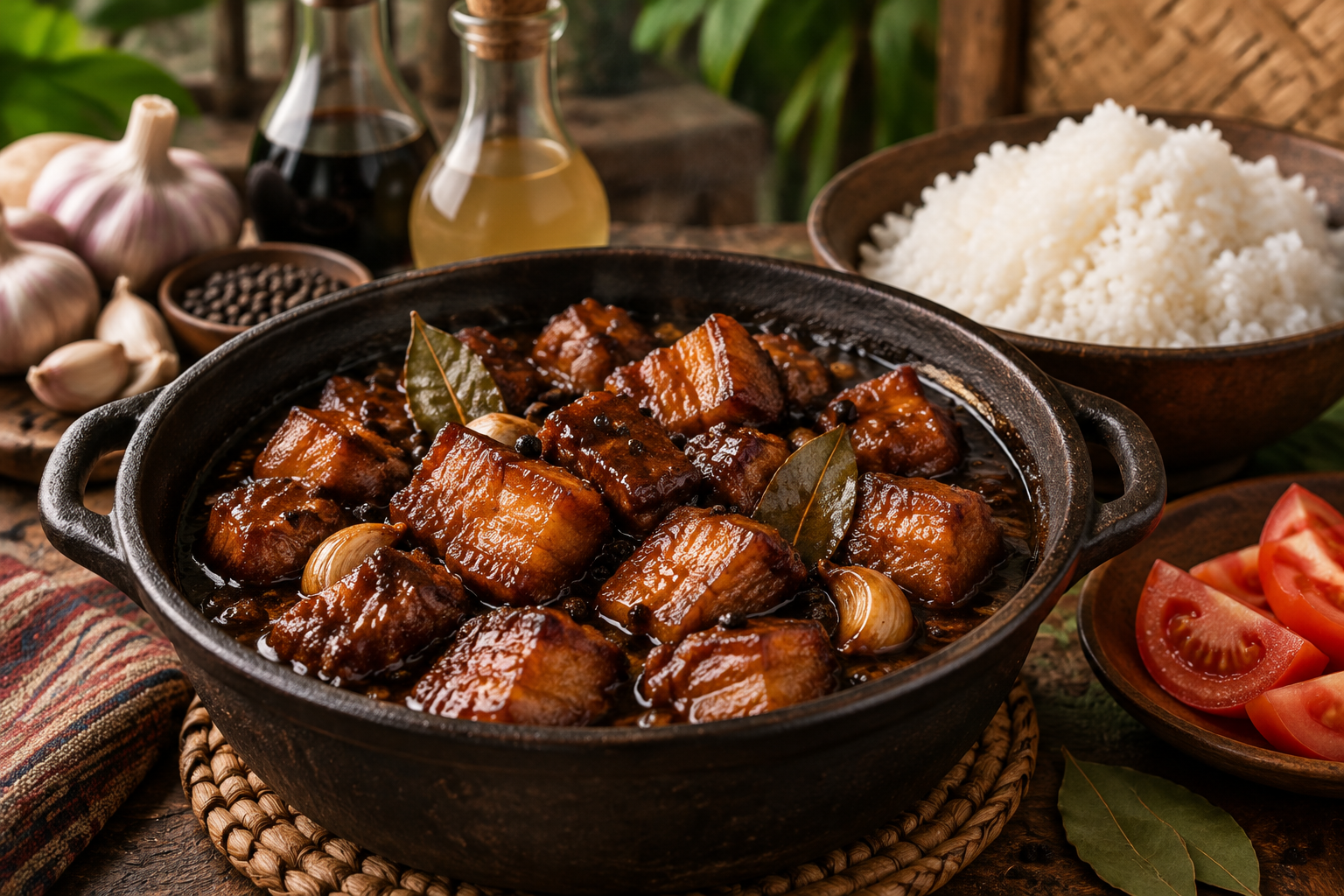
Ask ten Filipinos how to make adobo and you will receive ten different answers—each proudly tied to a specific province or family tradition. While the basic formula of vinegar and soy sauce remains, regional ingredients and techniques transform the dish dramatically. In 2026, as culinary tourism booms, home cooks are eager to understand these differences. This article explores three major regional adobo styles—Adobong Puti, Adobo sa Gata, and Adobong Dilaw—and provides a master technique for each.
Adobong Puti: The Vinegar-Forward Classic of Manila and the North
Adobong Puti, or “white adobo,” skips soy sauce entirely, relying on vinegar, garlic, salt, and sometimes a splash of fish sauce. The result is pale, tangy, and intensely savory. This style is common in Manila, Pampanga, and Ilocos, where local cane vinegar (sukang Iloko) gives a distinct fruity acidity.
How to Cook Adobong Puti
Marinate 1 kg pork or chicken in 3/4 cup cane vinegar, 8 cloves garlic, 2 tsp salt, 1 tsp peppercorns, and 3 bay leaves for 1 hour. Sear the meat, then add the marinade and simmer without soy sauce. The sauce will be thin and sharp—perfect for pouring over rice. Some cooks add a teaspoon of sugar to balance.
Adobo sa Gata: Coconut Milk Adobo from Bicol and the Visayas
In Bicol, where coconut trees dominate the landscape, adobo is enriched with gata (coconut milk) and often spiced with chilies. This version is creamier and milder in acidity, making it ideal for those new to adobo. The technique is similar to the modern fusion recipe but uses local coconut vinegar and bird’s eye chilies.
Adobong Dilaw: Turmeric Adobo from Batangas and Cavite
Adobong Dilaw, or yellow adobo, uses fresh turmeric instead of soy sauce for color and flavor. Common in Batangas and Cavite, this variation has a golden hue and an earthy, slightly bitter note that pairs beautifully with grilled fish or pork. Vinegar remains, but the turmeric replaces soy entirely, making it lower in sodium.
Why Regional Adobo Matters in 2026
The Philippine Department of Tourism’s 2026 “Flavors of the Islands” campaign has spotlighted regional adobo as a key driver of culinary tourism. According to a March 2026 article by the Philippine Information Agency, domestic travel searches including “regional adobo” grew by 41% year-over-year. Read the full 2026 report here. Home cooks are now treating adobo not as a single recipe but as a family of techniques worth mastering.
A Master Technique for Any Regional Style
Regardless of region, the core method is the same: marinate meat in acid and aromatics, sear for flavor, then braise in the same liquid. The key variables are the acid (vinegar type), the colorant (soy sauce, turmeric, or none), and the enrichment (coconut milk or not). Experiment with small batches to find your preferred balance. For authentic vinegar, seek out Datu Puti cane vinegar or coconut vinegar from Asian markets—both are widely available online in 2026.