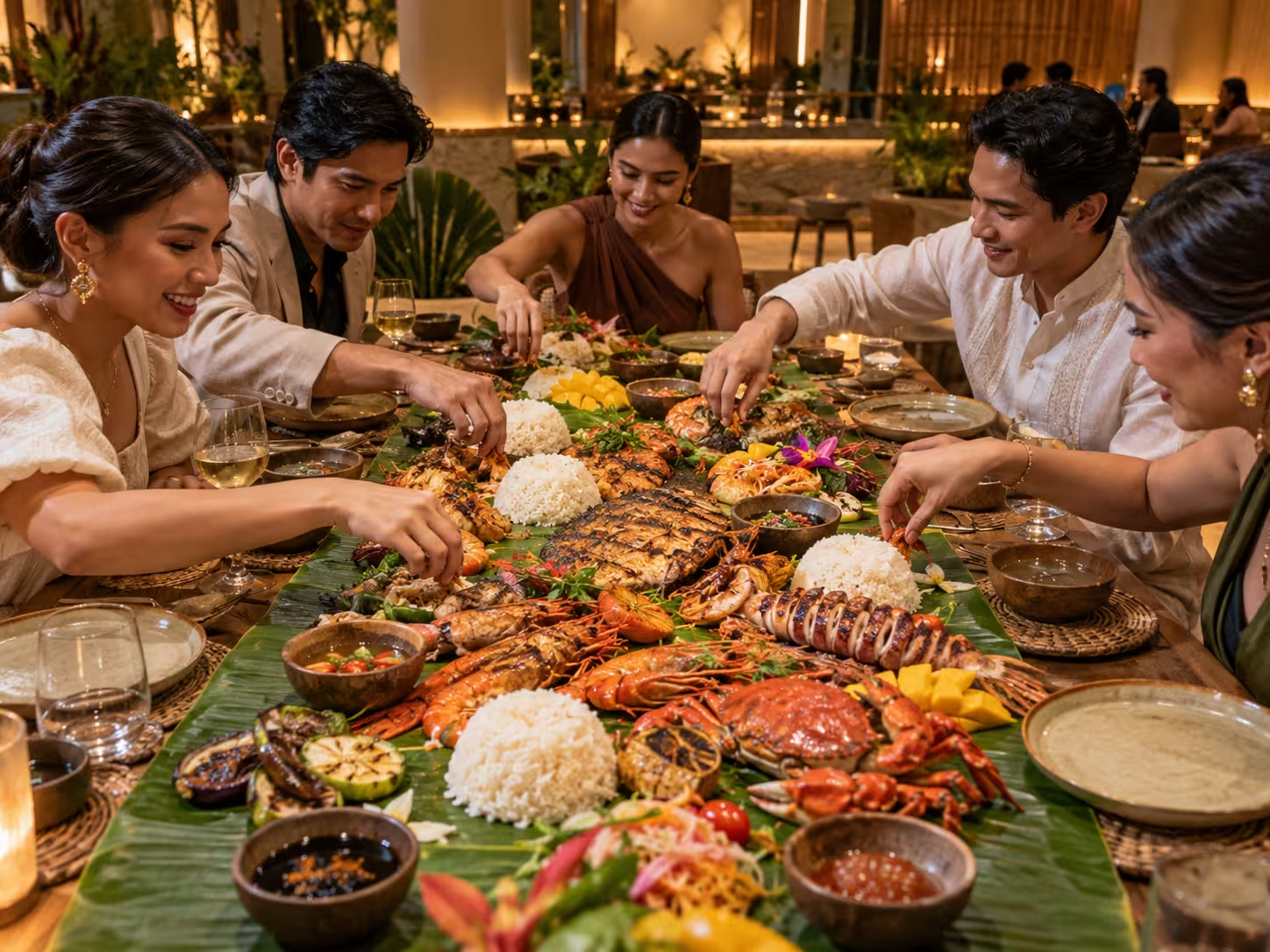
For decades, the Philippine tourism narrative was dominated by white sand and turquoise water. Food was an afterthought—a necessity rather than a draw. In 2026, that narrative is being rewritten on banana leaves. The modern kamayan has become a destination experience, with islands like Siargao and Panglao positioning the communal feast as a reason to travel.
Cev Siargao and the Island Chef’s Table
In March 2026, Cev—a restaurant in Siargao specializing in ceviche and kinilaw—launched Island Style Chef’s Tables, a year-long kamayan collaboration series that brings together chefs from the Philippines and beyond. The premise is deliberately unconventional: guests are not seated in a dining room but are transported to a secluded island location for a feast that captures the laid-back, sun-soaked spirit of Siargao. “There’s nothing quite like having a one-of-a-kind meal on a beautiful, secluded island, eating only with your hands,” says executive chef David del Rosario.
The series debuted with Bourke’s from Hong Kong, pairing Australian barbecue with Filipino kinilaw—a fusion that reflects the collaborative, open-ended nature of the modern kamayan. Each installment reinterprets the boodle fight through the lens of place, produce, and perspective, transforming the feast from a static tradition into a dynamic, evolving format.
UMA Panglao and the Farm-to-Boodle Philosophy
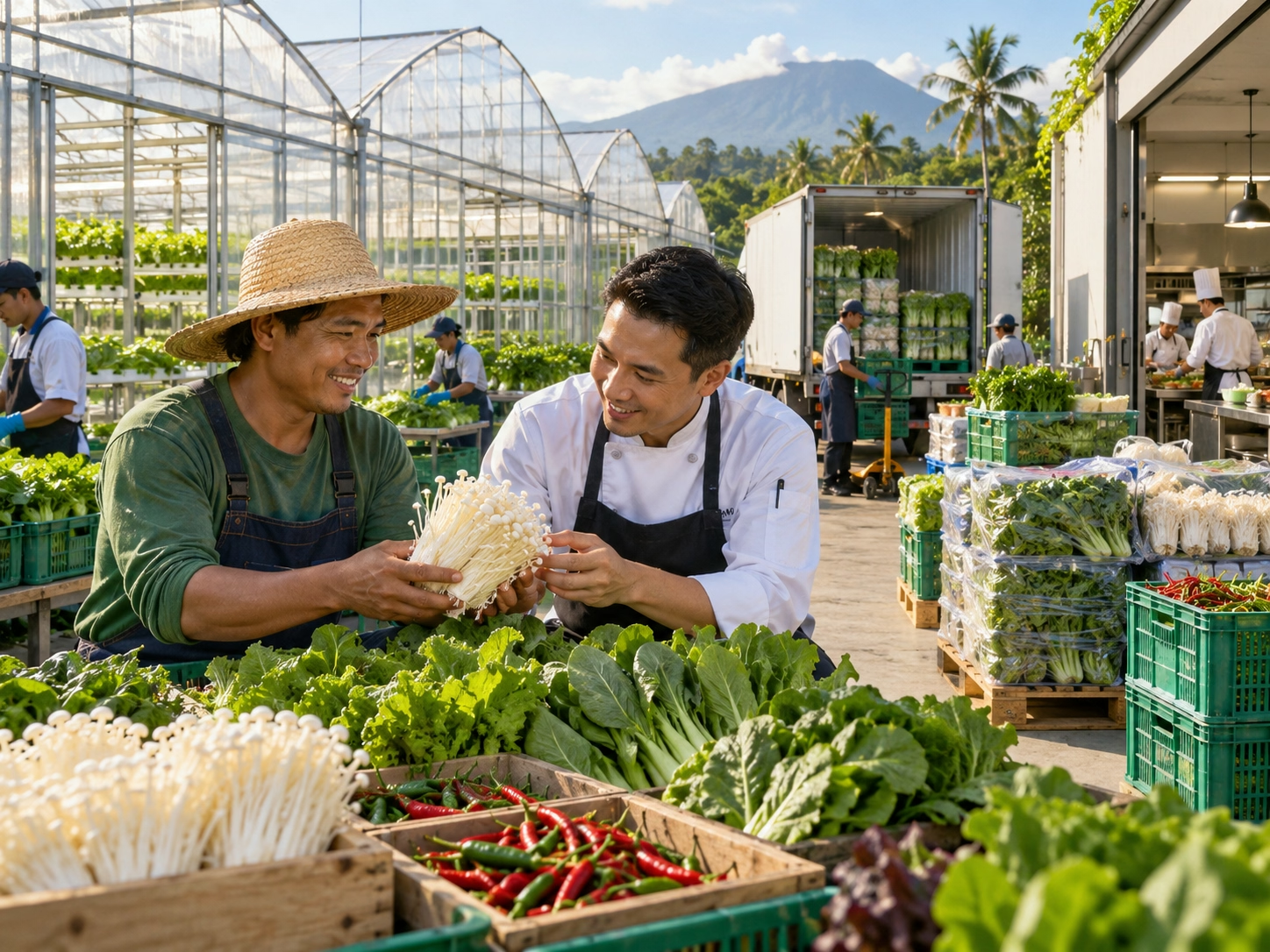
In Panglao, Bohol, UMA at South Palms Panglao – MGallery takes a different but equally destination-driven approach. Meaning “farm” in Filipino, UMA is built on direct sourcing from its own garden, where herbs, fruits, and vegetables—including lemongrass—are grown and harvested on-site. Its signature experience is the Build Your Own Boodle Fight, a communal feast of grilled seafood, tropical fruit, and farm vegetables served on banana leaves, paired with cold-pressed juices and an interactive bar cart showcasing Philippine craft spirits.
Here, the kamayan becomes an expression of terroir. The feast is not just a meal; it is a narrative of the resort’s commitment to local sourcing and sustainable tourism, extending the same philosophy from the kitchen to the bar.
The Economic Backdrop
These destination experiences are unfolding against a backdrop of extraordinary growth in Philippine food tourism. The sector is projected to grow at a compound annual growth rate of 14.5%, from $950 million in 2026 to $36.9 billion by 2036. The government’s 2024–2028 food and gastronomy tourism strategy framework, coupled with the Philippines’ hosting of the 9th UN World Tourism Forum on Gastronomy Tourism in 2026, has institutionalized food as a pillar of the visitor economy. Food-related bookings are expected to rise by 15–20% in the year following the forum.
Why Kamayan Fits the Destination Mold
The modern kamayan is uniquely suited to destination tourism because it is inherently experiential. It cannot be replicated in a sterile hotel dining room; it requires a sense of place—whether that is a secluded Siargao island or a Panglao garden farm. It is tactile, communal, and photogenic, but crucially, it resists the passive consumption that defines conventional dining. Diners must participate. They must reach, share, and engage.
For tour operators, this translates into higher perceived value and stronger word-of-mouth. For travelers, it offers authenticity—a connection to Filipino culture that a buffet cannot provide. And for the destinations themselves, it creates a differentiated identity in an increasingly competitive regional tourism market. The kamayan is no longer just what you eat in the Philippines; it is increasingly why you go.