The Chef Who Went to the Farm
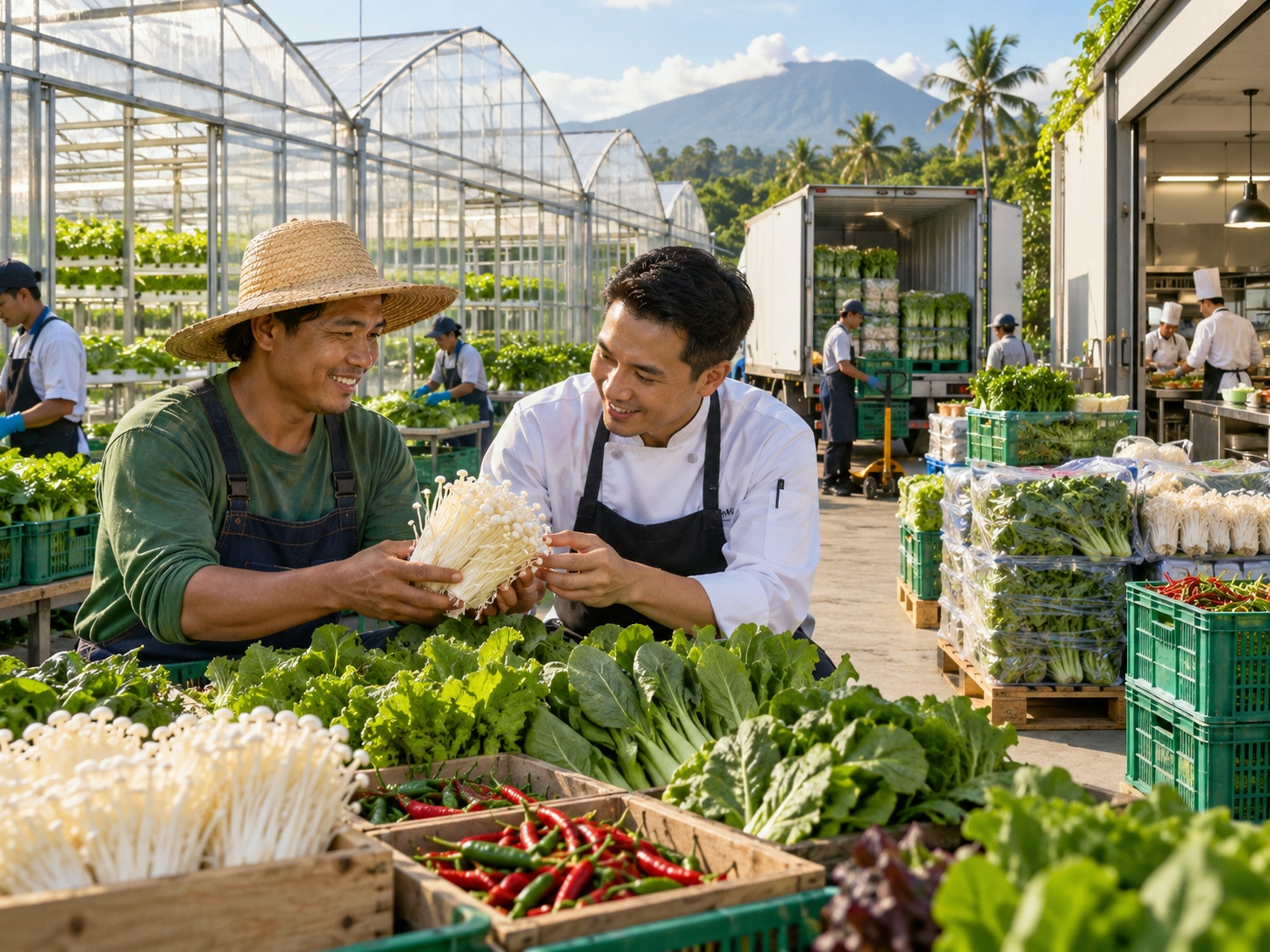
In May 2025, Chef Lord Carlo Bayaban, then executive chef of Hilton Manila, joined a group of chefs on a farm visit to Benguet organized by the Food Forward Initiative. What he saw changed his approach to procurement. “I saw how we can help connect as a hotelier straight to the farm, and what their challenges are as well,” he recalled. “It really opened my eyes. I saw that they have the same concerns as we do in lessening the gap”.
Upon returning, Bayaban implemented a system for Hilton Manila to purchase certain vegetables directly from farmers. The operation started modestly—around 300 kilos of potatoes and 150 kilos of cabbage per week. By the time he was promoted, Hilton was buying twelve to sixteen kinds of vegetables from a farmer cooperative. The quality was competitive: baby carrots and Japanese cucumbers sourced from Benguet farmers proved superior to imported alternatives, and at lower cost.
Bayaban’s experience is not unique. Across the Philippines, a growing number of hotels, restaurants, and institutional kitchens are experimenting with direct sourcing from local farms. The motivations vary—cost savings, freshness, sustainability credentials, and a genuine desire to support rural livelihoods—but the challenges are remarkably consistent.
The Communication Barrier
One of the most persistent obstacles is not logistical but linguistic. “You can see farmers getting disappointed because they don’t understand the language of the purchaser,” Bayaban explained. “Farmers are good at farming, harvesting, and selling, but you can’t tell them to plant only up to two inches or else you won’t buy it. On the corporate side, they’re required to have ISO compliance, and farmers may not understand this”.
Bridging this gap requires deliberate effort from both sides. Bayaban’s approach was to provide clear examples of what would pass and fail hotel standards, rather than relying on abstract specifications. “What you understand is quality. I won’t accept anything spoiled… We’re paying for quality,” he told farmers. This kind of plain-language communication—translating corporate requirements into practical farming terms—is essential for building trust and consistency.
Logistics and Post-Harvest Losses
Even when communication improves, physical infrastructure remains a bottleneck. “After harvest, through logistics, it gets [to Manila] bruised. We need to fix that,” Bayaban noted. “While it’s the farmer’s job to provide quality, it’s the government’s job to provide the logistics so that these quality harvests get to Manila intact. Our job as end-users is to make sure we buy everything”.
The logistics challenge is well documented. The Philippines’ largest third-party logistics provider estimates that around 70 percent of trucks on Philippine roads return empty after completing deliveries—an inefficiency that drives up costs and undermines the viability of farm-to-kitchen supply chains. Inter-island shipping costs have climbed by as much as P10 per kilogram, and farmers in Benguet have begun delaying harvests or risking spoilage as they wait for better prices to offset rising transport expenses.
Institutional Buyers and the Cash Flow Problem
For farmers accustomed to cash transactions at local markets, the payment terms of institutional buyers can be a shock. “They won’t pay cash. It’s a minimum of 30 days,” Bayaban warned. “Farmers should be ready for that”. This cash flow gap can be crippling for smallholders who lack access to working capital. Bridging it requires either intermediary financing or a shift in how agricultural cooperatives manage their finances.
Government has a role to play as well. The Department of Agriculture’s job, Bayaban argued, is to ensure that Good Agricultural Practices (GAP) certified farmers are able and know how to complete the requirements set by institutional buyers. That means not just certification but ongoing technical assistance and market facilitation.
The Path Forward
The farm-to-kitchen movement in the Philippines is still in its early stages, but the momentum is real. The DA and the Department of Tourism have partnered to develop a roadmap for food and farm tourism, with pilot areas in Bohol, Iloilo, and Benguet. These initiatives recognize that the gap between farmers and institutional buyers is not inevitable—it is a coordination problem that can be solved with the right mix of communication, infrastructure, and financing.
For chefs like Bayaban, the reward is not just cost savings but a deeper connection to the ingredients they serve. “We try to advocate a farm to plate initiative,” he said. For farmers, the reward is access to stable, high-value markets that recognize quality and pay accordingly. The challenge is scaling that connection from a handful of pioneering hotels to the thousands of restaurants and food businesses that make up the Philippine culinary industry.