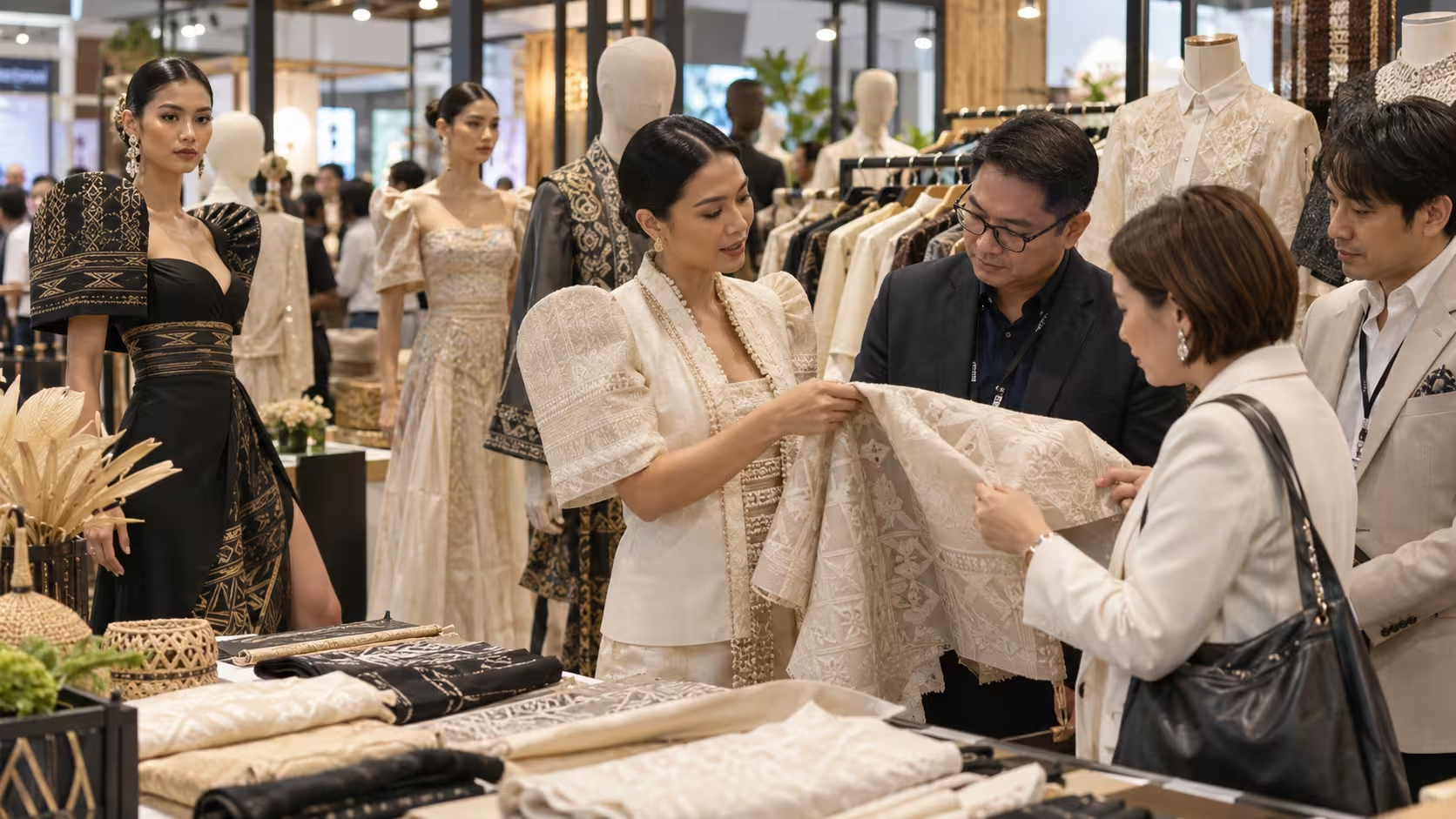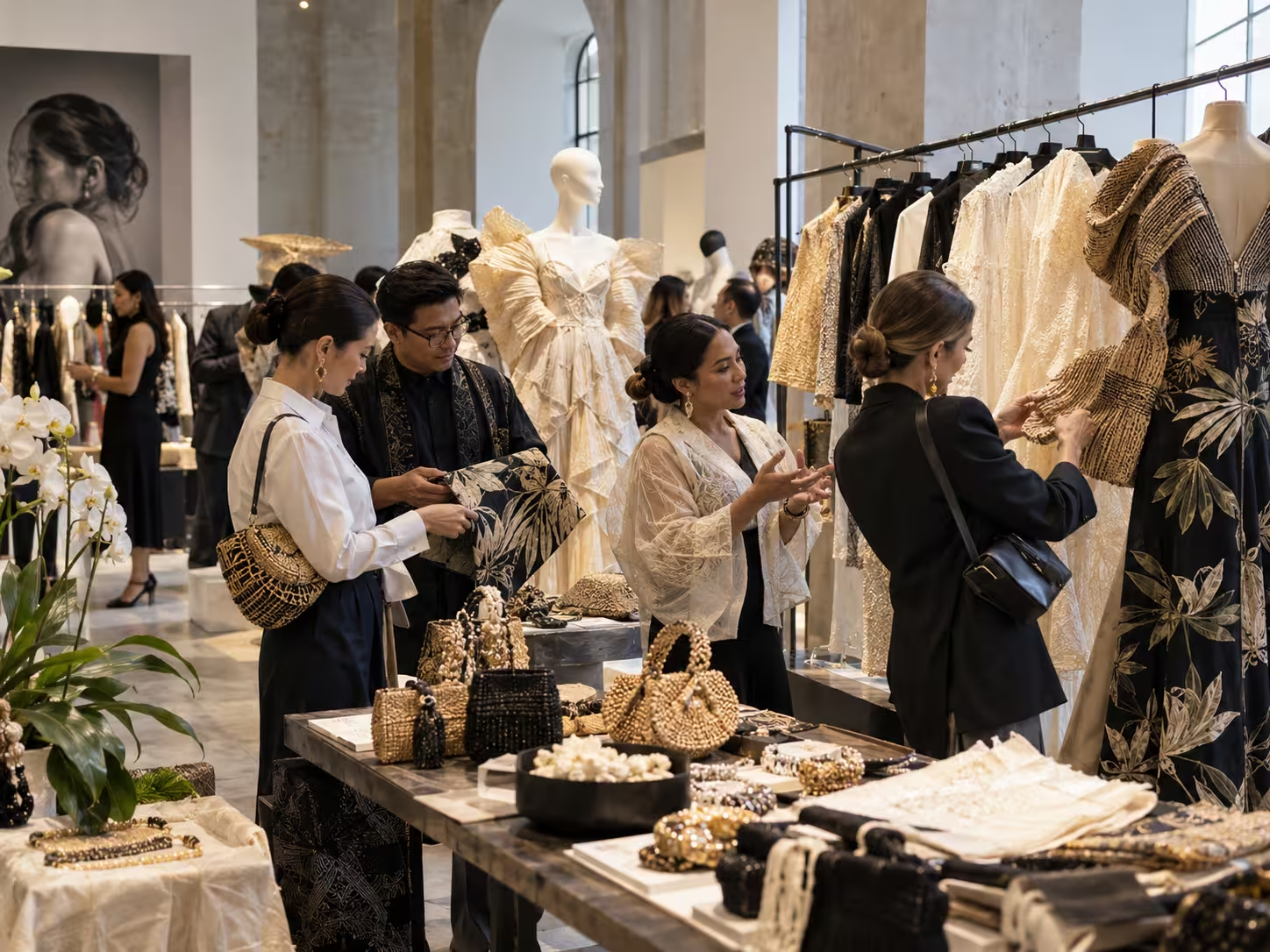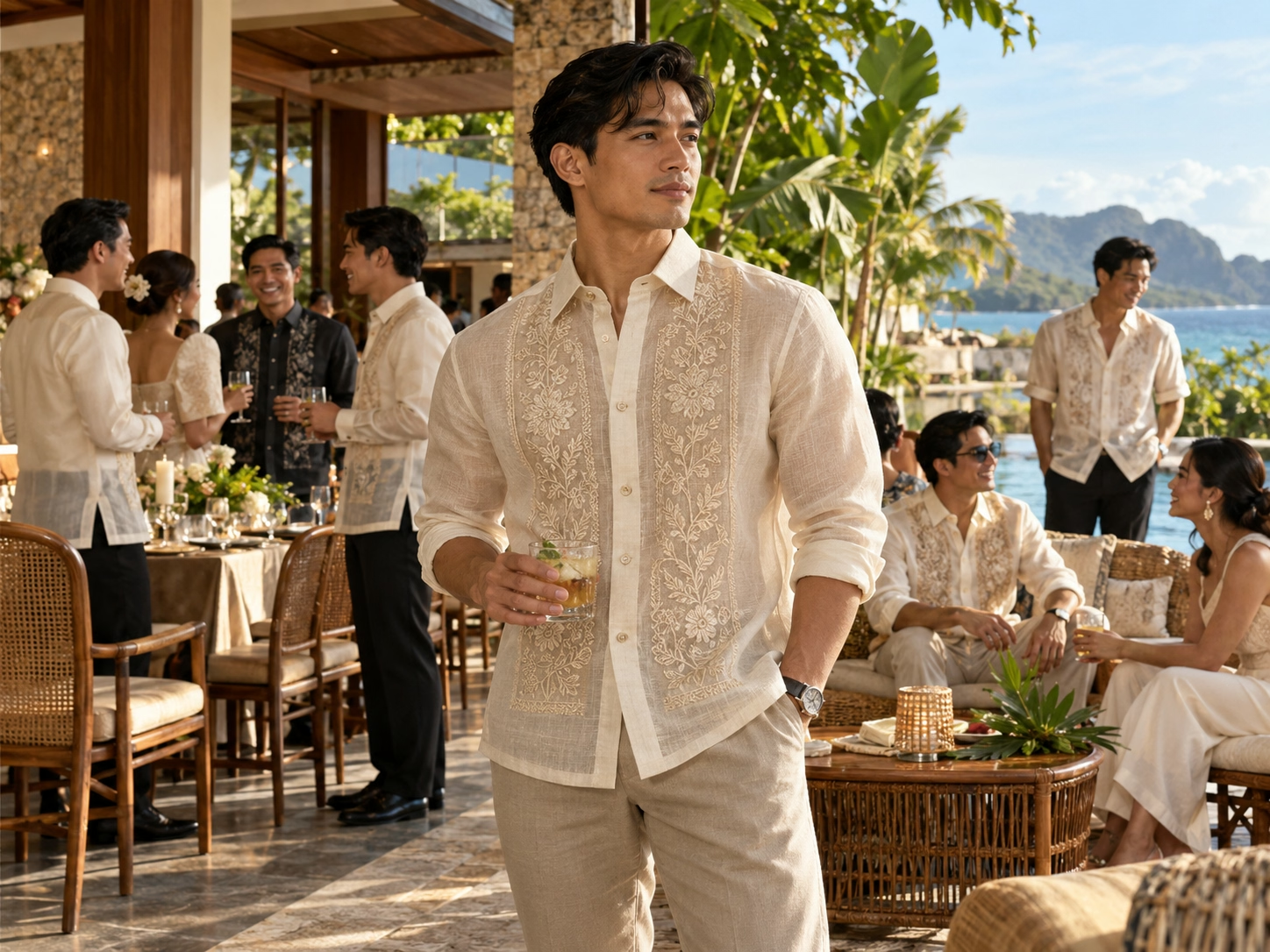
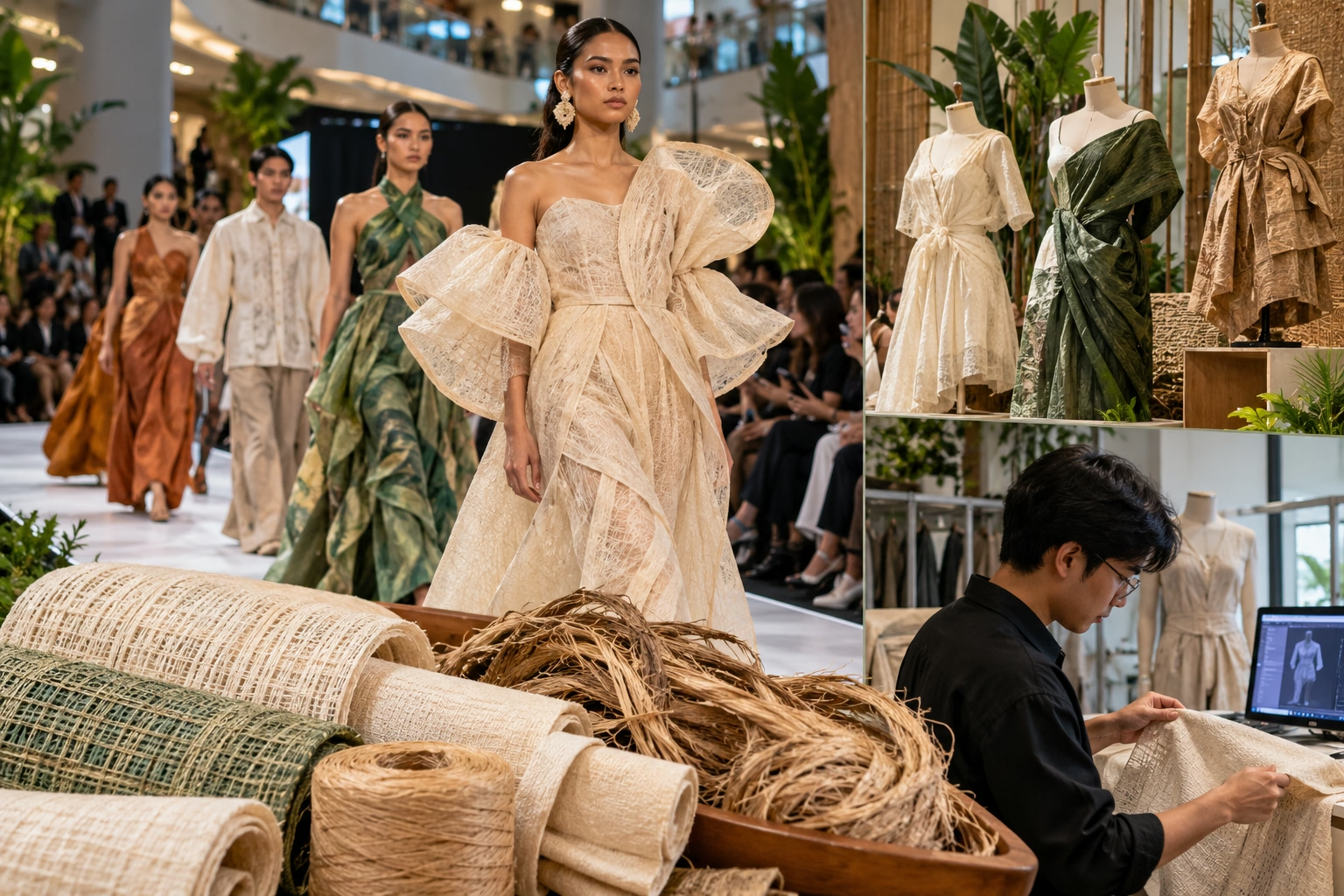
Fashion weeks are usually judged by silhouettes, styling, and front-row wattage. MNL Fashion Week 2026 offered a quieter but potentially more consequential metric: what the clothes were made of. Through a partnership with the Department of Science and Technology – Philippine Textile Research Institute (DOST-PTRI), designers were provided with Philippine Tropical Fabrics, and the results were showcased not only on the runway but in a pre-exhibition of ready-to-wear pieces at SM Aura.
More Than a Fabric Sourcing Exercise
The collaboration was framed around a dual mandate: empowering young and emerging Filipino designers while encouraging the use of locally developed textiles. That framing matters because it avoids the trap of treating local fabric as a decorative heritage gesture. DOST-PTRI’s involvement brought a research-and-development dimension — the fabrics were not simply sourced but positioned as materials with technical and expressive potential.
From Piña to AbacaTek
The material range included piña, piña blends, and other Philippine tropical fabrics, connecting contemporary ready-to-wear to fiber traditions that have often been confined to formalwear or souvenir markets. In Randolf’s The Waiting Room, designer RJ Santos selected AbacaTek’s abaca-based textile, integrating it into a collection otherwise driven by emotional narrative rather than material demonstration. The effect was subtle but important: the fabric became part of the story, not a label pinned onto it.
Yong Studio and the Sustainability Conversation
Yong Studio approached the brief from an environmental angle, building a collection whose color story moved from vivid nature-inspired shades toward restrained tones, creating a sense of gradual disappearance. Deadstock fabrics supplied much of the collection’s visual and tactile character, while varied textures and unexpected contrasts kept the looks dynamic. The emphasis on versatility made the sustainability message feel wearable rather than preachy — a necessary shift if local textile advocacy is to reach beyond the already converted.
The Research Behind the Runway
DOST-PTRI’s presence also signals that Philippine textile development is increasingly entangled with technology. The institute has been applying digital tools to textile documentation, body sizing, pattern recognition, quality assurance, and authentication, and has brought those initiatives into public conversations about AI and design. When a designer works with a DOST-PTRI fabric, they are not only supporting local agriculture and weaving communities; they are participating in a broader effort to make Philippine textiles legible to modern production systems.
John Lozano described the DOST-PTRI support as “incredibly meaningful,” saying it demonstrated that the work of MNL Fashion Week “has a purpose, which is to really empower and promote the use of Filipino fabrics”. The 2026 partnership did not solve the cost, scalability, or supply-chain challenges that still limit Philippine tropical fabrics. It did something more immediate: it put those fabrics in front of an audience trained to look closely at clothes, and asked designers to make them argue for themselves.