The international fashion industry is constantly looking for fresh voices, and the Philippines has many young designers who deserve serious attention. Their work reflects a generation that is creative, culturally aware, digitally connected, and unafraid to experiment. Instead of presenting Philippine fashion as something traditional or limited, these designers are showing that it can be contemporary, luxurious, edgy, and globally competitive.
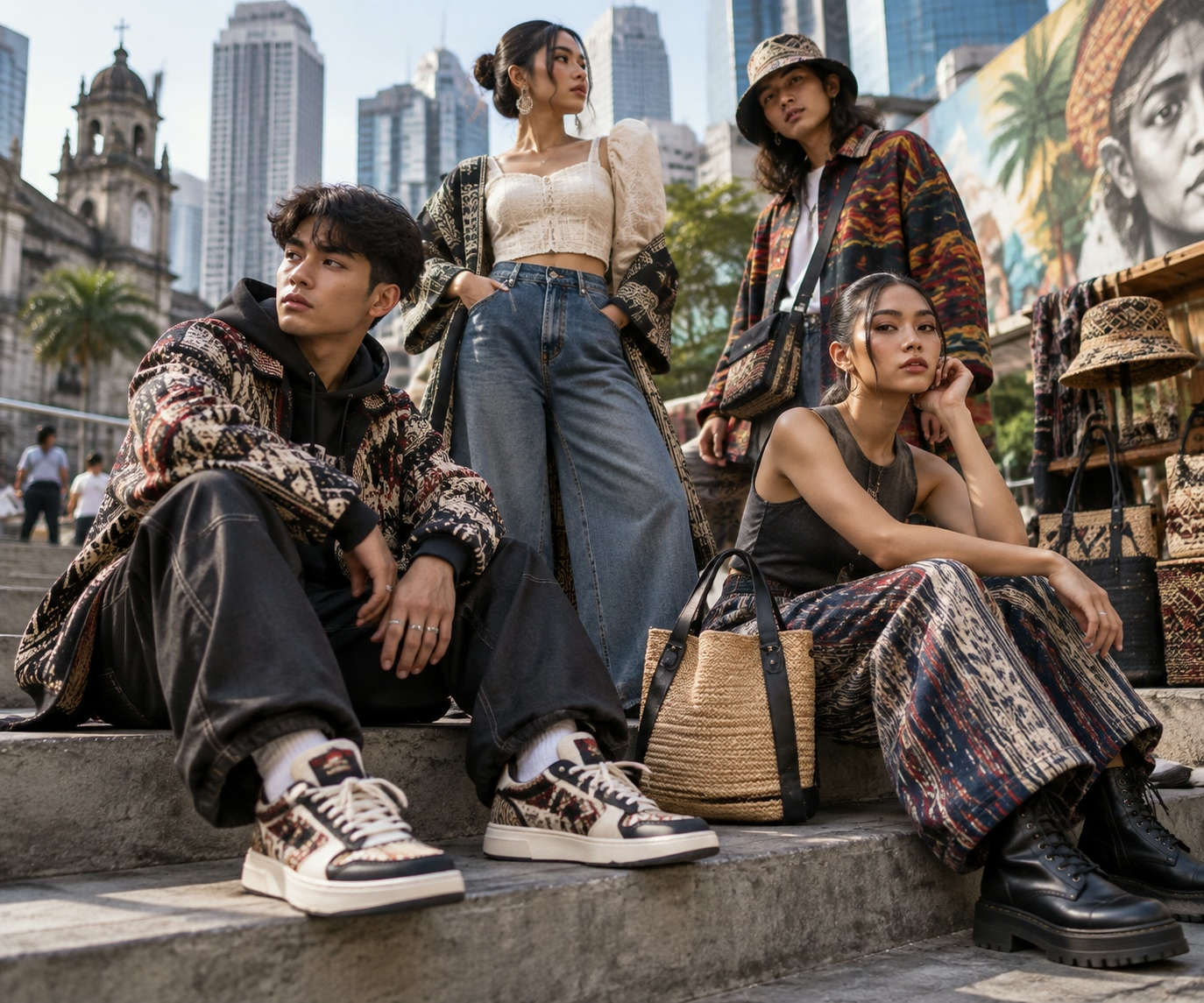
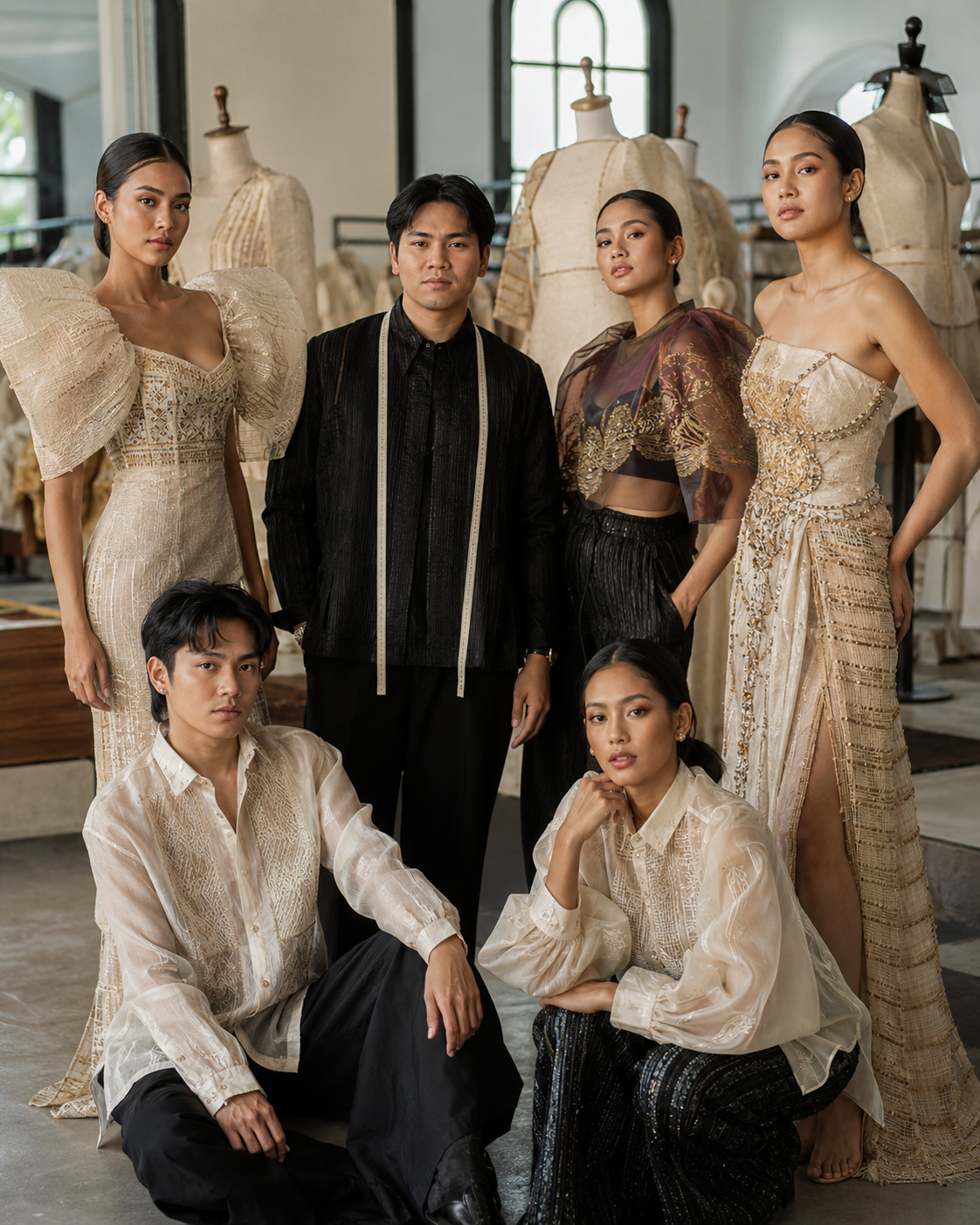
A major strength of young Filipino designers is their relationship with heritage. Philippine fashion has many recognizable cultural references, including the barong, the butterfly sleeve, piña-like textures, handwoven fabrics, and intricate embroidery. In the hands of younger creatives, these elements are no longer used only for formal or ceremonial clothing. They are being transformed into modern jackets, sculptural dresses, relaxed separates, eveningwear, and conceptual runway pieces. This gives their work a strong identity without making it feel old-fashioned.
The rise of designers such as Jaggy Glarino, Renz Reyes, Carl Jan Cruz, Chris Nick, and other newer Filipino labels shows how varied the country’s fashion landscape has become. Some designers lean toward clean lines and intelligent tailoring. Others create bold shapes, playful proportions, glamorous pieces, or street-influenced clothing. This variety is important because it proves that Filipino fashion is not a single aesthetic. It is a growing movement with many voices, moods, and creative directions.
Their potential also comes from the Philippines’ unique cultural background. Filipino style is shaped by local traditions, tropical living, colonial history, religious ceremonies, pop culture, and global media. Because of this, young designers can draw from many sources without losing their sense of identity. A collection may feel Asian, Latin-influenced, urban, romantic, and modern all at once. This layered perspective can become a major advantage in the global market, where originality is highly valued.
Craft remains one of the strongest foundations of Philippine fashion. Many Filipino garments are admired for their detail, whether through hand embroidery, beadwork, fabric manipulation, or careful finishing. Young designers who collaborate with local artisans can create pieces that carry both beauty and cultural meaning. These collaborations can also support communities that preserve traditional skills. In a luxury market that increasingly values authenticity, this kind of craftsmanship can help Filipino fashion stand out.
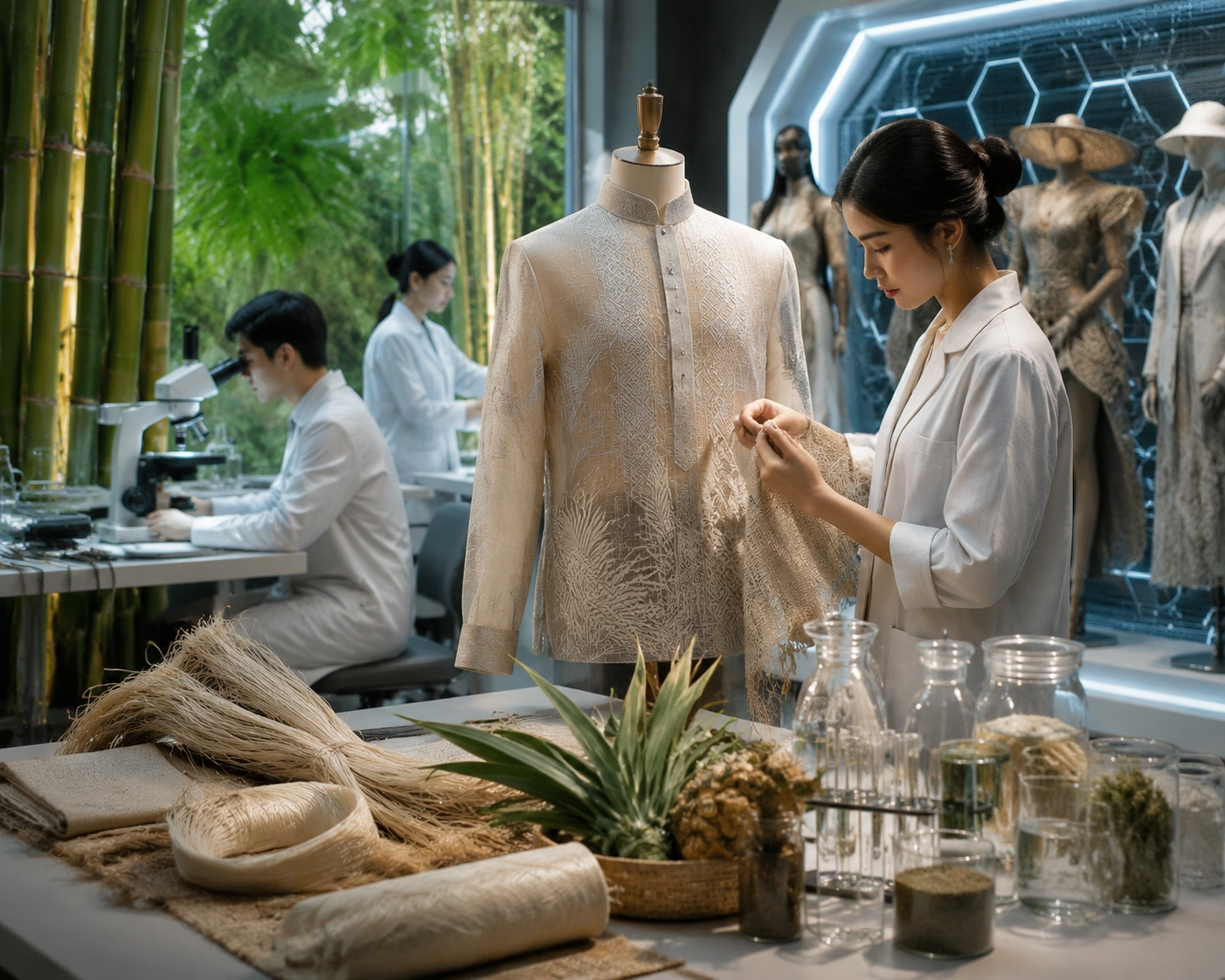
Sustainability gives this generation another reason to be noticed. Many younger designers are more conscious of waste, ethical production, and the environmental cost of fashion. Instead of producing huge volumes, some focus on smaller collections, custom orders, upcycled materials, or locally made pieces. This approach matches the growing demand for fashion that is thoughtful rather than disposable. For Filipino designers, sustainability can be more than a trend; it can become a natural extension of community-based craft and resourcefulness.
Of course, there are still real challenges. Young designers in the Philippines often have fewer resources than those based in major fashion capitals. International shows, fabric sourcing, production scaling, public relations, and global distribution require money and strong industry connections. Without proper support, even highly talented designers may struggle to reach wider audiences. However, the digital age has created new opportunities. Social media, online stores, fashion editorials, and celebrity placements can help young Filipino brands gain attention without relying only on traditional fashion systems.
What makes these designers especially exciting is their confidence. They are not asking whether Filipino fashion belongs on the world stage; they are proving that it does. Through original silhouettes, cultural storytelling, refined craft, and modern branding, young Filipino designers are building a future where Philippine fashion can be recognized internationally. Their work has the power to surprise the industry, inspire younger creatives, and show the world that the Philippines is a serious source of fashion innovation.