Western fashion has greatly shaped the Philippine fashion industry, influencing design, production, marketing, retail, and consumer preferences. From colonial tailoring to modern fast fashion, Western styles have affected how clothes are made, sold, and worn across the country. The result is a fashion industry that constantly balances international trends with Filipino taste, climate, culture, and craftsmanship.
The roots of this influence can be traced to Spanish and American colonial periods. Spanish fashion introduced formal clothing, religious modesty, embroidered garments, and European-style silhouettes. These influences helped shape iconic Filipino clothing such as the baro’t saya, traje de mestiza, and terno. Although these garments are now seen as traditional, they developed through the combination of local materials and Western ideas of elegance.
American influence later made fashion more commercial and practical. Western-style ready-to-wear clothing became increasingly popular, especially in urban centers. Department stores, schools, offices, and mass media helped spread American fashion standards. Suits, collared shirts, dresses, skirts, uniforms, denim, and casual wear became part of everyday Filipino wardrobes. This shift created demand for clothing that was affordable, convenient, and modern.
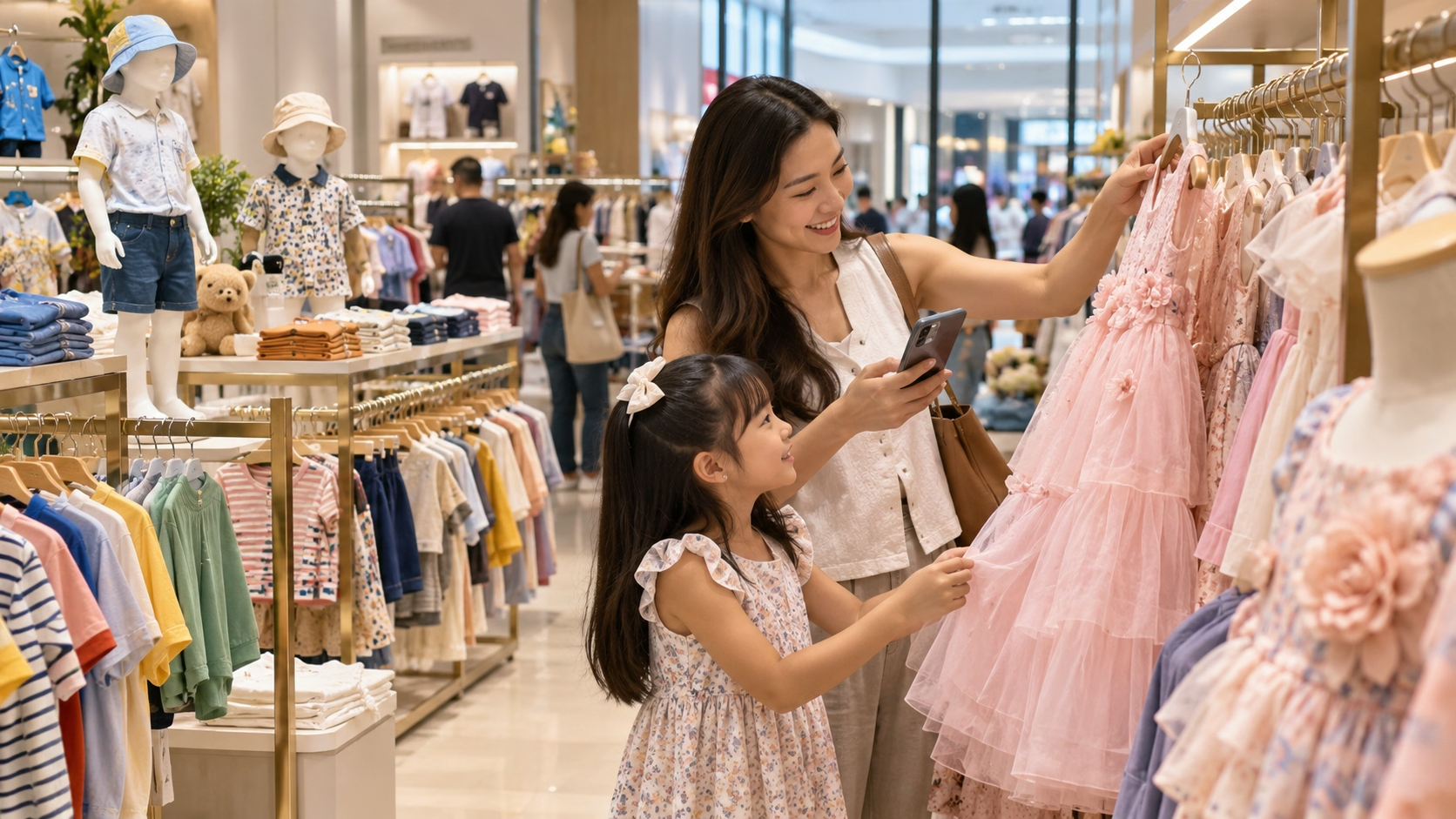
The rise of malls in the Philippines strengthened Western fashion’s presence. Shopping centers became major spaces where Filipinos encountered global brands, Western-inspired window displays, seasonal collections, and lifestyle marketing. Malls did not only sell clothes; they promoted ideas of beauty, success, comfort, and modern identity. Western fashion became connected with urban living, career ambition, and social mobility.
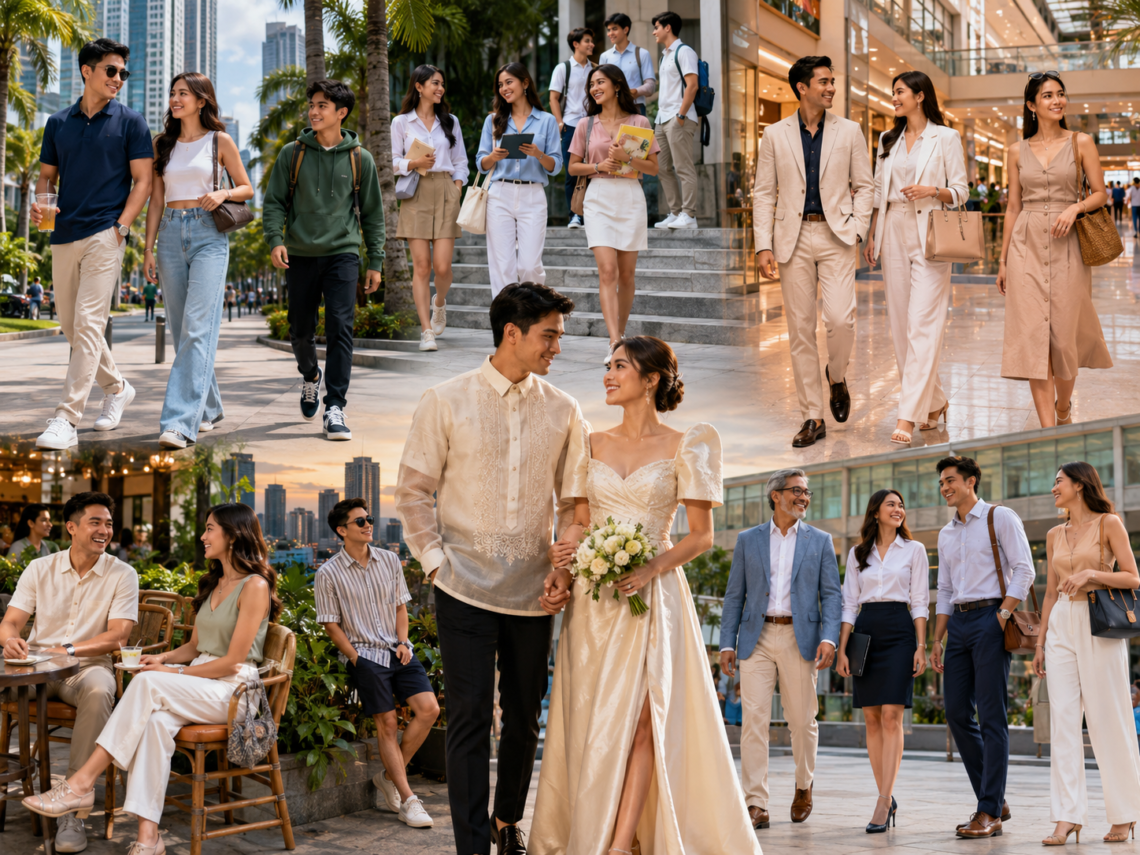
Filipino designers have also been deeply influenced by Western fashion systems. Many use techniques associated with European couture, American ready-to-wear, and global runway trends. Wedding gowns, evening dresses, business suits, cocktail dresses, and pageant gowns often follow Western silhouettes. Ball gowns, mermaid cuts, tuxedos, blazers, and minimalist dresses are common in formal Filipino fashion.
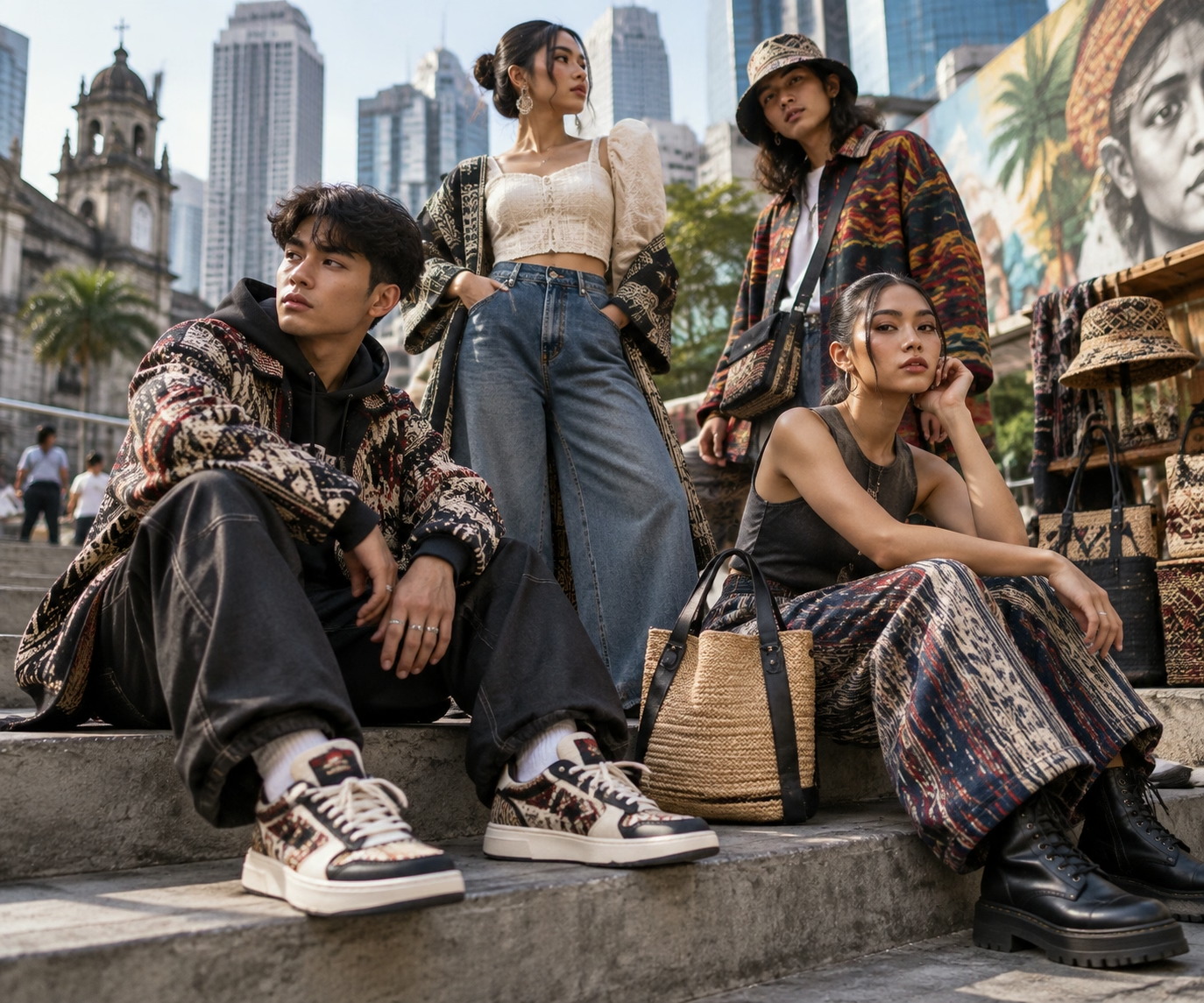
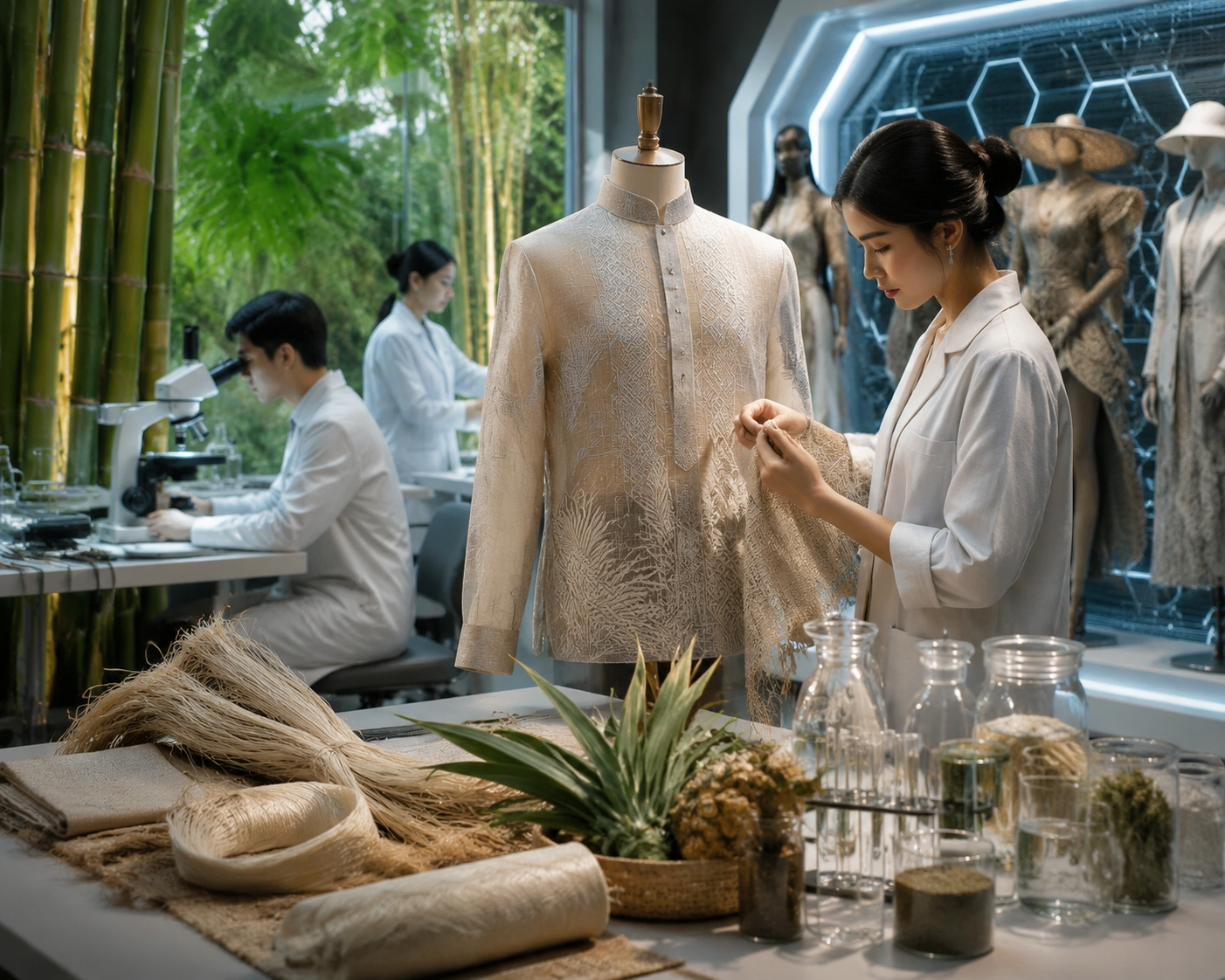
At the same time, the Philippine fashion industry has not abandoned local heritage. Many designers combine Western construction with Filipino textiles such as piña, jusi, abaca, and handwoven fabrics from communities like the T’boli, Ifugao, Ilocano, and Maranao. This creates garments that are globally recognizable but culturally rooted. A modern gown may have a Western silhouette while using indigenous fabric or embroidery inspired by local traditions.
Western fashion has also influenced the business side of clothing. Branding, fashion photography, runway shows, seasonal collections, influencer marketing, and magazine styling all follow models developed in Western fashion capitals. Filipino designers and brands often look to New York, Paris, Milan, and London for inspiration, while also responding to local consumers.
Fast fashion has intensified this influence. Many young Filipinos now wear Western-inspired streetwear, athleisure, denim, crop tops, sneakers, hoodies, and minimalist basics. Social media accelerates these trends, allowing styles from the United States and Europe to reach Filipino consumers almost instantly. However, these trends are usually adapted to local realities, such as warm weather, commuting conditions, school dress codes, workplace expectations, and religious values.
Western fashion has therefore helped modernize and commercialize the Philippine fashion industry. Yet the strongest Filipino fashion does not merely imitate Western trends. It uses them as tools, combining global style with local meaning. This balance allows Philippine fashion to remain competitive, expressive, and culturally distinct.