A quiet revolution is unfolding in Metro Manila’s dining scene, where chefs are treating fermentation not as a preservation necessity but as a creative frontier. At Metiz in Makati, Chef Stephan Duhesme champions Filipino ingredients and local producers through modern dishes grounded in memories of regional flavors. Following a full renovation, Metiz has evolved into a more immersive tasting menu experience, deepening its focus on fermentation, seasonality, and provincial Filipino ingredients. The restaurant’s tasting menu includes fermented rambutan, santol, pomelo, mangosteen, and piña vinegar curdled cream—a testament to how far the fermenter’s reach can extend.
The Fermentation Lab-Cum-Canteen
At Now Now in Mandaluyong, fermentation is the organizing principle. What began as a pandemic food concept started by friends Maxine and Bryan Kong, Patrick de Veyra, and Chino Recto, Now Now strives to take fermented dining in new directions. Bryan serves as Director of Fermentation, and the team pairs with Polish chef Mateusz Luczaj and pastry chef Lisane Luczaj to explore the possibilities of slow-food dining. The menu plays with fast-food culture through a high-dining lens: an “Instant Ramen” made with housemade garum, dashi, and chicken paitan; a “Hamburger” featuring zabuton koji steak, deviled egg salad, and fermented banana salsa; and a palate-cleansing tiger chili fermented in salt and vinegar. This is food that makes diners think about aging and the processes of making.
Reimagining Middle-Class Cuisine
At Tadhana Makati, Chef Frances Tariga returns home to launch a 10-course tasting menu (16 bites) that reimagines everyday Filipino “middle-class cuisine” such as afritada, champorado, taho, and pares using global techniques like fermentation and dry-aging. The approach combines modern techniques with deep-rooted local references, positioning fermentation as a bridge between tradition and innovation rather than a departure from it.
Why Chefs Are Turning to Fermentation
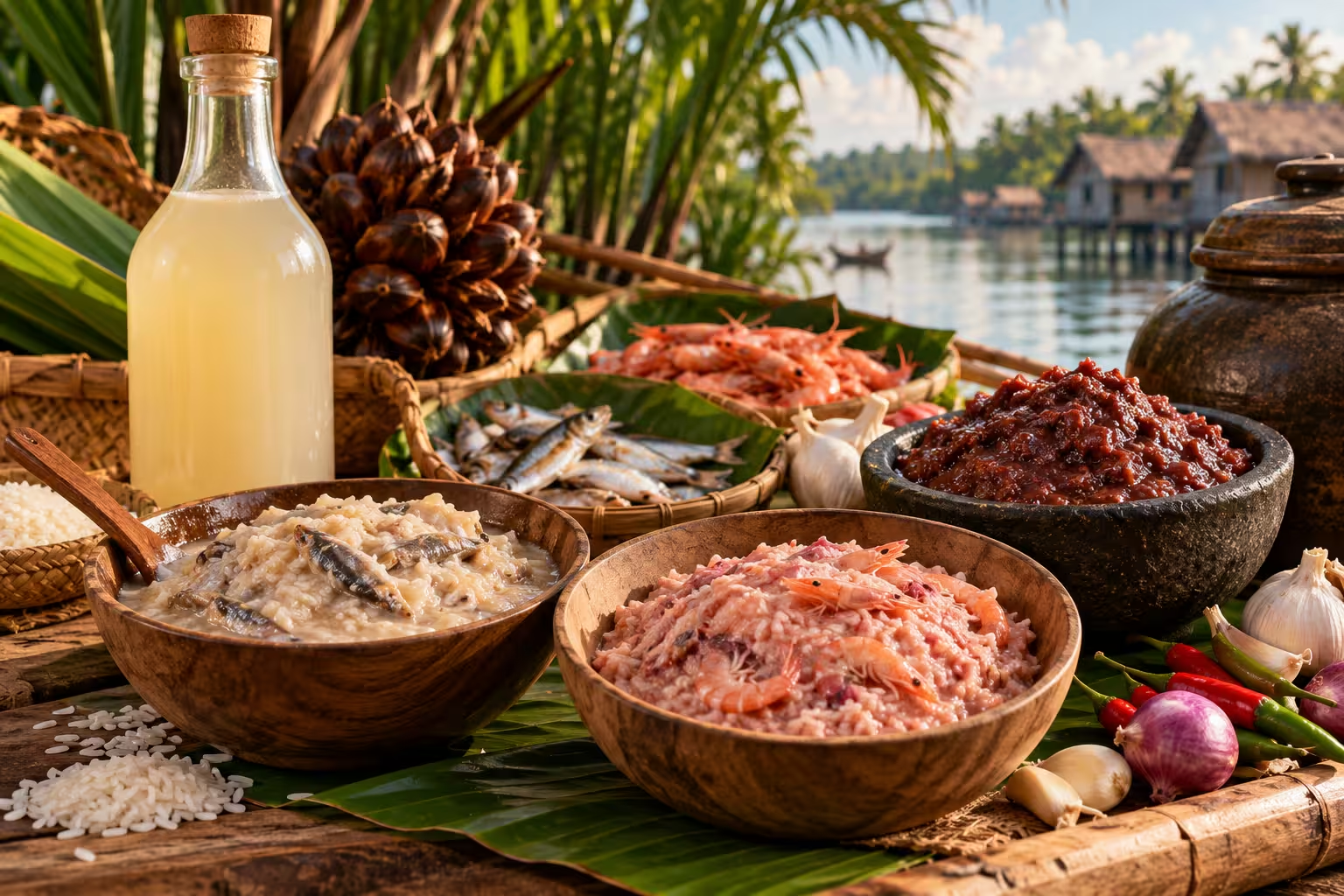
The appeal is multifaceted. Fermentation offers chefs a way to build complexity and depth without relying on imported ingredients. It also aligns with the global demand for gut-healthy, functional foods. By using bagoong and burong as base notes rather than mere condiments, chefs are demonstrating that these ferments can anchor a modern tasting menu. The scientific community is taking notice, too: research from the University of the Philippines has shown that burong isda contains Limosilactobacillus fermentum strains with probiotic and antifungal traits, giving chefs a compelling narrative to pair with their dishes.
The Standardization Challenge Behind the Scenes
The creativity on the plate is supported by quieter work behind the scenes. The Department of Science and Technology (DOST) has been developing standardized starter cultures to ensure that fermentation is controlled and products meet safety standards—a crucial step for chefs who want to scale their ferment-driven concepts. At the same time, initiatives like the DOST’s GRIND Program are working with traditional burong isda makers in Pampanga to propose Philippine National Standards, ensuring that the craft is preserved even as it enters new culinary contexts.