
A Framework Built on Intersection
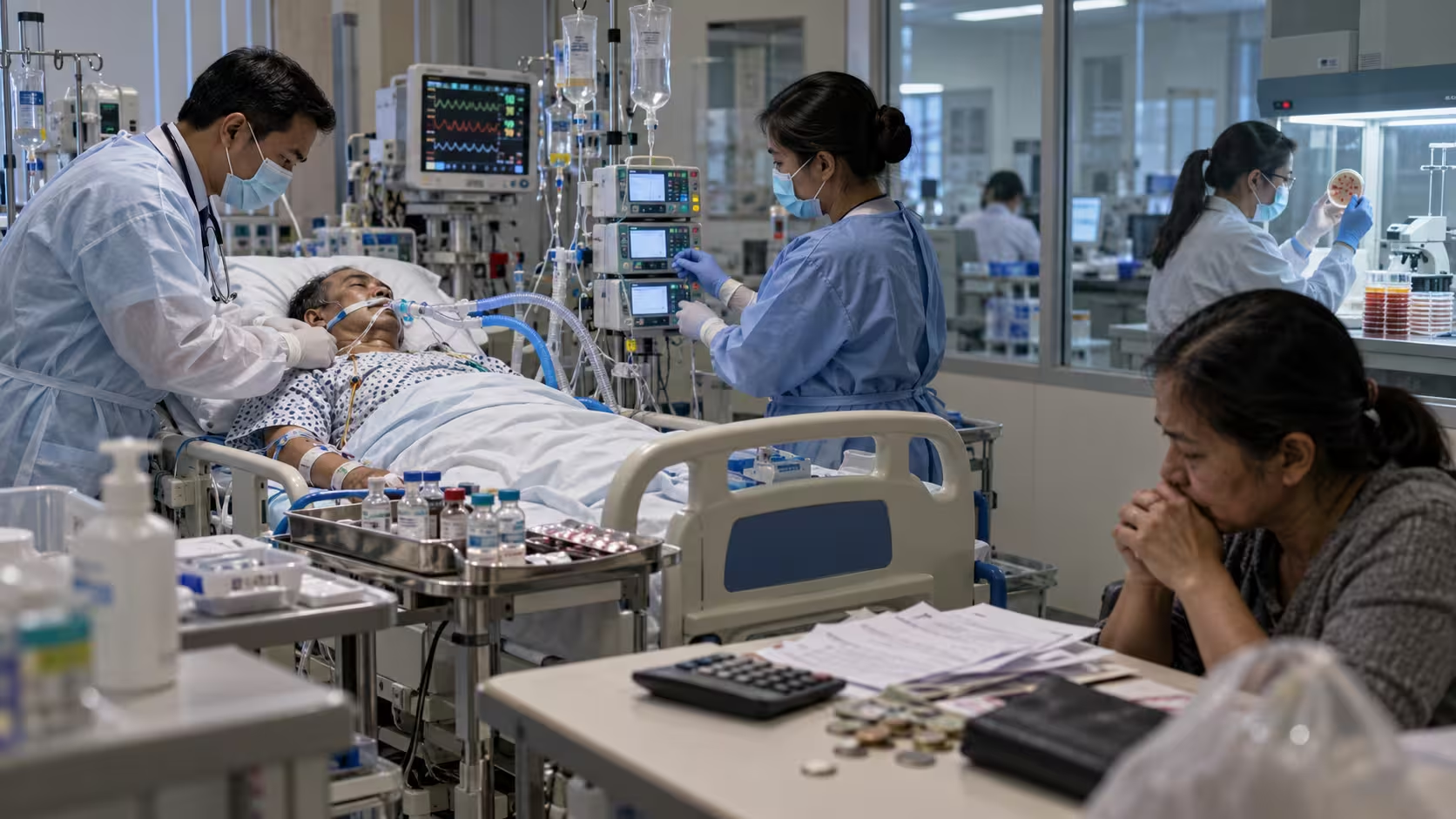
Antimicrobial resistance does not respect sectoral boundaries. A resistance gene selected in a swine farm can appear in a hospital ICU within months. Recognizing this, the Philippines embedded the One Health approach at the core of its Philippine National Action Plan on Antimicrobial Resistance 2024–2028, with the Inter-Agency Committee on Antimicrobial Resistance (ICAMR) serving as the coordinating body across human health, animal health, agriculture, and environment.
Genomic Surveillance as the Connective Tissue
The RITM AMR Network Symposium in November 2025 represented the most visible institutional expression of this framework to date. Six sessions covered AMR in viruses, bacteria and fungi, tuberculosis, and leprosy, bringing together laboratory scientists, clinicians, and regional health directors under a single collaborative umbrella. Dr. Ana Liza Duran, RITM Director, emphasized that the Network’s objectives include data sharing, technical expertise, and strategic resource allocation—three pillars that have historically been siloed.
By September 2026, the ARSRL had hosted a Digital Epidemiology Workshop for sentinel sites, equipping regional laboratories with tools to integrate genomic data into routine surveillance. This matters because resistance trends in Davao City may differ from those in Metro Manila, and national policy must account for regional heterogeneity.
The Livestock Sector: Policy Ambition Meets Enforcement Reality
The Philippines has committed to phasing out sub-therapeutic antimicrobial use for growth promotion in livestock. The FAO’s 2026 statement on the economic cost of AMR in livestock included a Philippine commitment to “gradual elimination of the use of antimicrobial growth promoters”. The Department of Agriculture’s Bureau of Agriculture and Fisheries Standards (DA-BAFS), in collaboration with the FAO, has been developing Philippine National Standards for integrated monitoring and surveillance of foodborne AMR.
Yet the gap between policy and practice remains wide. A 2025 review in Annals of Tropical Research noted that in developing nations such as the Philippines, enforcement of antibiotic restrictions in livestock production remains weak due to limited resources, inadequate training, and the lack of affordable alternatives. The WOAH Asia office convened a public-private partnership workshop in October 2025 specifically to address this enforcement gap, signaling that the private sector’s engagement is now considered indispensable.
Environmental Surveillance: The Missing Link
The environmental dimension of One Health in the Philippines is the least developed. A 2025 review in Frontiers in Microbiology identified critical research gaps in environmental reservoirs, spillovers, and source tracing. Hospital wastewater studies from Laguna and Tacloban have demonstrated that resistance genes persist and potentially disseminate through effluent systems, yet standardized environmental surveillance protocols remain absent.
What Coordination Actually Requires
The Philippine National Action Plan allocates resources for AMR awareness campaigns, surveillance expansion, and regulatory strengthening across sectors. However, the plan’s success depends on something less tangible: sustained political commitment across administrations and consistent funding for laboratory capacity at regional levels. The RITM’s genomic successes at international conferences in 2026—including a poster award at the Wellcome Genome Campus—demonstrate technical capability. The challenge is scaling that capability from sentinel sites to the entire archipelago.