Breaking Down the Silos
For decades, mental health and physical health have been treated as separate domains in public health systems worldwide. In the Philippines, a new generation of programs is challenging that divide, recognizing that adolescent well-being cannot be achieved by addressing one without the other. Depression affects sleep, appetite, and energy levels. Chronic illness fuels anxiety and isolation. The two are inseparable.
Project Tib-ong Kabataan: A Comprehensive Community Approach
Perhaps no program better exemplifies this integrated philosophy than Project Tib-ong Kabataan, the flagship youth health initiative of the Iloilo Provincial Government. “Tib-ong,” meaning “to uplift” in Ilonggo, brings together multiple provincial offices, the Department of Education, the Philippine Red Cross, and USAID’s ReachHealth Project to deliver a package of services for adolescents.
In July 2026, a Project Tib-ong Kabataan outreach at White Elementary School in Dingle, Iloilo, provided Indigenous Peoples (IP) students with a comprehensive suite of services: discussions on anti-bullying and mental health, prevention of smoking and vaping, free medical and dental consultations, and HIV screening. The program is now undergoing validation for the prestigious Galing Pook Award, which recognizes innovation and excellence in local governance.
The Teen Center Model: One-Stop Support
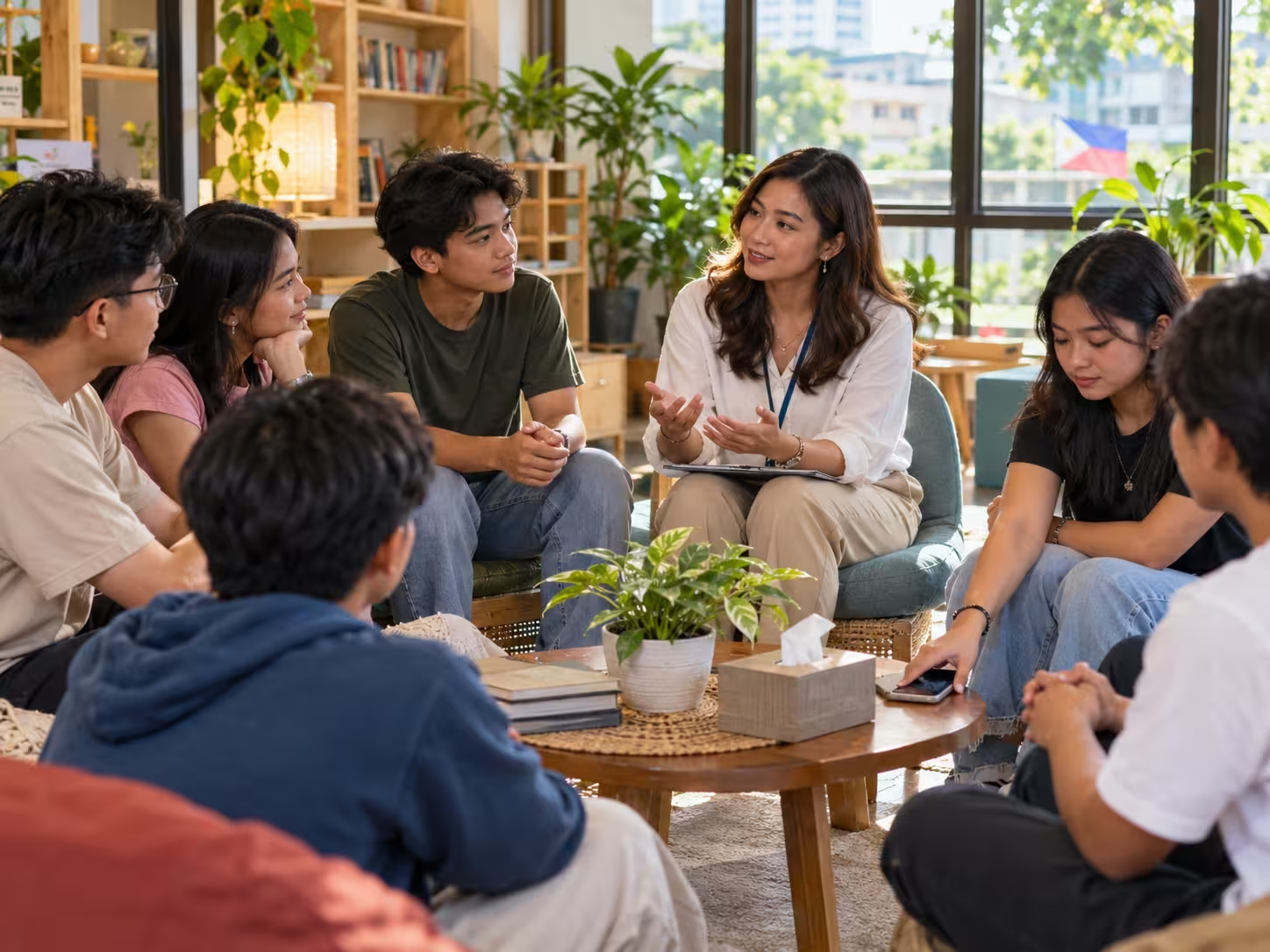
The Iloilo Teen Centers, funded under the PRIME program, embody the same integrated ethos. These school-based facilities offer counseling and mental health support alongside adolescent health services, responsible parenthood education, and life skills training—all under one roof. The logic is simple: a teenager struggling with anxiety may also need reproductive health information. A student facing bullying may also need nutritional support. By co-locating services, the centers reduce barriers to access and destigmatize help-seeking.
The Digital Dimension: AI and Peer Support
The 2026 Mind Health Report revealed that 29% of Filipinos, predominantly aged 18–34, regularly use AI-enabled tools for mental health management—higher than the global average of 21%. However, 33% felt uneasy after receiving AI guidance, and 25% received recommendations that led them to engage in harmful behavior. The finding underscores the need for professional, human-centered care that AI cannot replace.
In response, the Commission on Population and Development (CPD) Region VI launched the third version of AHlam Na!, a mobile application designed to promote adolescent sexual and reproductive health information and services. The app represents an effort to meet young people where they are—on their phones—while connecting them to professional support.
The Family as a Foundation
Recognizing that adolescent well-being is inseparable from family dynamics, the Iloilo government has also strengthened its Parent Education on Adolescent Health and Development (PEAHD) program. The initiative equips parents with the knowledge and skills to guide their children through the challenges of adolescence, addressing risks such as teenage pregnancy and early marriage.
A Holistic Future
The Philippines’ integrated approach to adolescent health in 2026 reflects a growing global consensus: mental and physical health are two sides of the same coin. By combining clinical services, community outreach, digital tools, and family engagement, these programs offer a model that other nations—and other Philippine provinces—would do well to replicate.