Structural Obstacles Within Destination Countries
The health of Filipino migrant workers is shaped as much by conditions in destination countries as by Philippine government policies. Research published in 2026 consistently identifies language barriers, legal precarity, and employment-related exclusions as primary obstacles to healthcare access across multiple host nations. These barriers operate not in isolation but intersect with financial constraints and employer power dynamics to create compounded vulnerability.
Language as a Critical Barrier
In Japan, despite a national health insurance system ensuring universal coverage, bureaucratic and linguistic hurdles restrict accessibility for Filipino migrants. The disconnect between formal entitlement and practical access reveals a critical distinction: insurance coverage does not guarantee utilization when communication infrastructure remains inadequate.
Qualitative research on Filipino migrant care workers in Japan identified language barrier as a distinct stressor, with workers struggling with Kanji (Chinese characters) and verbal communication. This linguistic challenge extends beyond daily workplace interactions to affect healthcare seeking behaviour, as workers may postpone medical consultations rather than navigate unfamiliar medical terminology in a non-native language.
In Taiwan, researchers documented financial, linguistic, and geographical barriers to healthcare access among Filipino migrant domestic workers. The geographical dimension—limited mobility and restricted movement outside employer-designated spaces—compounds linguistic challenges by preventing workers from independently accessing health facilities.
Legal Precarity and Employer Power
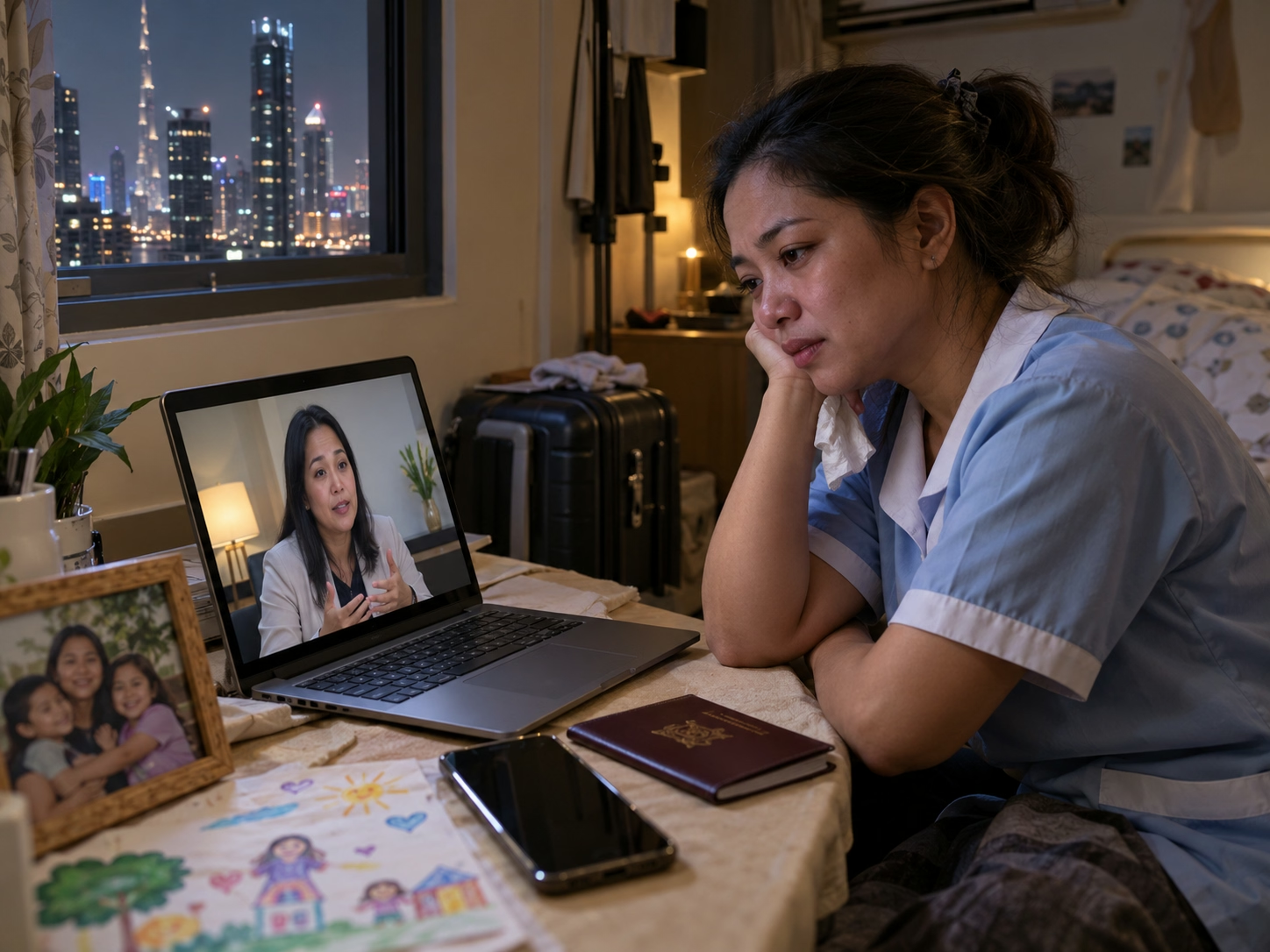
The legal status of migrant workers creates a structural vulnerability that transforms healthcare from a right into a negotiated benefit dependent on employer goodwill. Research on Filipino migrant domestic workers in Taiwan found that employers dictate working and living conditions, hold power leverage over labour brokers, and possess relative financial capability and familiarity with the Taiwanese healthcare system that could help workers overcome health-related challenges.
The inversion of this dynamic—where employers who could facilitate access instead become gatekeepers—creates perverse incentives. Workers who advocate for their health needs risk being perceived as troublesome, potentially jeopardizing contract renewals or employment relationships.
Some participants in the Taiwan study received explicit threats of contract termination and deportation from private labour brokers, a form of coercive control that effectively silences health complaints. This pattern is not confined to Taiwan; the intersection of precarious employment and gender-based violence among migrant women was found to involve employers disregarding women’s health as a barrier to accessing healthcare services.
Financial Barriers and Competing Priorities
A 2026 report from the Philippines revealed that 64% of Filipino families cannot afford a P10,000 hospital bill without incurring debt, pushing many to seek employment abroad. Twenty percent of respondents said they could pay less than P1,000 for a medical emergency without borrowing money or using health insurance.
These economic pressures travel with migrant workers. Research on OFWs in Italy found that many experience declining health because they take on multiple jobs and often skip regular medical checkups despite having access to healthcare. The logic is straightforward: time spent seeking preventive care is time not spent earning remittances that support families left behind.
PhilHealth’s Overseas Reimbursement Limitations
While PhilHealth offers reimbursement for overseas hospitalizations, the process requires submitting foreign medical records, hospital bills, and translated medical certificates within 180 days of discharge. This documentation burden, combined with language translation costs and administrative complexity, renders reimbursement impractical for many workers, particularly those in lower-wage positions.
House Bill No. 2, pending in Congress as of January 2026, seeks to exempt OFWs from mandatory PhilHealth premium contributions, with the national government and employers sharing costs. Labour groups have reported growing dissatisfaction among OFWs over mandatory contributions they describe as difficult to access while working abroad.
The Need for Bilateral Health Agreements
Bilateral labour migration agreements increasingly include health provisions. The Philippines maintains agreements with the United Kingdom (2021), Finland (2025), and Austria (2023), incorporating healthcare protections. The proposed UAE-Philippines insurance framework represents the most ambitious effort to date, potentially allowing workers to access medical services under a dual-country insurance model.
However, bilateral agreements require enforcement mechanisms to translate paper protections into practical access. Without robust monitoring and complaint resolution processes, legal precarity and employer power will continue to shape health outcomes regardless of formal entitlements.