
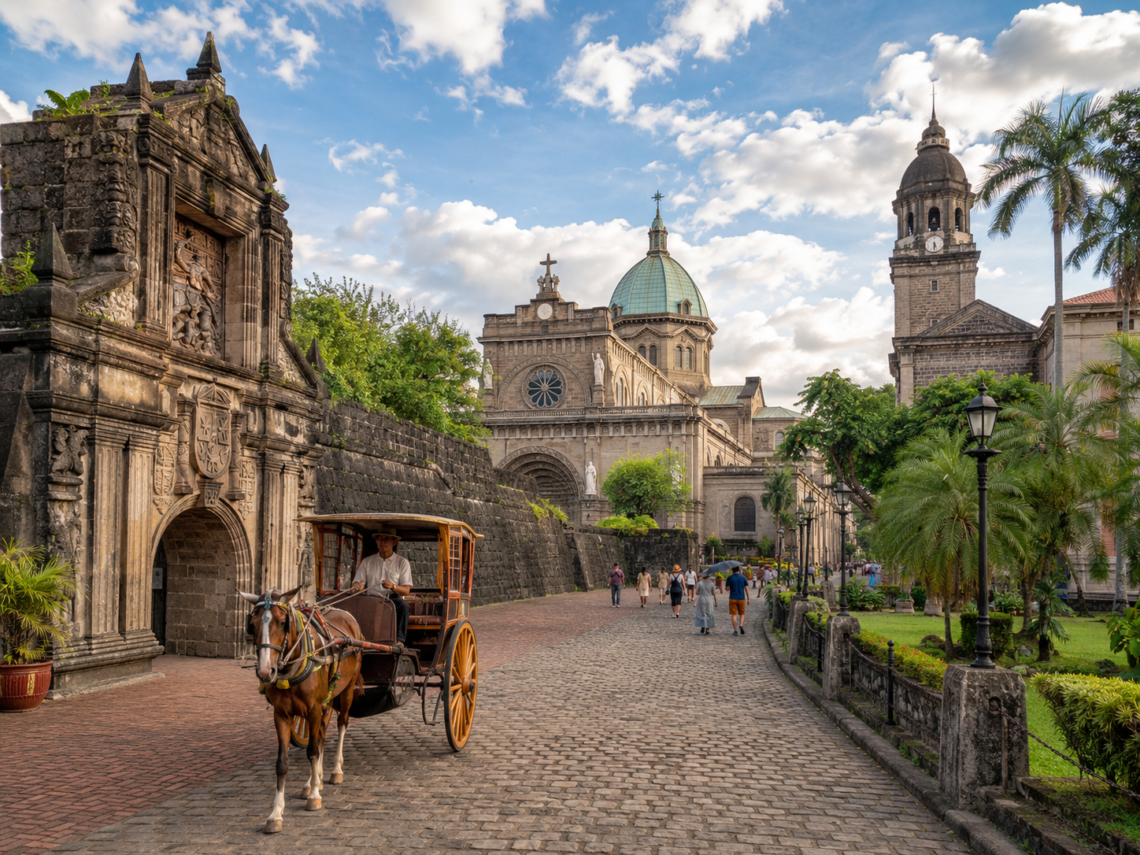
Manila’s Intramuros, famously known as the walled city, embodies centuries of Philippine history in its streets, walls, and architectural marvels. Established in 1571 by Spanish colonizers, Intramuros became the heart of political, religious, and military activity in the capital. Its enduring fortifications, churches, and museums continue to draw travelers who wish to experience a city where history feels tangible at every corner.
The fortress walls of Intramuros were constructed primarily to fend off foreign invaders and pirate attacks, using thick layers of adobe stones. Fort Santiago, a key feature of the walled city, has witnessed pivotal events in Philippine history. Beyond serving as a military defense structure, it became a prison for revolutionaries and intellectuals during colonial and wartime periods. The fort’s museum preserves the memory of José Rizal, whose imprisonment and subsequent execution symbolize the nation’s quest for freedom. Visitors can explore the fort’s bastions, gardens, and exhibits, each telling a story of courage and resilience.
Religious heritage forms the backbone of Intramuros. San Agustin Church is a prime illustration of Spanish baroque influence, with its intricate ceiling murals, gold-plated altar, and historical artifacts. As the oldest stone church in the country, it represents centuries of Filipino faith and artistry. Another religious landmark, Manila Cathedral, has been rebuilt several times due to natural calamities. Its majestic neo-Romanesque architecture and colorful stained-glass panels stand as a testament to Manila’s enduring spiritual devotion and historical continuity.
Beyond architecture, Intramuros offers rich cultural experiences. Museums such as Casa Manila recreate colonial-era lifestyles with detailed room layouts, furniture, and traditional décor. Visitors can also enjoy guided walking tours or ride the iconic kalesa, which provides a slow, immersive way to explore the narrow streets lined with heritage houses. Local crafts, art galleries, and cultural performances ensure that travelers experience the full spectrum of the city’s historical and artistic legacy.
Plazas like Plaza de Roma not only enhance the visual charm of Intramuros but also serve as living spaces where past and present converge. These public squares were once central to political, religious, and social life during the Spanish era. Today, they remain vibrant gathering spots surrounded by cafes, souvenir shops, and gardens that encourage leisurely exploration while reflecting on history.
Intramuros is more than a collection of old buildings; it is a narrative of Manila’s evolution from a fortified colonial outpost to a modern capital with a deep appreciation for its past. The combination of fortresses, churches, plazas, and museums allows visitors to fully grasp the historical and cultural significance of this walled city. For those seeking to experience Manila’s heritage firsthand, Intramuros provides an unforgettable journey into the Philippines’ storied past.