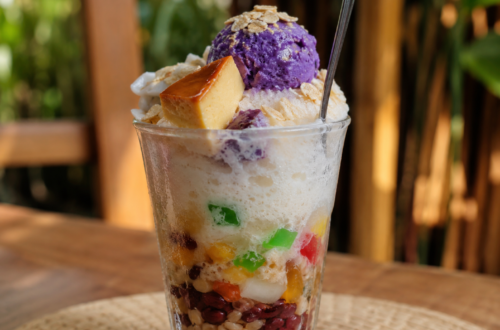
Halo-halo—the chaotic, colorful shaved ice dessert—has always mirrored the Philippines’ layered history: sweetened beans from Chinese traders, leche flan from Spanish colonizers, ube from local soil, and crushed ice from American refrigeration. But in 2026, halo-halo is undergoing a profound transformation driven by climate change, local agriculture, and a renewed pride in indigenous ingredients.
Climate Change Forces a Rethink of Classic Toppings
The traditional halo-halo relies on evaporated milk, canned fruit cocktail, and commercial ube halaya. However, the 2025–2026 El Niño cycle caused a 14% drop in domestic milk production and a spike in canned fruit imports, according to the Philippine Statistics Authority’s 2026 agricultural commodity bulletin. In response, artisanal halo-halo makers in Laguna, Batangas, and Baguio are swapping canned ingredients for fresh, climate-resilient alternatives: coconut cream instead of evaporated milk, fresh kaong and nata de coco produced by local cooperatives, and roasted pili nuts as a crunchy topping.
The Ube and White Bean Revival
Ube, the purple yam that gives halo-halo its signature color, faced a supply shortage in early 2026 due to typhoon damage in Bohol. This prompted farmers in the Cordillera region to expand ube cultivation using terrace-based agroforestry, reducing erosion and water use. Meanwhile, the heirloom white bean balatong is making a comeback as a protein-rich alternative to sweetened red mung beans. Chef Margarita Forés, speaking at the 2026 Madrid Fusión Manila, called this shift “a dessert-led agricultural revolution—every spoonful of halo-halo now tells you where the rain fell and which farmer survived.”
Halo-Halo as a UNESCO-Listed Community Practice
In May 2026, the City of San Fernando, Pampanga, filed a joint application with the NCCA to include “The Art of Making Halo-Halo in Pampanga” in the Philippine Registry of Cultural Property. The application highlights 34 traditional halu-halo makers, many of whom are third-generation women who still shave ice by hand. The city’s annual Halo-Halo Festival, held every December, drew 120,000 visitors in 2025 and is expected to exceed 150,000 in 2026. Local tourism data shows that 70% of festival attendees come from outside Pampanga, injecting ₱340 million into the provincial economy.
Halo-halo in 2026 is not merely a dessert; it is a climate adaptation strategy, a gender-inclusive livelihood, and a cultural archive in a glass. As one Lucban farmer said, “We used to put whatever was cheap and canned. Now we put whatever the land can still give us—and that tastes better.”