Halo-halo is already an ice cream adjacent experience: shaved ice, evaporated milk, ube, leche flan, kaong, monggo, langka, and a scoop of ice cream on top. The question Sebastian’s Ice Cream posed in May 2026 was simpler than it sounds: what if the whole bowl became the pint?
Three Regional Readings of a National Dessert
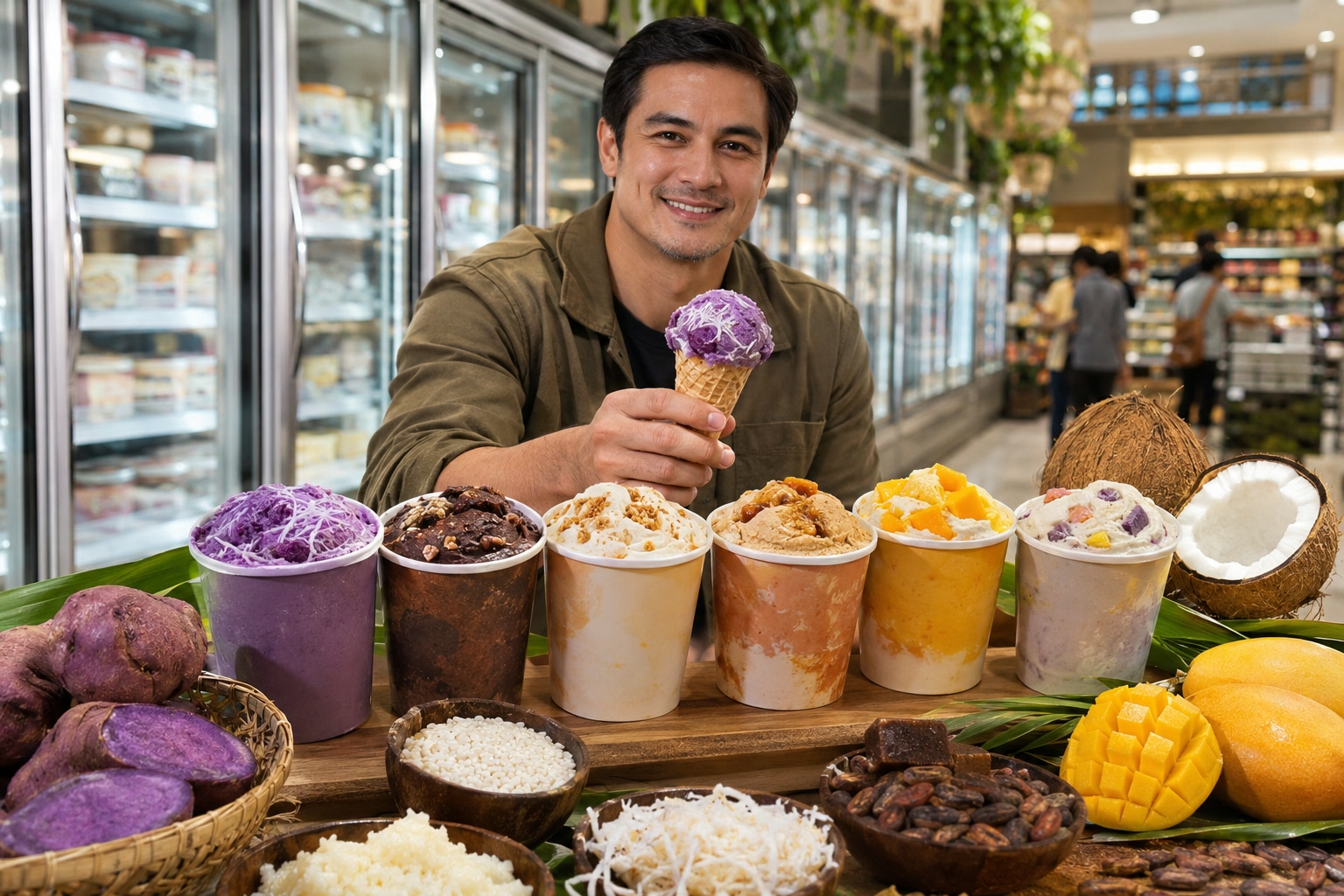
The brand’s summer 2026 “Halo-Halo Festival” collection pays tribute to the iconic dessert through three distinct flavor architectures. Halo-Halo Classic is built with ube ice cream, kaong, red monggo, buko, and langka, finished with a leche flan ribbon—a faithful frozen reconstruction of the familiar layered bowl. Pampanga Style leans into the province’s white halo-halo tradition, using macapuno ice cream, saba bananas, and pastillas de leche, a regional variation that swaps the visual drama of ube for a creamier, more delicate profile. Sebastian’s Style pushes fruit forward, combining blackberry ice cream with mango, raspberry, and kamias sorbets, nata de coco, Fuji apple chunks, and coconut cream leche flan.
The collection is not a gimmick layered onto a standard base. Each variant treats halo-halo as a compositional system—ice cream, textural inclusions, and a ribbon or sauce—rather than a flavor extract. That is a more technically demanding approach because the inclusions must retain their identity at frozen temperatures, the same challenge artisan producers face when translating rice-based or fruit-heavy desserts into ice cream.
Nata de Coco Gets Its Own Line
Alongside the halo-halo pints, Sebastian’s launched a Nata de Coco Sorbet series in three dairy-free flavors: Nata de Coco con Buko, Nata de Coco con Pinya, and Nata de Coco con Calamansi. The line is explicitly framed as a celebration of nata de coco as a Filipino invention, crediting chemist Teódula Kalaw África for developing the coconut gel that became a staple of Philippine desserts and preserves.
That framing matters for the artisan ice cream conversation because it moves the value proposition beyond “local flavor” into local intellectual and agricultural history. Nata de coco is not simply an ingredient that happens to be produced in the Philippines; it is a product with a documented Filipino origin story. Turning it into a sorbet base and a textural component gives the line a narrative that is difficult to replicate with imported inputs.
Coconut Bars and the Texture Play
The summer rollout also included coconut ice cream bars inspired by classic coconut-filled chocolate bars: Coconut Almond with roasted almonds and milk chocolate, Coconut Dark Chocolate as a vegan dairy-free version dipped in 70% dark chocolate, and Coconut Latik Pili combining coconut ice cream with latik caramel and roasted pili nuts. The chocolate coating comes from Risa Chocolate, an artisanal brand sourcing cacao from South Cotabato.
The bars are a different format bet. Pints serve the scooping and sharing occasion; bars serve impulse and portability. By covering both formats in the same summer window, Sebastian’s is testing whether the halo-halo narrative can travel across consumption contexts—from a sit-down scoop at The Podium flagship to a delivery-ready bar.
The Nostalgia Economy, Executed Precisely
The collection works because it does not treat nostalgia as a vague mood. It names the components: kaong, red monggo, pastillas de leche, kamias, latik, pili. These are specific, regional, and texturally distinct. The halo-halo format gives the brand permission to be maximalist—layered, colorful, inconsistent by design—without losing coherence. For the full summer lineup and availability details, see the ABS-CBN Lifestyle report: Sebastian’s Ice Cream unveils halo-halo-inspired summer lineup.