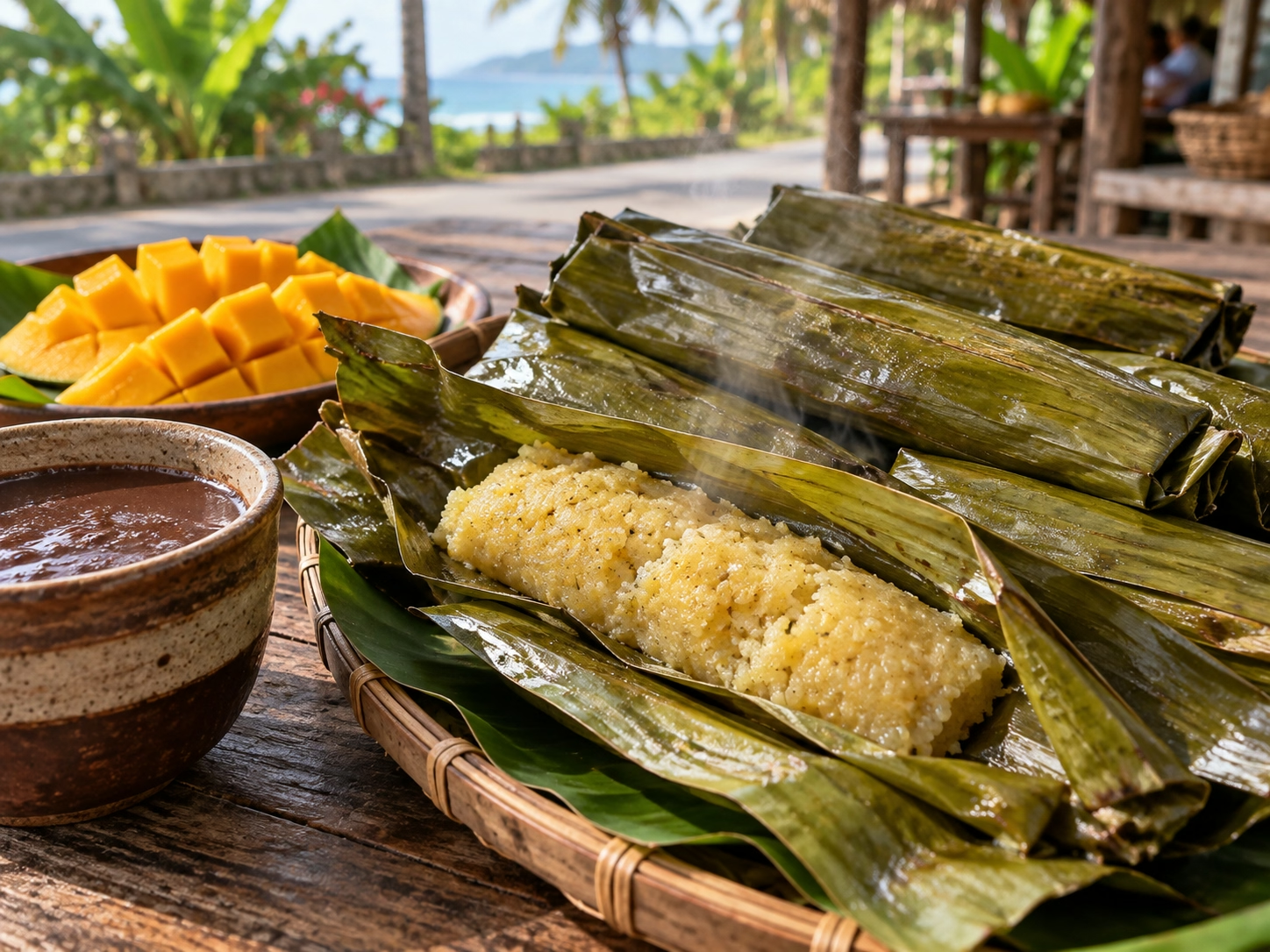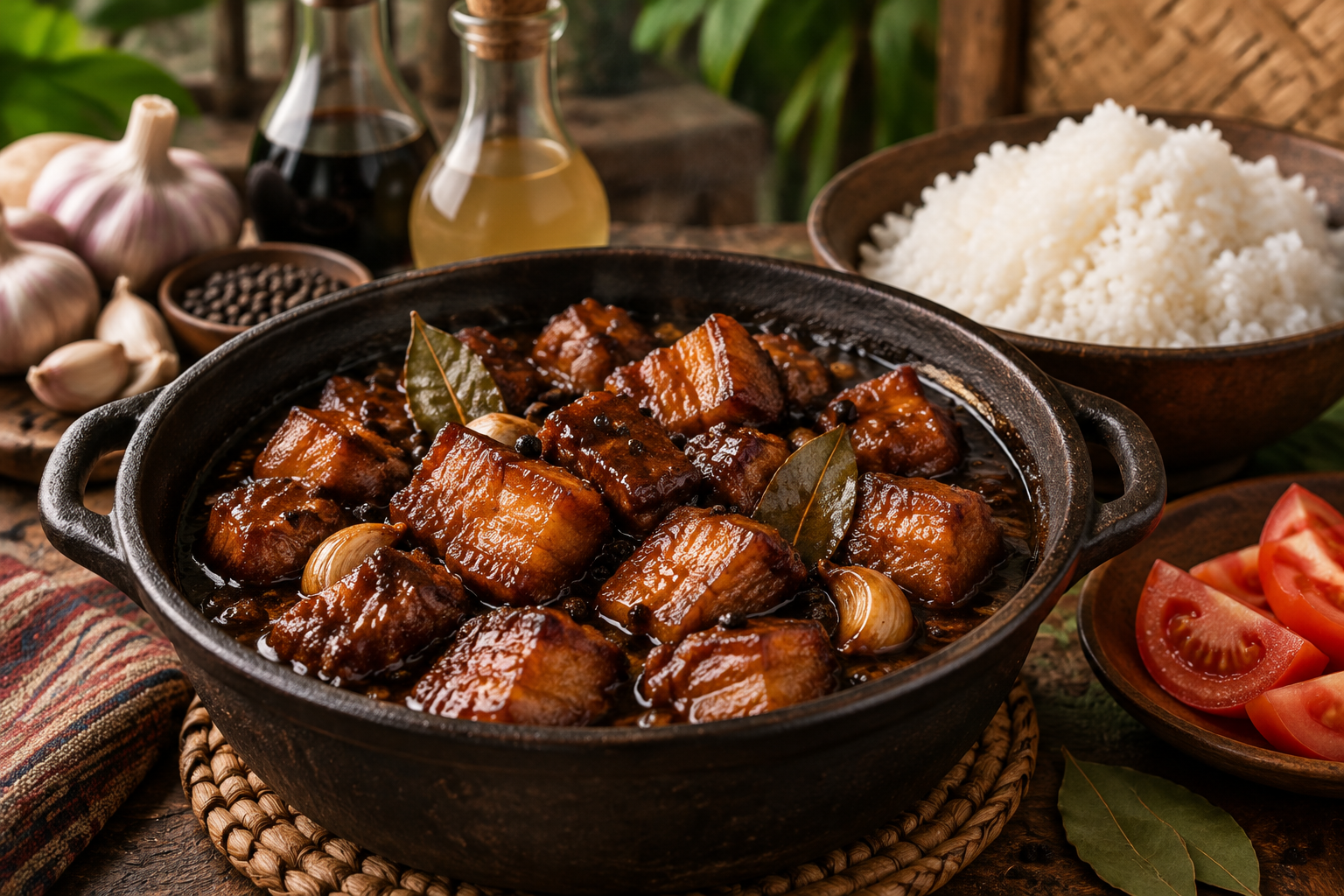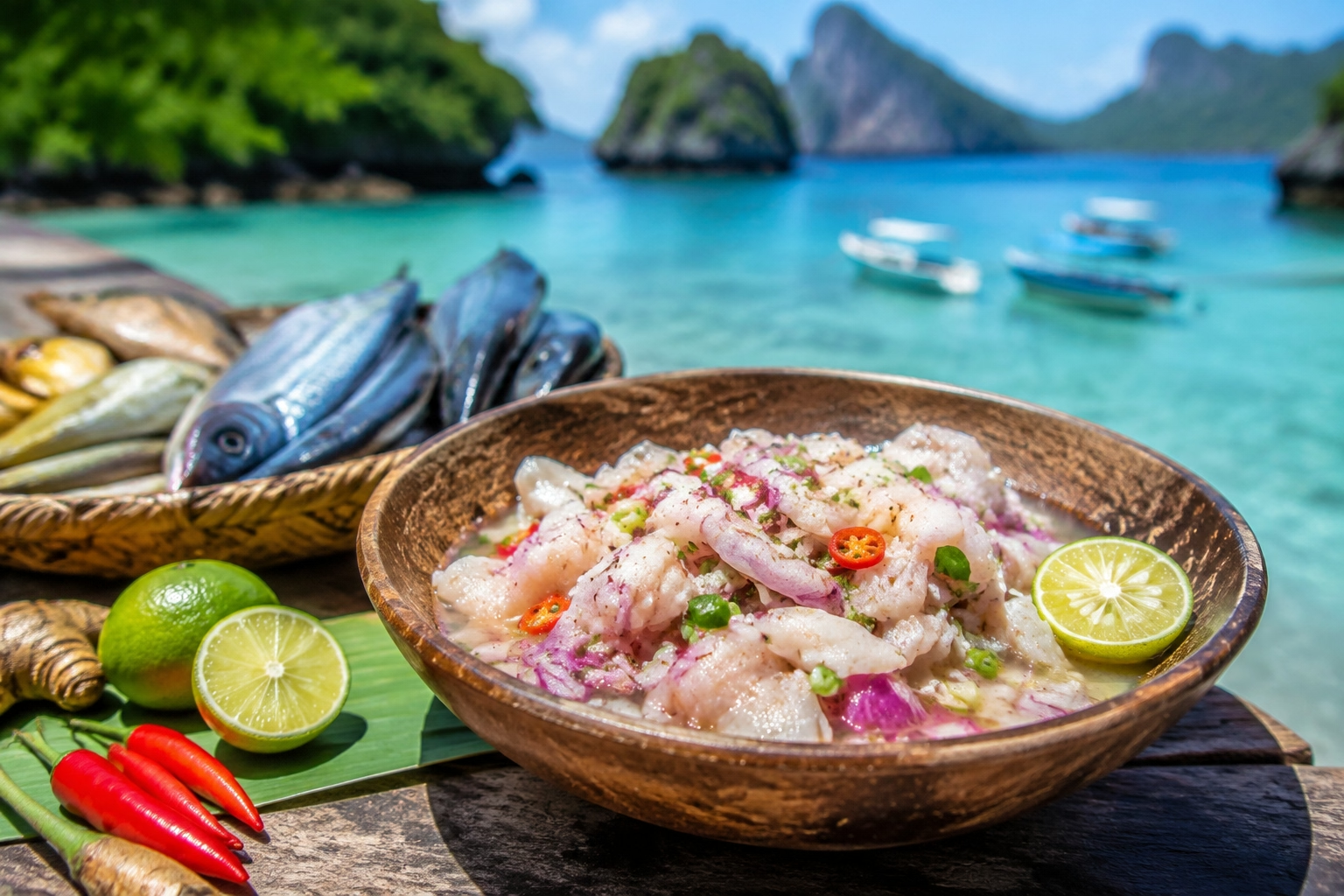
A few meters from the shoreline of Moalboal, fishermen in palm-lined outriggers sort their morning haul of parrotfish, squid, and slipper lobsters directly into styrofoam boxes bound for Cebu City’s kitchens. This daily rhythm fuels a culinary tradition that defines the island: sutukil — a portmanteau of sugba (grill), tuwa (soup), and kilaw (ceviche). In Metro Cebu, the concept is less a menu option and more a way of life, a triple-threat preparation that demands absolute freshness.
Sutukil: The Holy Trinity of Cebuano Seafood
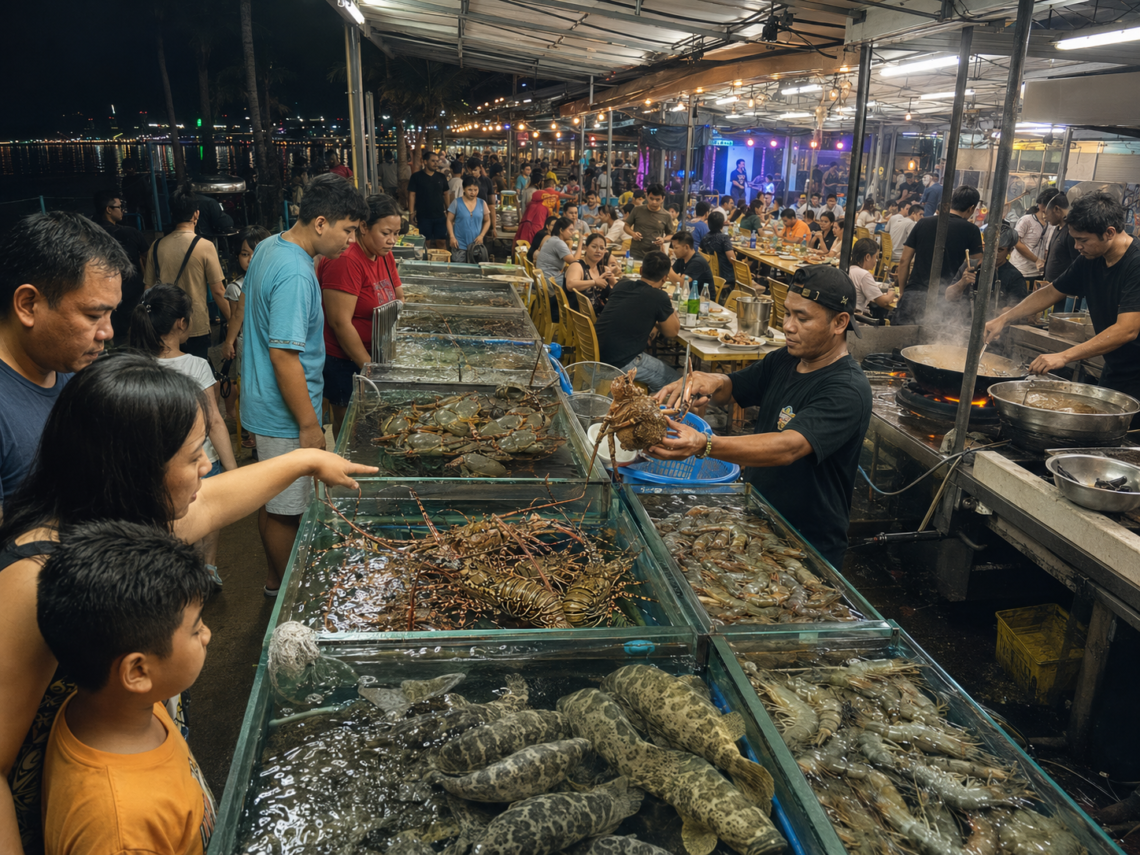
Walk into any seaside eatery from Liloan to Talisay and you will be greeted by iced displays of marine creatures still twitching. The drill is simple: point at a fish, and the cook asks, “Sutukil?” The fish head and bones become a clear ginger-infused tinuwa soup; the fillets are sliced into kinilaw cured in vinegar, ginger, and chili; the collars and bellies hit a blazing charcoal grill. At STK ta Bay! sa Paolito’s, a beloved no-frills joint in the city proper, this trio arrives on banana leaves within 20 minutes, the kinilaw’s acidity balancing the smoke-charred skin of the grilled portion.
Larsian and Beyond: Street Grill Havens
For a more chaotic, incense-like immersion, Larsian sa Fuente remains a rite of passage. Despite a modernized roof, the open-air complex retains its soul: rows of stalls where skewered squid, stuffed milkfish, and scallops on the half shell are basted with a sweet-soy glaze. The 2026 Department of Tourism report on culinary tourism highlighted Cebu’s grill markets as a “primary driver of evening visitor spending,” noting a 22% year-on-year rise in food-focused tourists arriving at Mactan-Cebu International Airport. This DOT Culinary Tourism Update 2026 confirms that travelers increasingly plan layovers specifically for a Larsian dinner.
Mactan’s Ocean-to-Table Restaurants
Mactan Island, connected to Cebu City by bridges, has evolved into a cluster of premium ocean-to-table restaurants. Establishments like Scape Skydeck and Ibiza Beach Club now forge direct partnerships with small-scale fishers from Olango Island, ensuring that spiny lobsters and mangrove crabs travel less than 15 kilometers from sea to kitchen. The trend is further refined by chefs who infuse Spanish and Japanese techniques into traditional sutukil, producing dishes like kinilaw drizzled with coconut cream and truffle oil — a controversial but undeniably popular twist.
The Live Seafood Capital’s Expanding Reach
In the northern towns of Catmon and Sogod, bakasi (saltwater eel) soup draws devotees willing to drive two hours for its reputed revitalizing properties. Meanwhile, the famed Cebu lechon may dominate international headlines, but domestic tourists increasingly come for the sea. Travel booking data from early 2026 showed Cebu trailing only Boracay in gastronomic trip bookings, with “seafood grill” appearing as a top search term. The province’s fisheries production remains robust, with the Philippine Statistics Authority reporting steady growth in aquaculture yields for milkfish and grouper.
What makes Cebu’s seafood scene distinct is its democratic character. At one end, you can spend PHP 200 on a pungent, satisfying puso (hanging rice) and grilled tuna belly at a roadside stall in Taboan. At the other, you can indulge in a degustation of coral trout kinilaw paired with natural wines overlooking the Mactan Channel. The common denominator is the sutukil ethos: respect the ingredient, apply fire, acid, or broth, and serve immediately. In a world obsessed with farm-to-table, Cebu has been quietly practicing ocean-to-plate for generations.