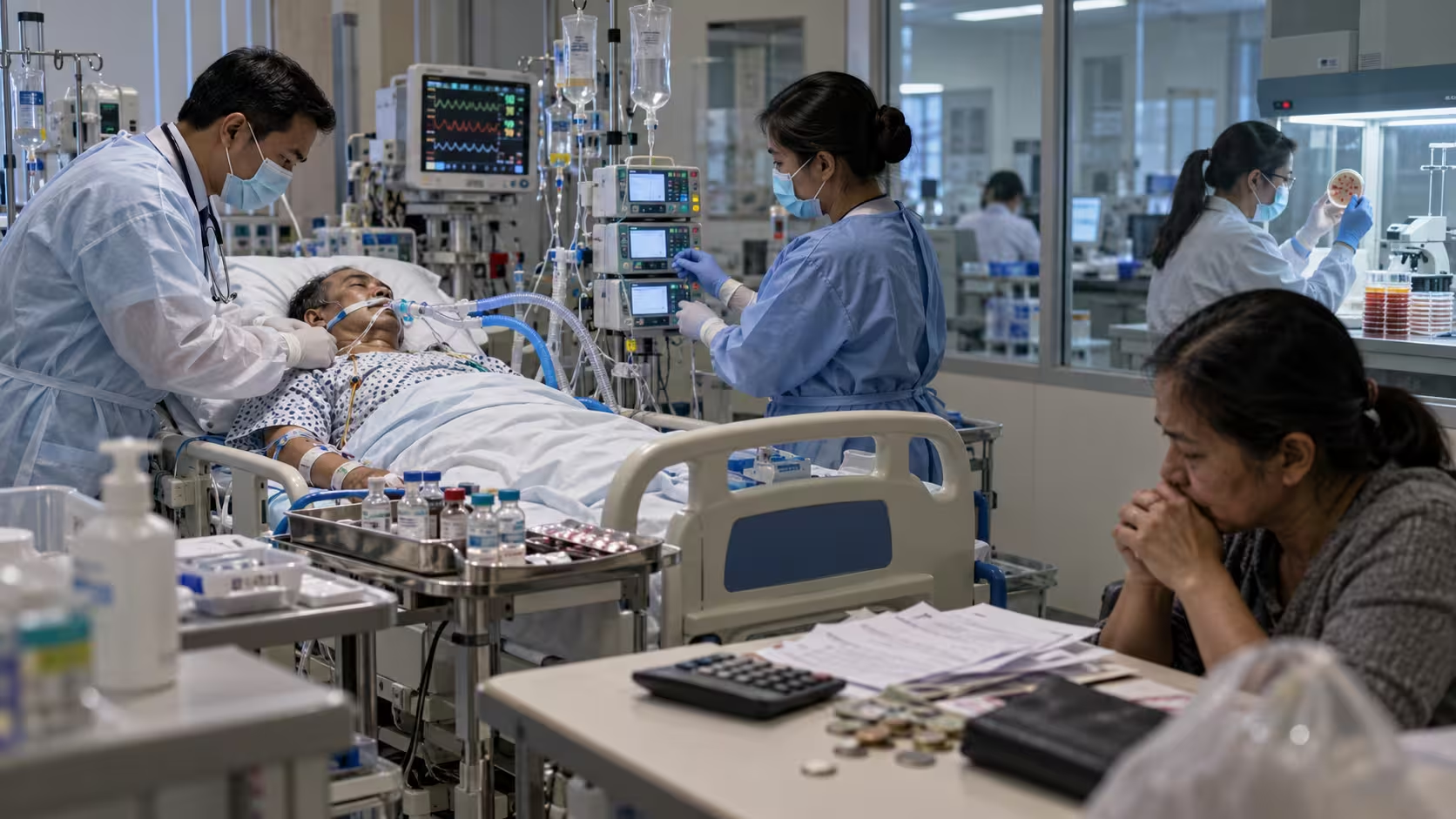
For an older Filipino, receiving effective healthcare may require navigating several systems at once. PhilHealth handles national health insurance, senior citizen laws provide financial protections, local governments operate frontline health services, and families often coordinate the entire process.
Understanding this structure is important because the Philippines is already home to millions of older people. Data from the 2020 Census of Population and Housing placed the number of citizens aged 60 and above at around 9.22 million.
The central question is therefore no longer whether older adults need dedicated support. It is whether existing programs can deliver continuous care as people live longer with chronic and age-related conditions.
National Coverage Gives Seniors an Important Starting Point
Senior citizens are covered by the National Health Insurance Program under Republic Act No. 10645.
This means health insurance is intended to remain available even when an older person is no longer employed or paying contributions through a workplace.
The National Commission of Senior Citizens also serves as a national institution focused on the concerns and welfare of older Filipinos. Its official website is available at https://ncsc.gov.ph/.
For families, however, knowing that national programs exist is only the first step. They must still understand where to go, what documents may be needed, and which facilities can provide the required treatment.
Senior Citizen Discounts Can Lower the Burden of Long-Term Care
Republic Act No. 9994 gives eligible seniors financial protections that include a 20 percent discount and VAT exemption on qualified medical goods and services.
These provisions are particularly valuable because aging often brings recurring expenses.
An individual with hypertension may need regular consultations and daily medication. Someone with diabetes may require laboratory monitoring. A patient recovering from a stroke may need repeated follow-up visits and rehabilitation.
The financial burden comes from accumulation. Small medical expenses repeated every week or month can become a major household cost.
The Real Problem Is Often Continuity of Care
A realistic scenario is an older adult who receives a diagnosis at a local clinic but needs additional tests in another town. The patient completes the tests, returns home, and later visits a different doctor.
Without organized records, each stage can become disconnected from the next.
This is why senior healthcare is not only about paying hospital bills. It also involves referrals, medication management, follow-up appointments, and communication between patients, caregivers, and healthcare providers.
In geographically isolated communities, the problem may be even more serious because a missed appointment can involve far more than rescheduling. It may mean arranging another long journey and paying additional transport costs.
Community Health Services Form the Front Line
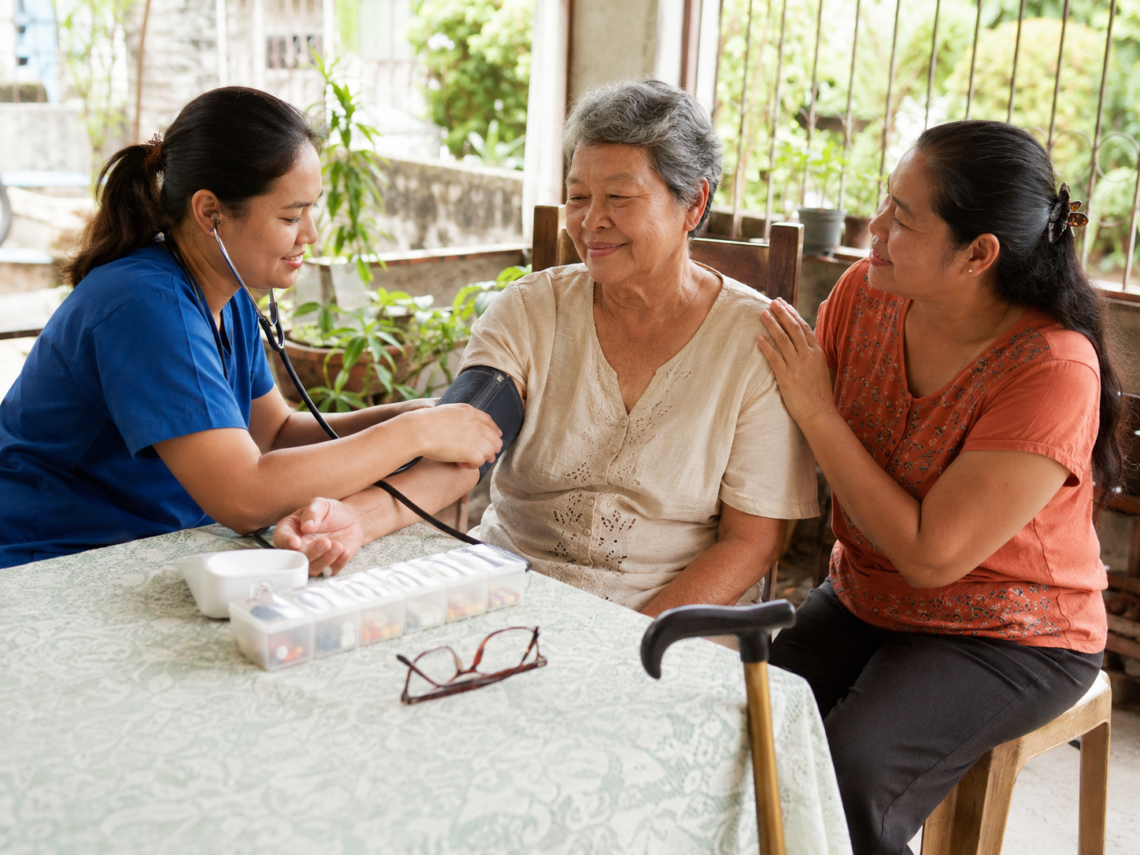
Barangay health stations and rural health units can serve as important first points of contact, particularly for blood pressure checks, basic assessment, health education, and referrals.
OSCA offices can also help seniors navigate benefits linked to their legal status.
Families can strengthen the care process by keeping copies of prescriptions and test results, maintaining a current medication list, checking health insurance details, and knowing the nearest appropriate referral facility.
This practical preparation is increasingly important because older adults often need care from multiple providers.
The Philippines has created significant legal and insurance protections for its senior population. The next measure of success is how consistently those protections work in everyday life.
A senior-friendly health system should not force families to choose between delayed treatment and unaffordable expenses. It should make preventive care easier, reduce avoidable complications, and help older adults remain independent for as long as possible.