A Values-Driven Shift
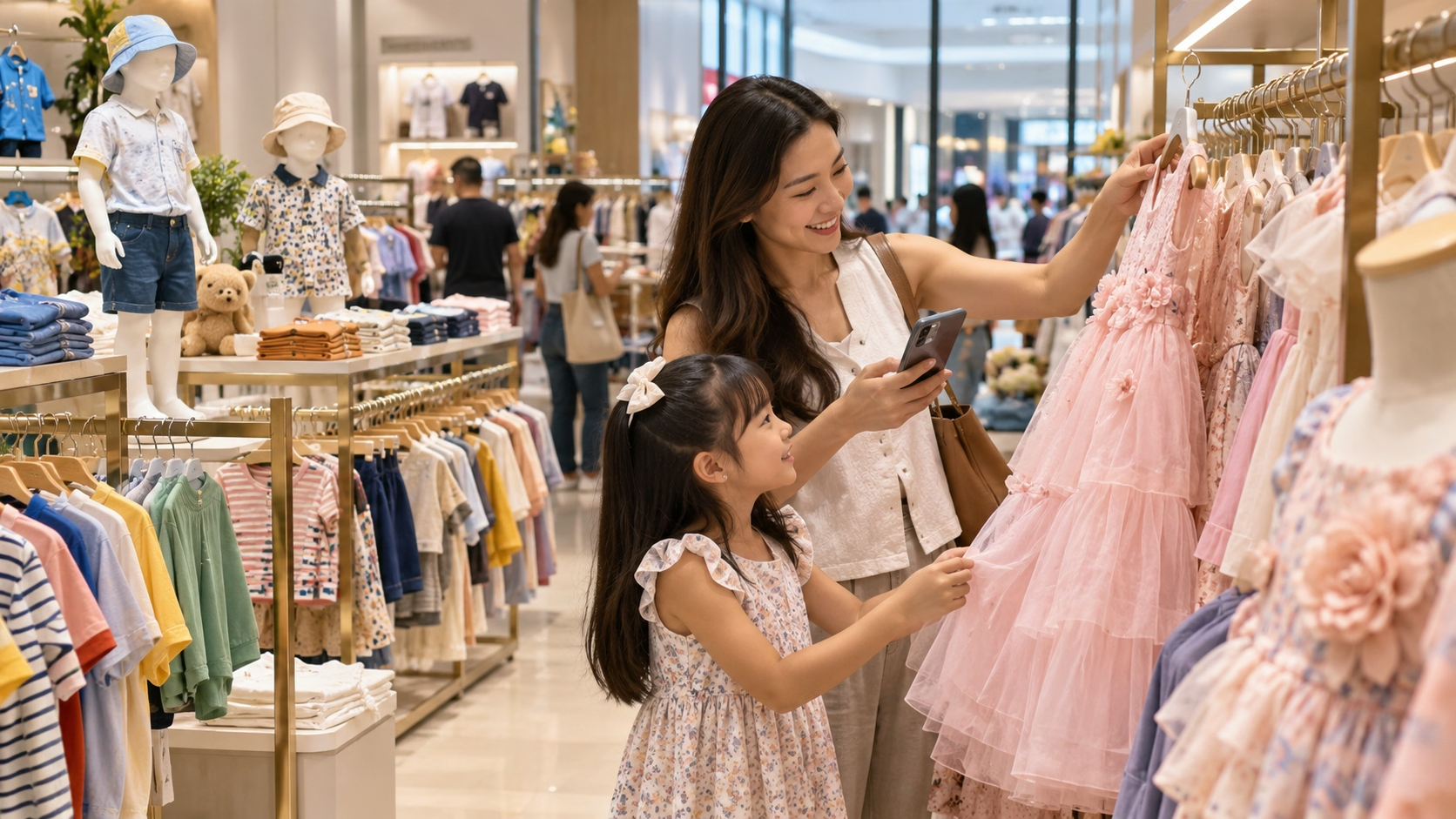
Filipino parents are increasingly weighing sustainability alongside affordability when purchasing children’s clothing, creating a complex consumer landscape that rewards brands capable of delivering both. According to Euromonitor International’s January 2026 report, parents in the Philippines are prioritising eco-friendly and affordable childrenswear, a shift that is reshaping product development and marketing strategies across the sector.
This evolution reflects broader changes in Filipino consumer psychology. The Dentsu 2025 Philippines Consumer Trends Report reveals that 48% of Filipinos are attempting to live more minimally, buying new items only when necessary—a figure 18 percentage points higher than the global average. Yet this restraint coexists with a strong aspirational impulse: 77% of Filipinos still believe owning many expensive things is important.
The Secondhand Revolution
A 2026 academic study published through the University of Jyväskylä examined mothers’ motivations for purchasing secondhand branded children’s clothing on peer-to-peer platforms. The findings were striking: economic, sustainability, and “good parenting” motivations were all significant drivers of purchasing behaviour.
For Filipino mothers navigating rising costs of living, secondhand platforms offer a way to dress children in quality brands without the premium price tag. Simultaneously, participating in the circular economy is framed as responsible parenting—a way to model environmental consciousness for the next generation.
This trend is particularly relevant in a market where the top brands include both premium labels like Guess Kids and affordable stalwarts like Uniqlo. Uniqlo’s leadership position is built on a reputation for quality basics and inclusive sizing, appealing to parents who want durability without extravagance.
Sustainable Brands Find Their Niche
PoshBabiesPh and the Eco-Conscious Consumer
Euromonitor’s report highlights PoshBabiesPh as a champion of sustainable and inclusive essentials for Filipino families. The brand’s success demonstrates that sustainability is not merely a marketing buzzword but a genuine purchase driver for a growing segment of Filipino parents.
This aligns with global trends in childrenswear, where brands incorporating eco-friendly materials and inclusive sizing are gaining traction. Filipino parents are increasingly knowledgeable about supply chains, material sourcing, and labour practices—and they are willing to pay a premium for brands that align with their values.
The Role of Local Artisans
Cebu-based designers are also contributing to the sustainability narrative. In 2026, a young Cebu designer was named Best Designer Grand Champion at the Cebu City Upcycling Fashion Design Competition for creating a couture piece made from discarded cable wire covers. While not strictly childrenswear, such initiatives signal a broader cultural shift toward upcycling and creative reuse that resonates with environmentally conscious parents.
Additionally, workshops like the Porac Art Workshop, which empowered 30 children—including Aeta youth—to create nature-inspired art for sustainable fashion, demonstrate grassroots engagement with eco-consciousness at the community level.
The Economics of Ethical Consumption
Balancing Aspiration and Restraint
The Filipino consumer’s relationship with childrenswear is defined by duality. Dentsu’s research shows that 51% of Filipinos shop around to ensure value for money, and 61% will save up for something they truly want. Discount coupons and promotions frequently prompt consumers to try other brands.
This means brands must navigate a delicate balance. They need to communicate quality and values without appearing elitist or inaccessible. They must offer promotions that feel like smart shopping rather than desperate discounting. And they must build brand loyalty that survives the temptation of a competitor’s flash sale.
The data suggests that 86% of Gen Z and 87% of Millennials stick with brands they like once they find them. For childrenswear brands, the opportunity lies in becoming that trusted choice—the label that Filipino parents return to season after season, not because it’s the cheapest or the most luxurious, but because it consistently delivers on quality, values, and value.
What Brands Should Know
Emerging brands are leveraging AI for personalised shopping experiences, a development that could help parents navigate the overwhelming array of choices. By understanding individual family preferences, budgets, and values, AI-driven recommendations can reduce decision fatigue while increasing satisfaction.
The Philippine childrenswear market is not simply growing—it is maturing. Parents are no longer passive consumers but active participants in a marketplace that increasingly reflects their complex identities: aspirational yet prudent, globally aware yet locally rooted, and deeply committed to raising children who dress well and live responsibly.