The New Hijab Market Is Being Built Online
A significant part of the Philippine hijab fashion story is unfolding not on traditional runways but on smartphone screens.
Social media platforms and online marketplaces have reduced the barriers that once made fashion businesses expensive to launch. For young Muslim entrepreneurs, this has opened opportunities to sell scarves, inner caps, modest dresses, abayas, loose trousers, accessories, and coordinated outfits without immediately investing in large physical stores.
The potential audience is substantial. Data published by the Philippine Statistics Authority from the 2020 census recorded nearly seven million people affiliated with Islam. The figure is not a current 2026 estimate, but it demonstrates why Muslim-focused clothing should not automatically be treated as a marginal retail category.
The market also extends beyond religious demographics. Loose silhouettes, long dresses, and practical layering appeal to some consumers because of comfort and style.
Social Media Has Changed Who Defines Fashion
Influencers Are Making Modest Style More Practical
Traditional fashion media often focuses on polished campaigns and celebrity appearances. Online modest fashion content tends to succeed for a different reason: usefulness.
A creator can show how to keep a hijab secure during a long commute, choose breathable fabrics for humid weather, prepare a professional outfit for the office, or create several looks from one neutral scarf.
These details are highly relevant in the Philippines.
Young consumers are not simply copying international trends. They compare styles from Indonesia, Malaysia, South Korea, Turkey, and the Middle East, then adapt them to local weather, social settings, and purchasing power.
A layered outfit popular in a cooler country, for example, may be simplified for Manila or Davao. A luxury scarf trend may inspire an affordable locally produced alternative.
Small Brands Can Compete Through Cultural Understanding
For independent sellers, cultural knowledge can be more valuable than a large advertising budget.
A business that understands prayer routines, family celebrations, university dress needs, wedding customs, and the realities of tropical heat can create products with clear relevance. Customers may care about whether a scarf is transparent, slips easily, requires many pins, or remains comfortable after several hours.
These practical concerns shape purchasing decisions.
Local entrepreneurs also have an opportunity to differentiate themselves through regional identity. Rather than selling products that look identical to imported designs, brands can incorporate Philippine colors, local craftsmanship, and culturally informed storytelling.
This approach can strengthen both commercial value and cultural recognition.
The Real Opportunity Goes Beyond Selling Scarves
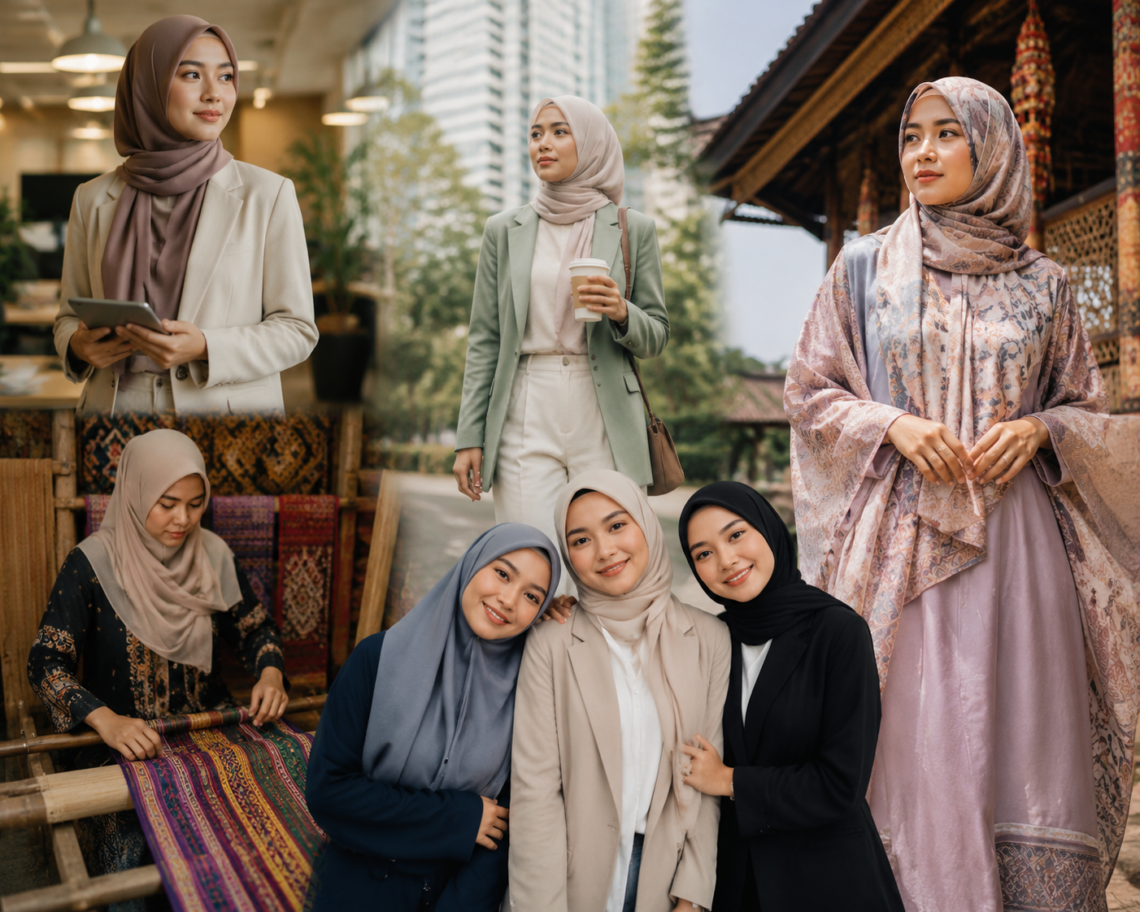
The emerging modest fashion ecosystem includes photographers, stylists, makeup artists, graphic designers, content creators, tailors, fabric suppliers, logistics providers, and event organizers.
This makes hijab fashion part of a wider creative economy.
The growth of the sector also creates a more complex public image of Muslim women. Online, they can be seen not only as consumers but also as founders, designers, professionals, and cultural commentators.
That visibility matters in a country where many people outside Muslim-majority areas may have limited direct experience with Islamic communities.
Fashion cannot solve every problem related to representation, but it can create everyday forms of familiarity. A styling video, designer profile, or small-business story can show Muslim life through ordinary ambitions and creative work rather than through stereotypes.
The most compelling aspect of the Philippine hijab fashion movement may therefore be its combination of commerce and self-representation. Young entrepreneurs are not only responding to demand. They are helping define what modern Filipino Muslim style looks like—and who gets to tell that story.