The way people sleep has a direct influence on their health. In the Philippines, sleep patterns are shaped by work demands, school requirements, transportation difficulties, family obligations, and technology use. While many people treat sleep as something that can be sacrificed, irregular or insufficient sleep can affect nearly every system in the body.
A proper sleep routine includes both enough hours of rest and a consistent schedule. Adults usually need about seven to nine hours of sleep, while children and teenagers require even more. However, many Filipinos do not reach this amount. In busy cities, long travel time is a common reason. A person may need to wake up before dawn to avoid traffic or arrive at work on time. By the time they return home, eat dinner, help with family duties, and relax, bedtime may already be very late.
Night work is another major challenge. The Philippine economy includes many industries that operate outside normal daytime hours. Call center agents, nurses, police officers, security guards, delivery workers, and service employees may work while others sleep. This schedule can disturb the natural rhythm of the body. Human bodies are generally designed to be active during daylight and restful at night. When this pattern is reversed, sleep may become lighter, shorter, and less refreshing.
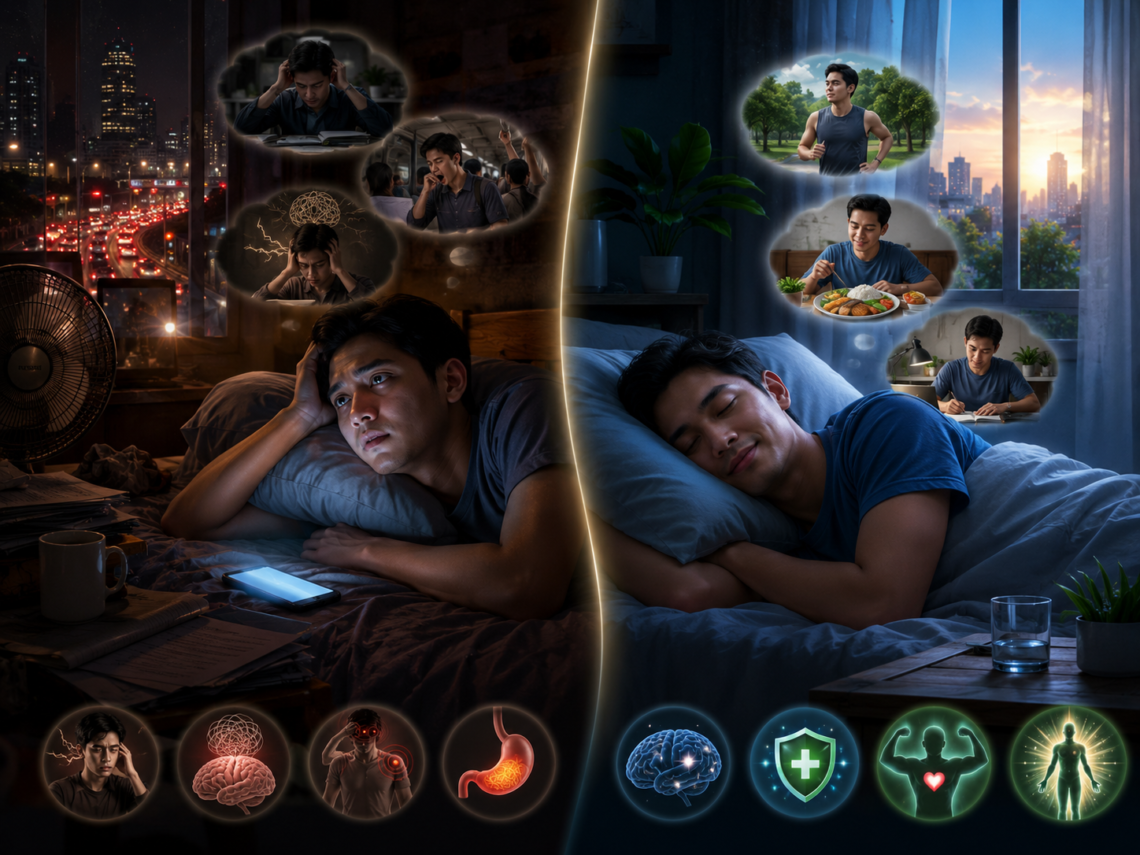
Physical health can suffer when sleep is poor. During sleep, the body repairs muscles, balances hormones, and supports immune function. People who sleep too little may become more likely to experience frequent illness. They may also feel body pain, headaches, or low energy. Over time, poor sleep may contribute to high blood pressure and other heart-related problems.
Another important effect involves blood sugar and appetite. Lack of sleep can make the body less efficient at using insulin, which is important for controlling blood sugar. It can also increase hunger and cravings for unhealthy food. This is relevant in the Philippines, where rice-heavy meals, sweet drinks, fast food, and late-night eating are common in some lifestyles. Poor sleep combined with unhealthy eating may increase the risk of obesity and diabetes.
Sleep also plays a key role in mental health. People who do not sleep well often have difficulty concentrating, remembering details, and controlling emotions. A student who stays awake late every night may struggle during lessons and exams. An employee with poor sleep may become less productive and more stressed. Parents who lack rest may feel easily irritated or overwhelmed. If sleep deprivation continues, it may worsen anxiety and depressive symptoms.
The use of phones and other devices has made sleep problems more common. Many Filipinos spend time online before sleeping, whether for communication, entertainment, gaming, or work. This can delay bedtime. The light from screens can also affect the body’s production of melatonin, making sleep come later than expected.
Improving sleep patterns does not always require expensive treatment. Simple habits can make a difference. People can set a fixed bedtime, avoid caffeine late in the day, reduce screen exposure before bed, and keep the sleeping area cool, dark, and quiet. Even small changes, when practiced regularly, can improve sleep quality.
In the Philippines, better sleep awareness can support better public health. Families, schools, workplaces, and communities should recognize sleep as a necessary part of wellness. A well-rested population is more energetic, focused, emotionally balanced, and physically resilient.