Few ingredients are as important to Filipino cooking as rice. It is present in humble home kitchens, roadside eateries, fiesta tables, and urban bakeries alike. In the Philippines, rice is not limited to plain steamed grains served beside viands. It is fried for breakfast, boiled into porridge for comfort, turned into sticky sweets for special occasions, and steamed into delicate cakes for snacks. Looking at dishes such as sinangag and puto reveals how deeply rice shapes Filipino culinary life.
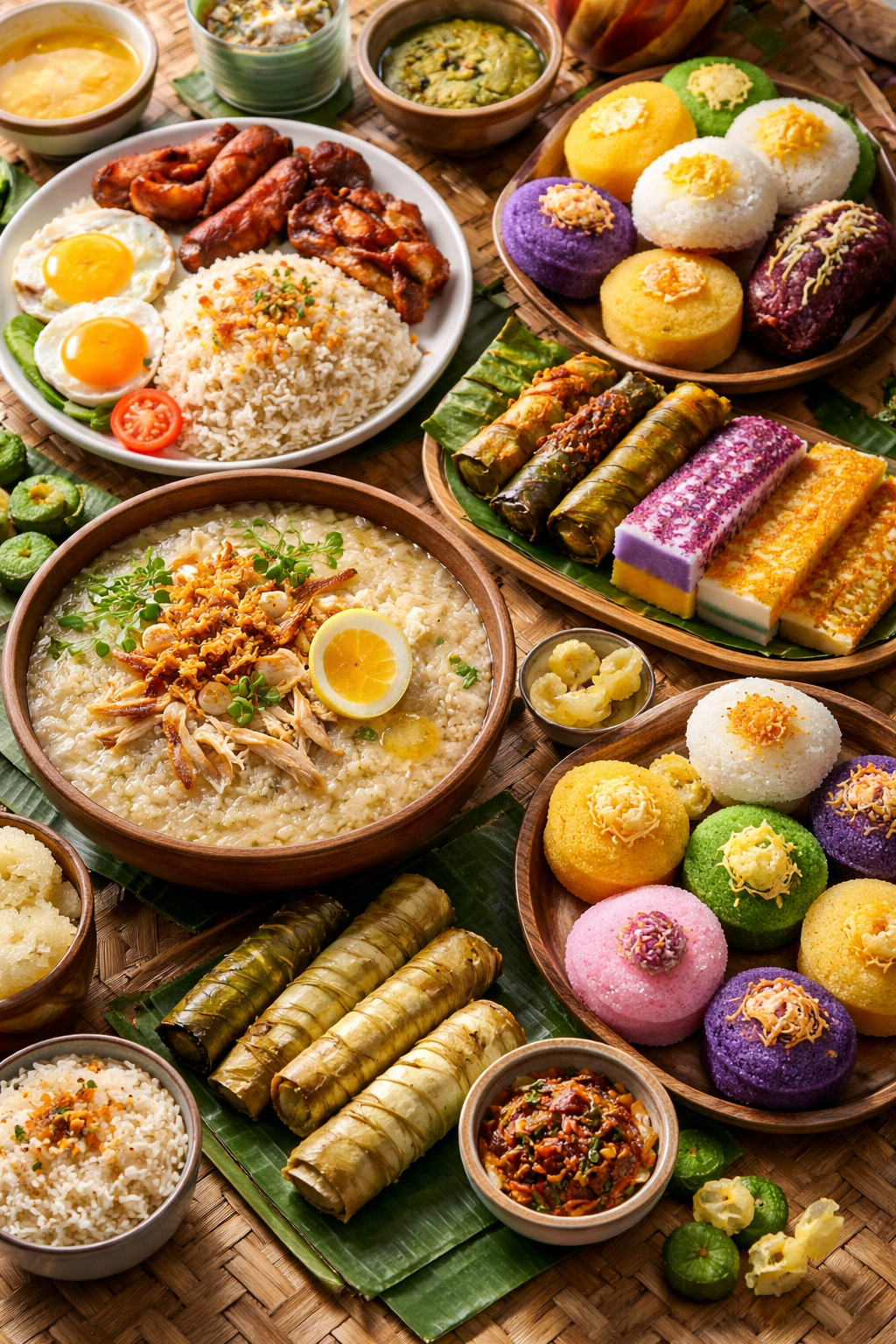
The day often begins with sinangag, a garlic fried rice that plays a major role in Filipino breakfast culture. What makes it distinct is its use of leftover rice. Rather than wasting yesterday’s cooked grains, Filipino cooks reuse them in a practical and flavorful way. The rice is loosened and fried with minced garlic, sometimes with a touch of salt or a splash of oil infused with the drippings of meat. The result is fragrant, slightly crisp, and ideal for pairing with savory breakfast items. This dish shows a common feature of Filipino home cooking: thrift and flavor often go hand in hand.
As the texture of rice changes, so does its purpose. When cooked slowly in a generous amount of liquid, rice becomes lugaw, a comforting porridge that can be either plain or heavily garnished. Ginger, fried garlic, scallions, chicken, tripe, and boiled egg are common additions depending on the style. Arroz caldo, although its name reflects Spanish influence, has strong links to local food habits and Chinese-style congee traditions. It is appreciated for being easy to digest, but also for being deeply satisfying, especially when served hot on rainy days or late evenings. In this form, rice becomes less about structure and more about warmth and softness.
Filipino cuisine also demonstrates how rice enters the domain of sweets and snacks. The term kakanin refers to a wide family of rice-based delicacies that are central to local food traditions. Many of them use glutinous rice or rice flour along with coconut milk and sugar, creating textures that range from chewy to creamy. Biko is dense and sticky, with a rich sweetness from coconut caramel. Suman is often wrapped in leaves, giving it aroma as well as portability. These foods are more than snacks; they are markers of celebration, regional identity, and domestic skill.
One of the lightest members of this rice-based category is puto. Unlike sticky desserts, puto is steamed until soft and airy. It is usually mildly sweet and can be enjoyed plain or flavored with pandan, ube, or coconut. Cheese has also become a popular topping in modern versions. Traditional puto-making sometimes involved soaking rice and allowing the batter to ferment, which added subtle depth to the flavor and helped create a gentle rise. Today, simplified recipes are common, but puto still retains its familiar role as a merienda favorite and a companion to savory dishes like dinuguan.
What makes Filipino rice cuisine fascinating is its technical diversity. The same grain can be fried for aroma, simmered for comfort, steamed for delicacy, or sweetened for festivities. This wide range reflects the adaptability of Filipino cooks across regions and generations. Rice is not just a staple in the Philippines; it is a culinary language through which families express practicality, hospitality, memory, and taste.