The Architecture of Comfort
In the closed rooms of Manila’s tailoring houses, a quiet technical revolution is underway. The classic European suit—structured, layered, built for temperate climates—is being dismantled and rebuilt for a country where humidity is a permanent condition. This is not a stylistic preference. It is an engineering problem, and the solution is reshaping what luxury means in the Philippines .
Masanting Sastreria’s Daniel Du and Mark and Carin Aguas describe their approach as the “Filipino Housecut”: a tailoring philosophy that begins with the question of how a garment releases heat while maintaining the presence expected of formalwear . At Tiño Group, master tailor Napoleon Arienza, trained in the rigid Roman school, has incorporated softer Neapolitan elements not as an aesthetic choice but as a climatic necessity. The canvas weight, the shoulder treatment, the lining—every layer is recalculated .
When Indigenous Meets Italian Wool
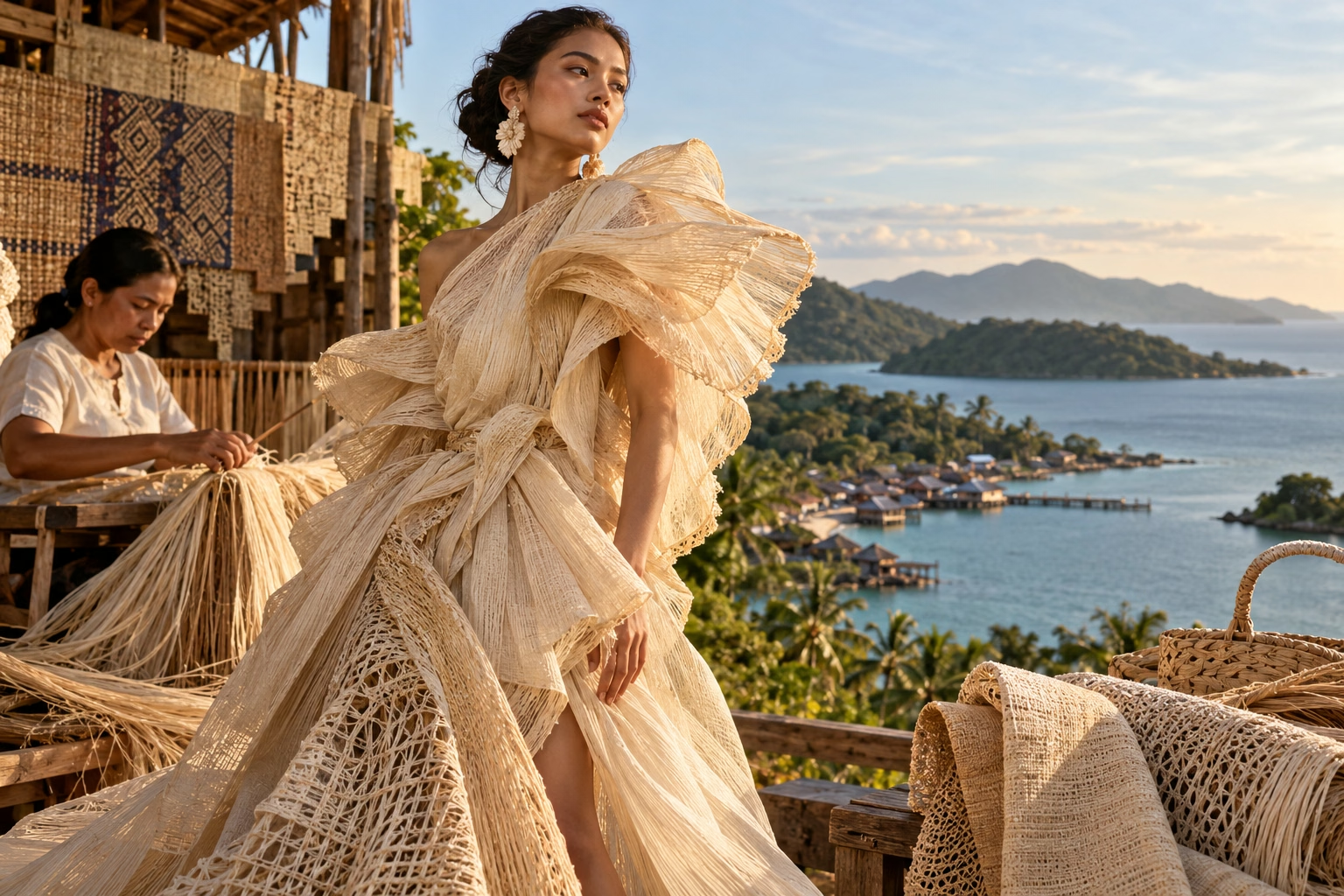
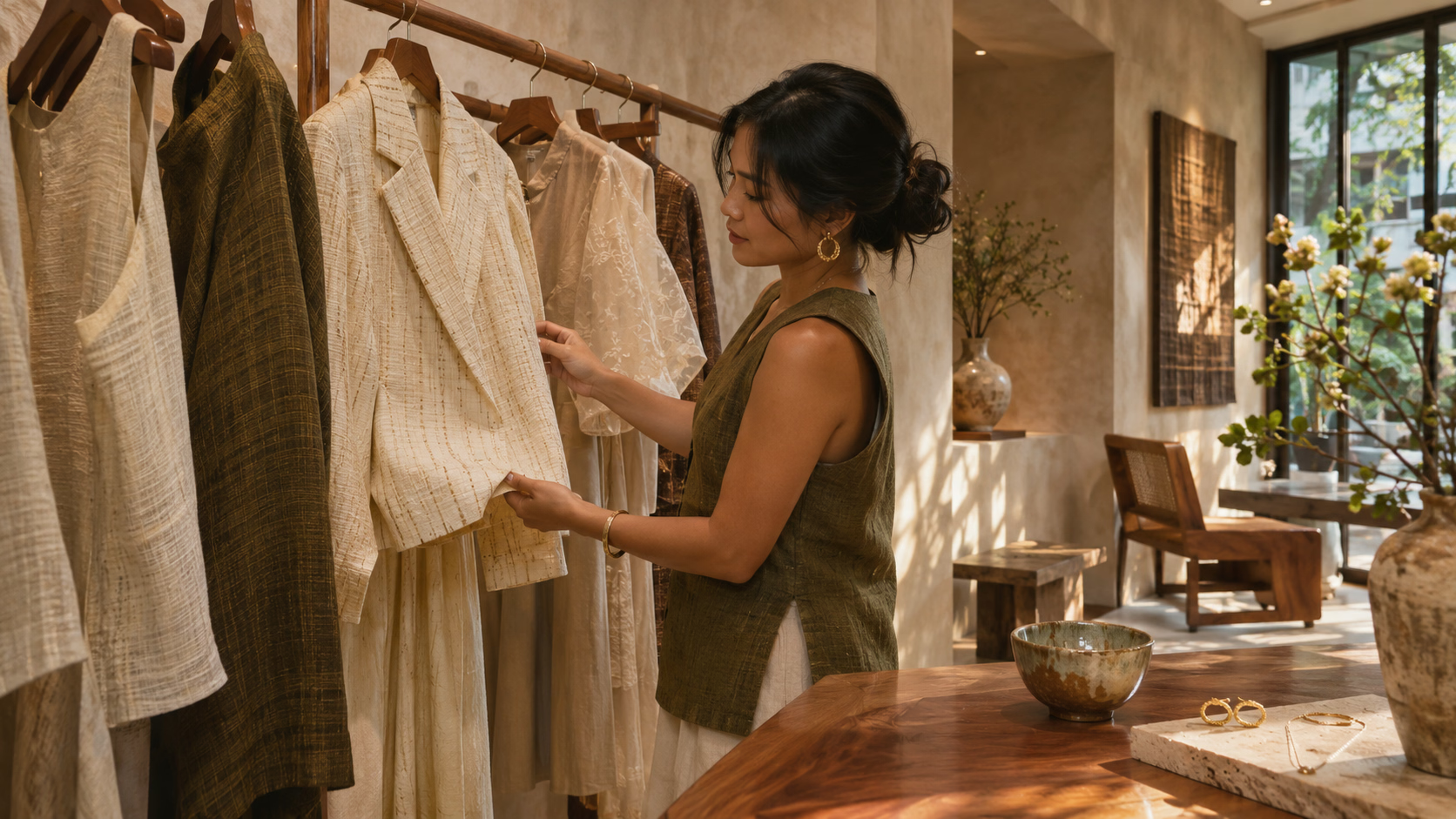
The more radical experimentation involves materials. Tiño Group’s womenswear pairs local inabel weaves with English and Italian wool, allowing each fabric to perform its native function. More experimentally, the house is testing piña-derived fiber for internal jacket architecture—a body canvas that balances flexibility and stability . This is not hybridity for its own sake. It is a recognition that handwoven Philippine fibers possess properties that conventional tailoring canvases do not.
Johann Paulo Ebarle of JE & Co offers a counterpoint, arguing that the barong and the suit should remain distinct traditions rather than blended . His perspective is useful precisely because it resists the easy narrative of fusion. Quiet luxury, in the Philippine context, may ultimately be less about combining materials than about refusing to choose between heritage and technique.
The Client Who Changed
What shifted? Ebarle notes that grooms have moved away from slim-fitting black and navy suits toward Neapolitan tailoring with fuller jackets, higher-waisted trousers, and earth tones . The barong itself has relaxed—a silhouette that offers movement rather than restraint. The Filipino luxury client, in other words, is no longer dressing to look European. He is dressing to look like himself, in a climate he actually lives in.