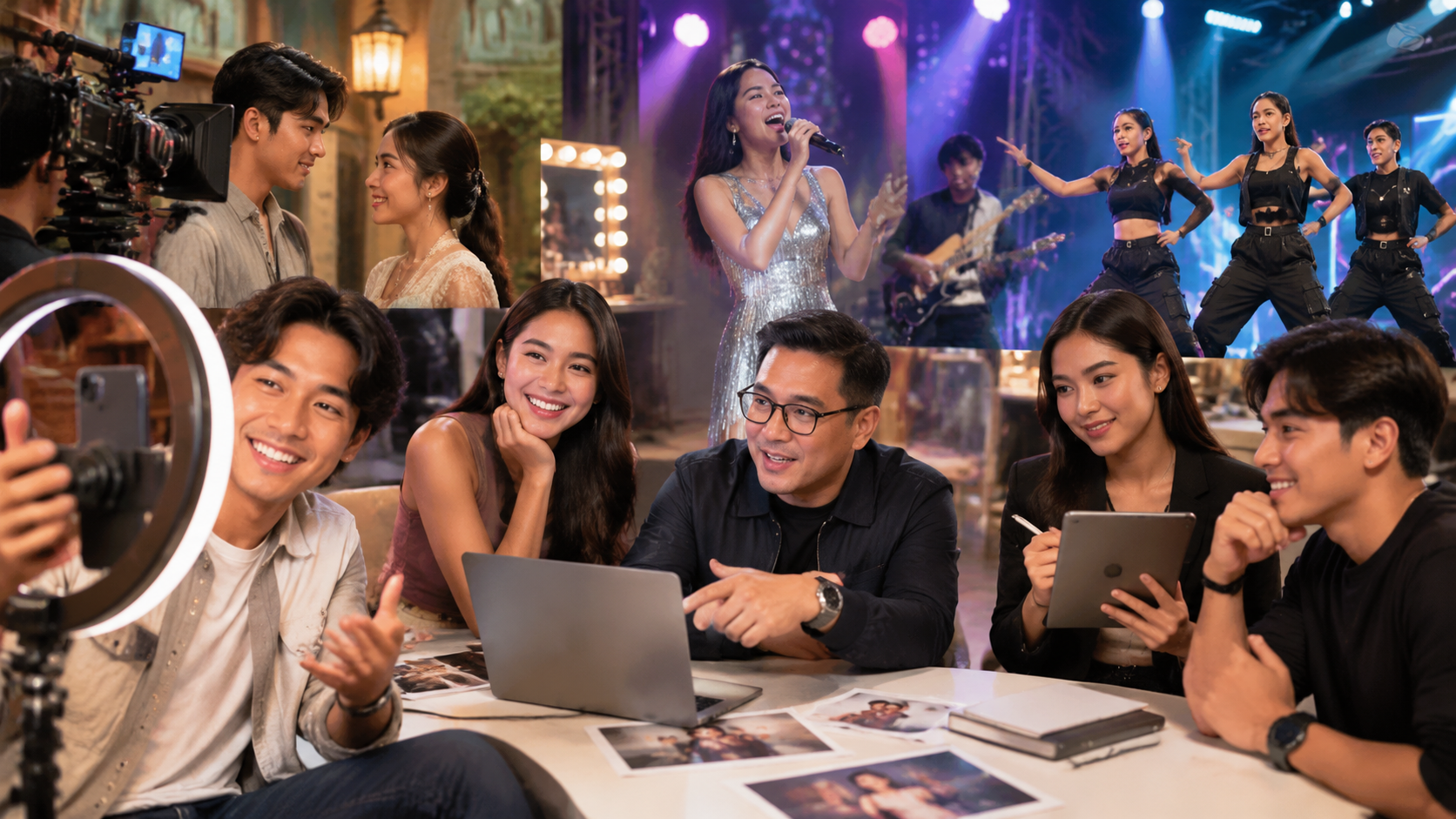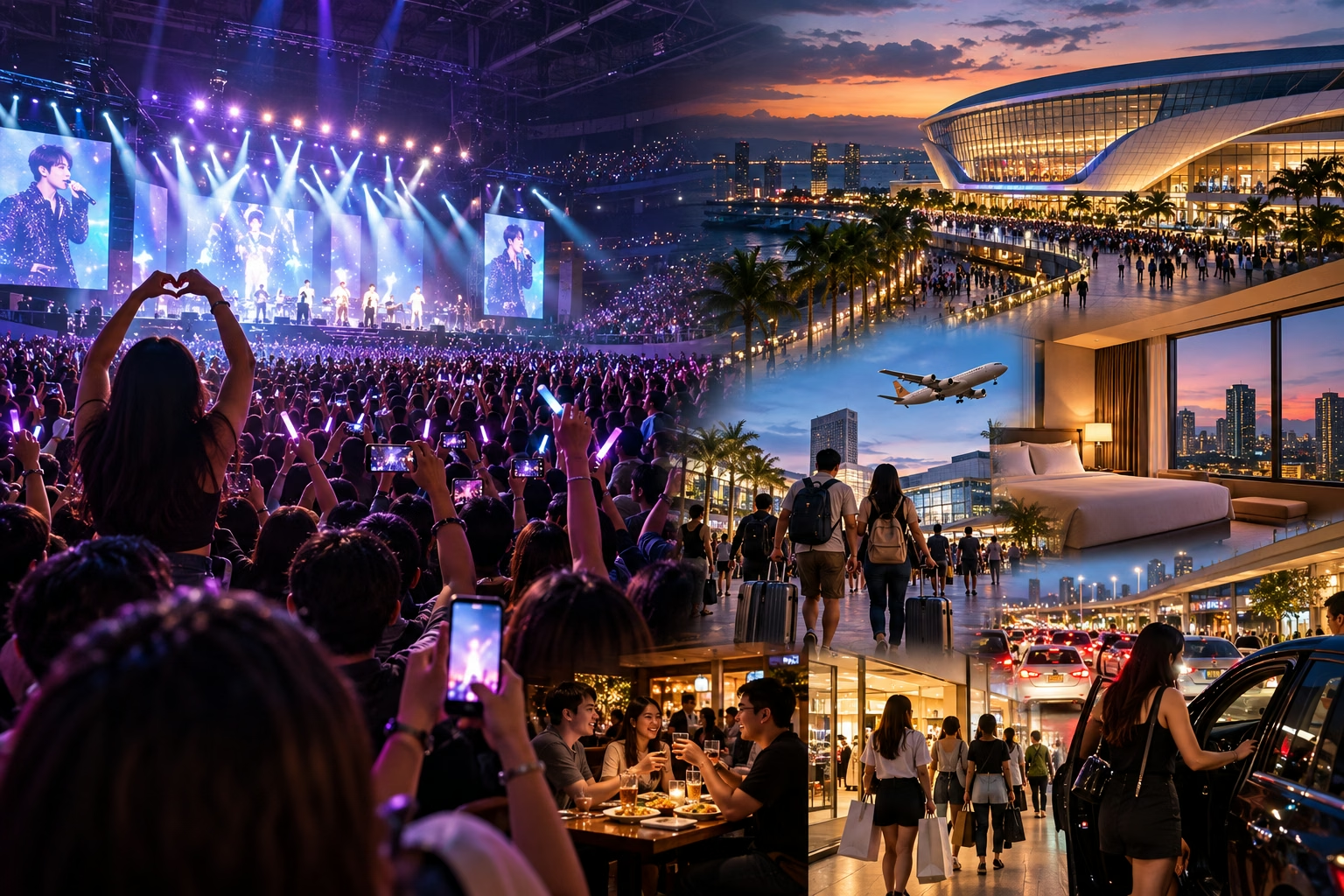
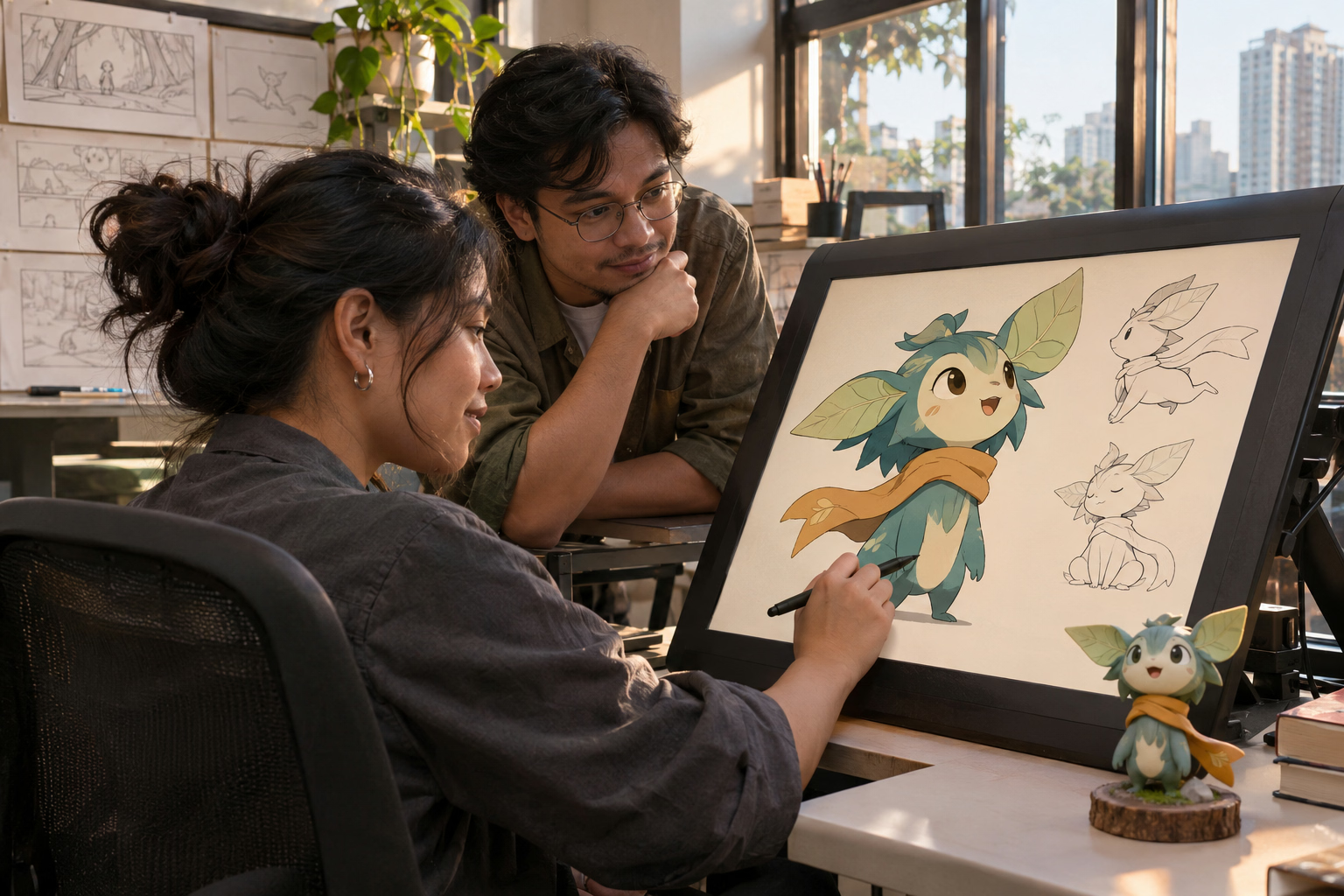
Two contrasting examples illustrate the current state of Filipino entertainment IP on the world stage: P-Pop’s festival breakthroughs and a Japanese-origin property adapted by a Philippine network. One represents original IP export; the other, licensed adaptation. Both reveal the possibilities and structural constraints.
P-Pop’s Soft Power Moment
In July 2026, the Philippine Embassy in Paris hosted a lecture on P-Pop as cultural diplomacy, highlighting milestones including BINI becoming the first Filipino act to perform at Coachella and SB19 appearing at Lollapalooza . These achievements demonstrate that Filipino pop music has evolved beyond entertainment into an instrument of cultural diplomacy, showcasing Filipino talent and identity while strengthening the country’s soft power.
The significance for IP franchising is indirect but real. Music groups are brands with franchise potential—merchandise, endorsements, content formats, international touring. BINI and SB19 have achieved the visibility that makes such extensions viable. Yet the infrastructure for systematic IP licensing around Filipino music acts remains underdeveloped compared to the K-pop model, where agency-driven franchise management is institutionalized.
Voltes V Legacy and the Adaptation Question
The more complicated case is “Voltes V: Legacy,” GMA Network’s live-action adaptation of the Japanese anime that aired from May to September 2023. The production was licensed from Toei Company through Philippine licensee Telesuccess Productions, with close supervision from Toei . The series was a technical milestone for Philippine television, and Toei later re-edited the Philippine material into a film version with new CG effects for Japanese release .
This is an impressive production achievement—but it is not Filipino IP. The underlying property, characters, and franchise rights belong to Toei. The Philippine contribution was execution, not ownership. The adaptation demonstrates that Filipino studios and networks can meet international production standards; it does not demonstrate that Filipino-owned characters can become global franchises.
The Ownership Imperative
The distinction matters because franchise economics accrue disproportionately to IP owners. A licensed adaptation generates production fees and local broadcasting revenue. A successful original franchise generates licensing royalties, merchandising revenue, and format rights across territories and decades.
Government policy has recognized this gap. The DTI’s stated intent to shift from low-cost outsourcing to high-value original creations explicitly targets the ownership question. The Philippine Creative Industries Development Act provides the legislative framework. But policy intent and commercial reality are separated by the long, expensive process of building characters and stories that travel.
P-Pop’s organic global traction suggests that Filipino creative talent can achieve international resonance. Voltes V Legacy proves Filipino production capability. What remains unproven is whether a Filipino-owned entertainment property can navigate the licensing, marketing, and franchise management requirements of global distribution. The pieces exist; the assembly has not yet occurred.