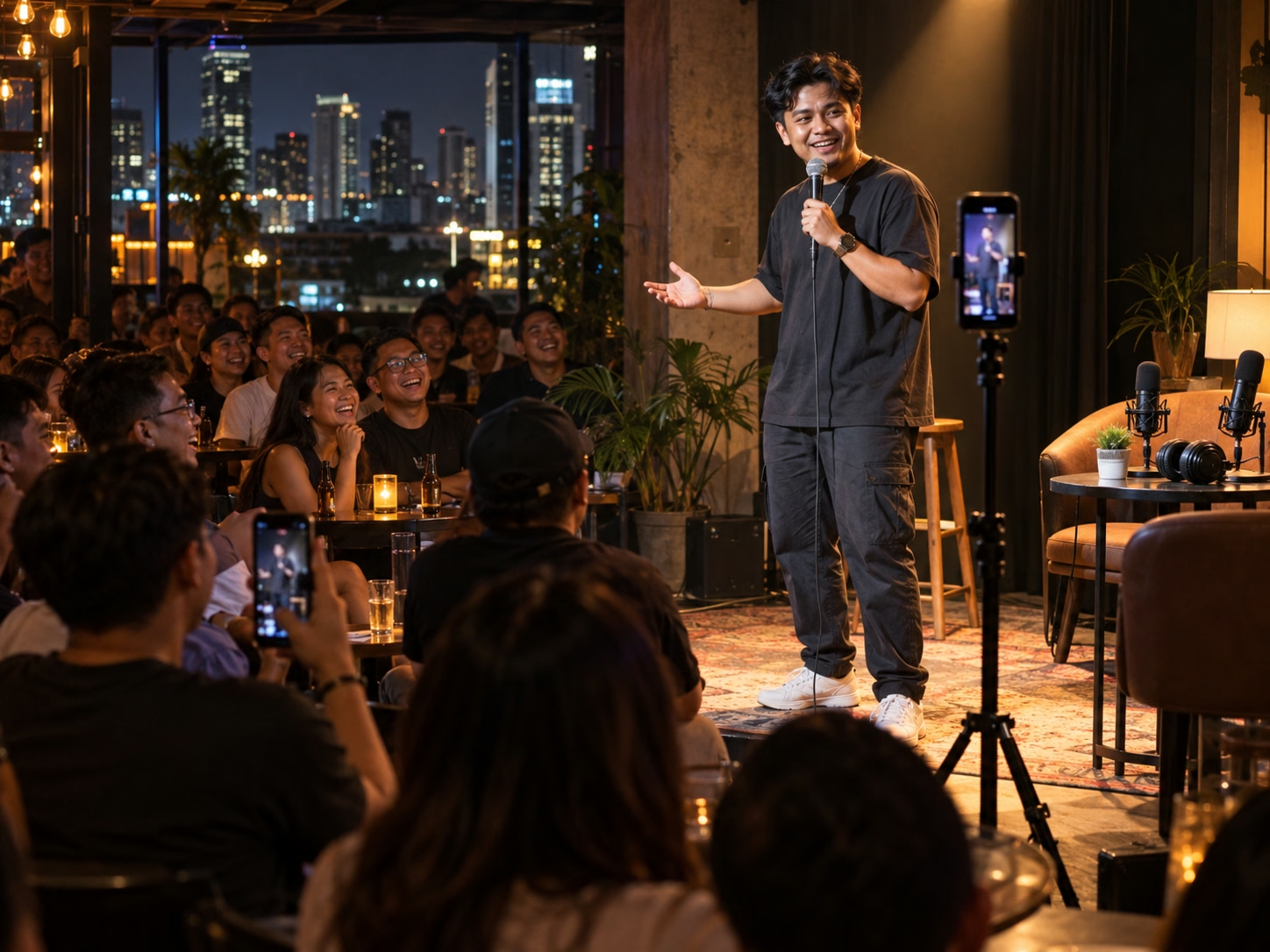
Stand-up comedy has always been the poor man’s therapy, but in the Philippines of 2026, it has evolved into a form of social excavation. Faced with a complex political landscape, economic pressures, and a rapidly shifting cultural identity, Filipinos are turning to comedians to make sense of the absurdity. The new generation of Pinoy comics is not satisfied with mere observational humor; they are deconstructing the very fabric of Filipino society, one punchline at a time.
The Political Punchline in a Polarized Climate
Navigating political humor in 2026 is a high-wire act. Filipino audiences are deeply polarized, and comedians must walk a tightrope between satire and alienation. However, the best in the scene have found a way to critique without preaching. Instead of direct attacks, the trend has shifted toward “absurdist criticism.”
Comedians like those featured in the Comedy Manila collective are focusing on the bureaucracy and the bizarreness of daily governance rather than the personalities. The laughter comes from a place of shared exhaustion. Jokes about traffic jams that inspire philosophical debates, or the logical gymnastics required to fill out government forms, resonate because they are universally felt. In 2026, the political joke is less about telling the audience who to hate and more about validating the collective confusion of living through this era.
Redefining Gender and the Mainstream
The biggest cultural shift in 2026 is the mainstreaming of LGBTQIA+ comedy. While gay comedians like Vice Ganda have dominated the mainstream box office for years, the underground stand-up scene was long dominated by straight men. Today, queer comics are taking over the intimate stages of Cubao Expo and Poblacion, bringing perspectives that are fresh, unapologetic, and deeply nuanced.
These comics are moving beyond the “gay best friend” trope to discuss the reality of queer dating apps, trans healthcare, and the unique dynamics of Filipino “chosen families.” The laughter in these rooms is cathartic. It is the sound of an audience finally seeing their lives reflected not as a caricature, but as a complex, hilarious reality. This inclusivity has broadened the audience for stand-up, bringing in more women and queer patrons who previously felt alienated by the “boys club” vibe of the older circuit.
The Revival of Regional Humor
Finally, 2026 is the year regional identity took center stage. The dominance of Taglish in Metro Manila is being challenged by comedians who perform entirely in Bisaya, Ilonggo, or Kapampangan. These acts, often performing in specialized venues in their home regions or in diaspora community centers, are exploding in popularity.
This move toward regional language is an act of cultural preservation. It proves that humor is deeply tied to linguistic nuance. A joke about a grandmother’s superstitions lands differently in Ilonggo, carrying the weight of specific cultural textures that English cannot capture. The Cultural Center of the Philippines has even begun featuring regional stand-up nights, acknowledging the art form as a vital component of contemporary Filipino oral tradition. The message in 2026 is clear: the Filipino voice is not a monolith, and the laughter is richer for it.