Policy and production set the boundaries, but the circular economy ultimately depends on consumer behavior. In the Philippines, a quiet but measurable shift is underway: ownership is no longer the default mode of fashion consumption. Rental platforms, clothing swaps, and recommerce enterprises are normalizing the idea that a garment’s value lies in its use, not its permanence in a closet.
Clothing-as-a-Service Goes Mainstream
Wear Forward, founded by Prince Jimdel Ventura, positions itself as the Philippines’ premier Clothing-as-a-Service (CaaS) platform. It operates an AI-powered circular fashion marketplace and virtual wardrobe that allows users to buy, sell, rent, swap, and donate preloved and upcycled clothing, alongside alteration and styling services. At the RESA PH 2025 conference, Ventura demonstrated that the CaaS model could function as a viable ecosystem—not a niche charity—by integrating multiple circular transactions into a single user journey.
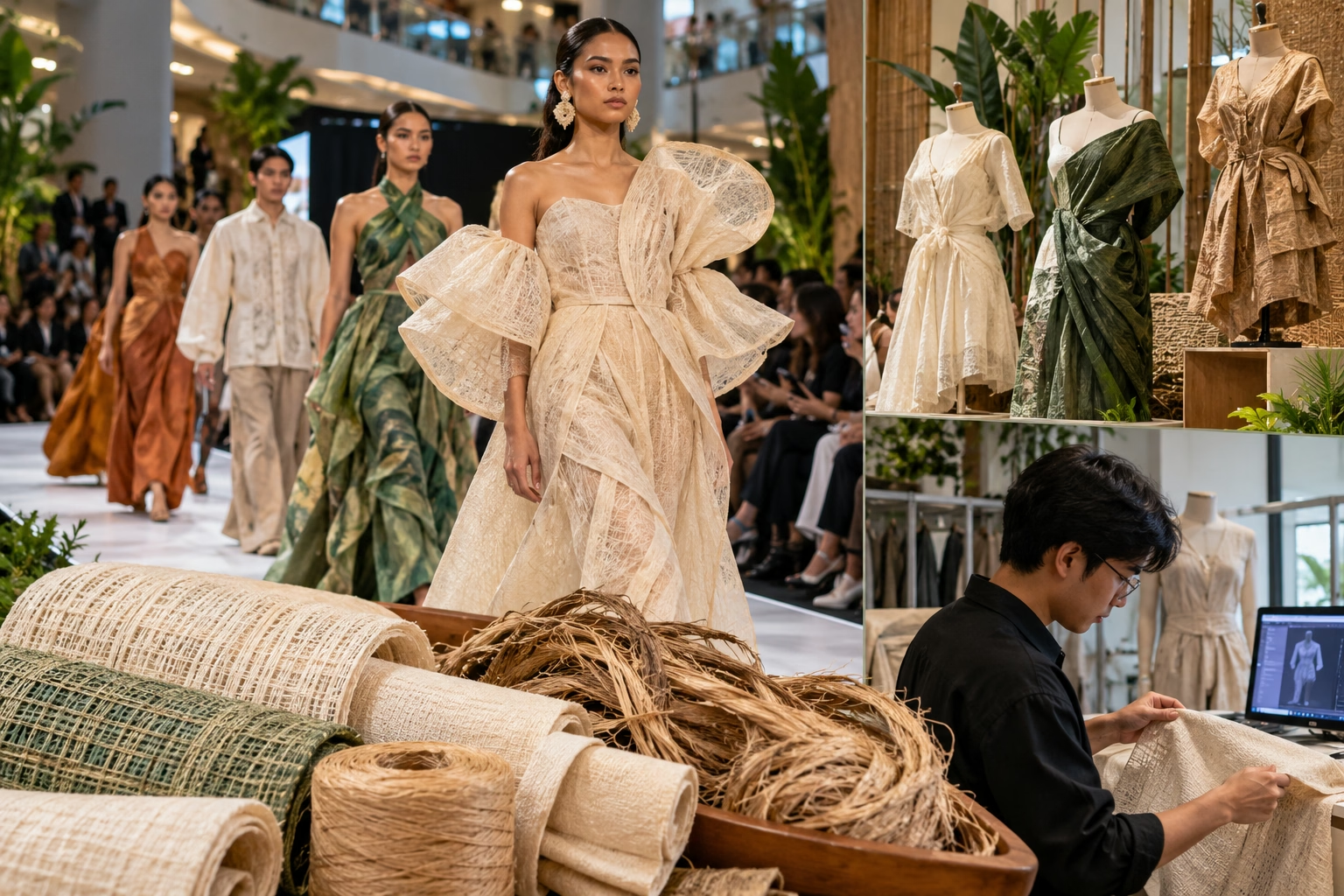
The rental market is maturing in parallel. Designer Chynna Mamawal partnered with rental platform RNT Wardrobe in late 2025 for an exclusive, size-inclusive Filipiniana and Barong capsule collection available only for rent. This collaboration signals a cultural shift: rental is no longer confined to fast-fashion knockoffs or budget formalwear. It is becoming a channel for Filipino craft and high design, allowing consumers to access pieces they might never purchase outright while reducing the carbon footprint associated with single-wear garments.
The Swap Economy and the Social Layer
Not all circular consumption requires digital platforms. Basically Borrowed, a Philippine sustainability-focused community platform based in Makati, organizes clothing swap parties to extend garment lifecycles. These events transform circular fashion from an individual purchasing decision into a social practice—a space where style, community, and waste reduction intersect.
This grassroots layer is critical because it addresses a behavioral barrier that policy cannot legislate: the emotional attachment to novelty. Swapping and borrowing reframe novelty as access rather than acquisition. For a fashion culture shaped by ukay-ukay (secondhand) traditions and barangay (community) ties, these models resonate with existing social norms rather than importing foreign sustainability frameworks.
The Economics of Access Over Ownership
The financial logic is compelling. Renting a designer piece for a weekend can cost PHP 2,000 to PHP 6,000, compared with a purchase price of PHP 15,000 to PHP 30,000. For occasional formalwear—barong, filipiniana, wedding guest attire—the calculus favors access. But the deeper value lies in lifecycle extension: every rental, swap, or resale displaces a potential new production cycle and delays disposal.
The challenge remains scale and trust. Recommerce platforms must solve for authentication, hygiene, logistics, and sizing to compete with the convenience of fast fashion. Yet the direction is unambiguous. Filipino consumers are beginning to treat clothing as a service and a shared resource—a shift that, if sustained, will reduce the volume of single-use fashion entering the waste stream.