When the Personal Becomes the Runway
The most striking collections to emerge from Manila Fashion Week 2026 were not built on trend forecasting. They were built on memory, grief, desire, and defiance. Yana Kalaw’s “Girls, Girls, Girls” opened with beauty queen Michelle Dee in a sheer frock embroidered with the word “Tibo” seven times—a bold reclamation of a term that has historically been used as a slur against sapphic women. “This femininity is not one we are typically accustomed to,” Preview observed. “Devoid of the male gaze, the fashion was allowed to reach into extremities, attaining a pleasingly grotesque level of girlhood.”
Kill Joy Studios and the Architecture of Manila Memory
Where Kalaw explores gender and grief, Kill Joy Studios constructs what one reviewer called “bolder, stranger and more personal territory.” The label draws on Manila street energy, music, family, and queer identity, translating the chaotic texture of the city into garments that feel simultaneously nostalgic and futuristic. Lilah Roché completes the trio with a reimagining of the Manila noir action film, placing a powerful female protagonist at the center of a genre historically dominated by male antiheroes. Together, these three designers represent a generation unwilling to settle for a single, export-friendly definition of “Filipino fashion.”
The Diaspora Dimension
Identity in Filipino fashion is not solely a domestic conversation. Spanish-Filipino designer Lizandro Acera, a 2026 graduate of Central Saint Martins’ prestigious BA Fashion Womenswear pathway, channeled his family history into a collection called “Fortuna,” reflecting on the pressures of projecting success in Filipino society. Filipino Japanese designer George Inaki of Milamore was named a finalist for the 2026 CFDA/Vogue Fashion Fund, joining an inner circle shaping American fashion. These designers carry Filipino identity across borders, complicating any simple narrative of “local talent going global.”
Craft as Cultural Memory
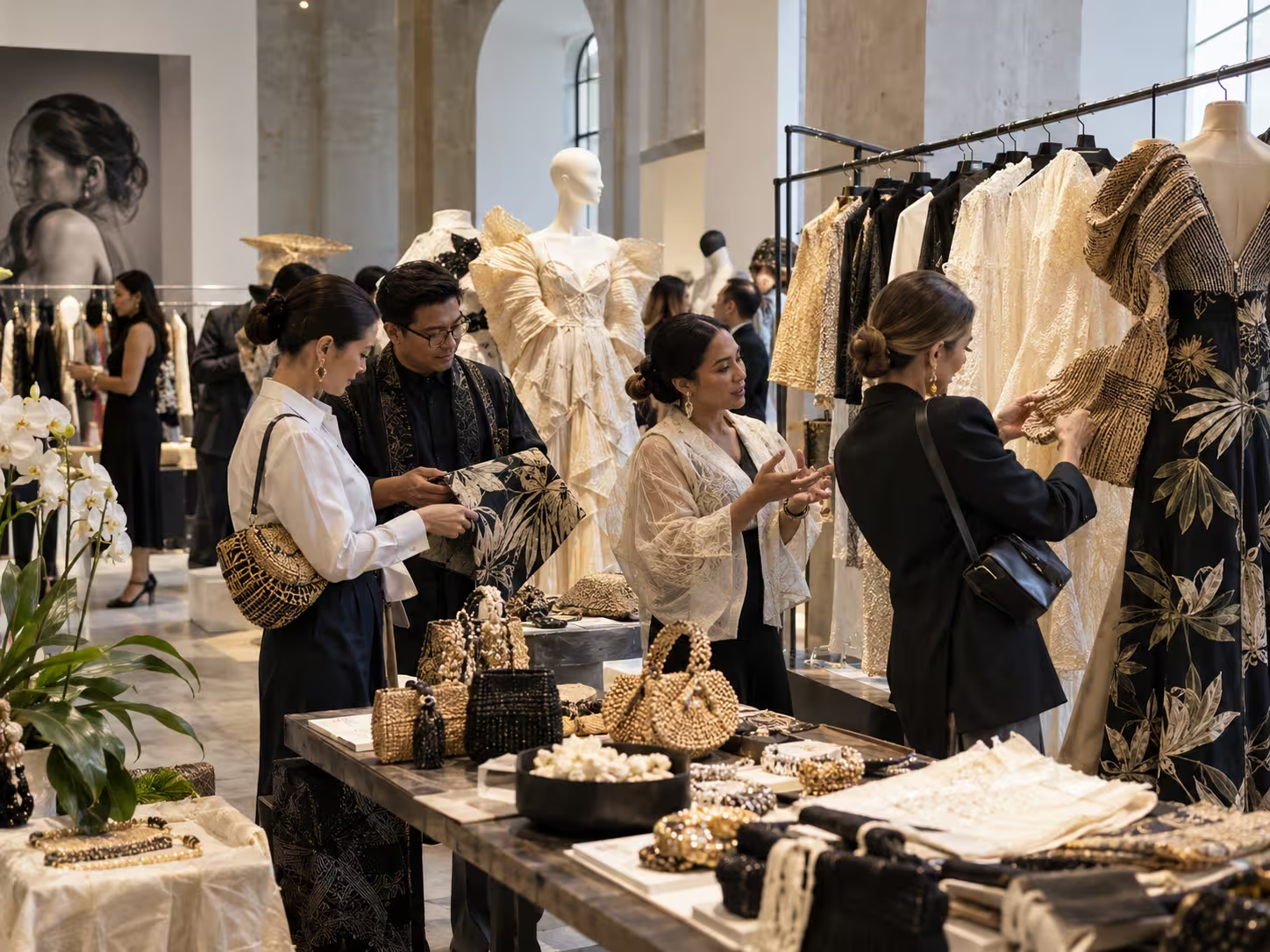
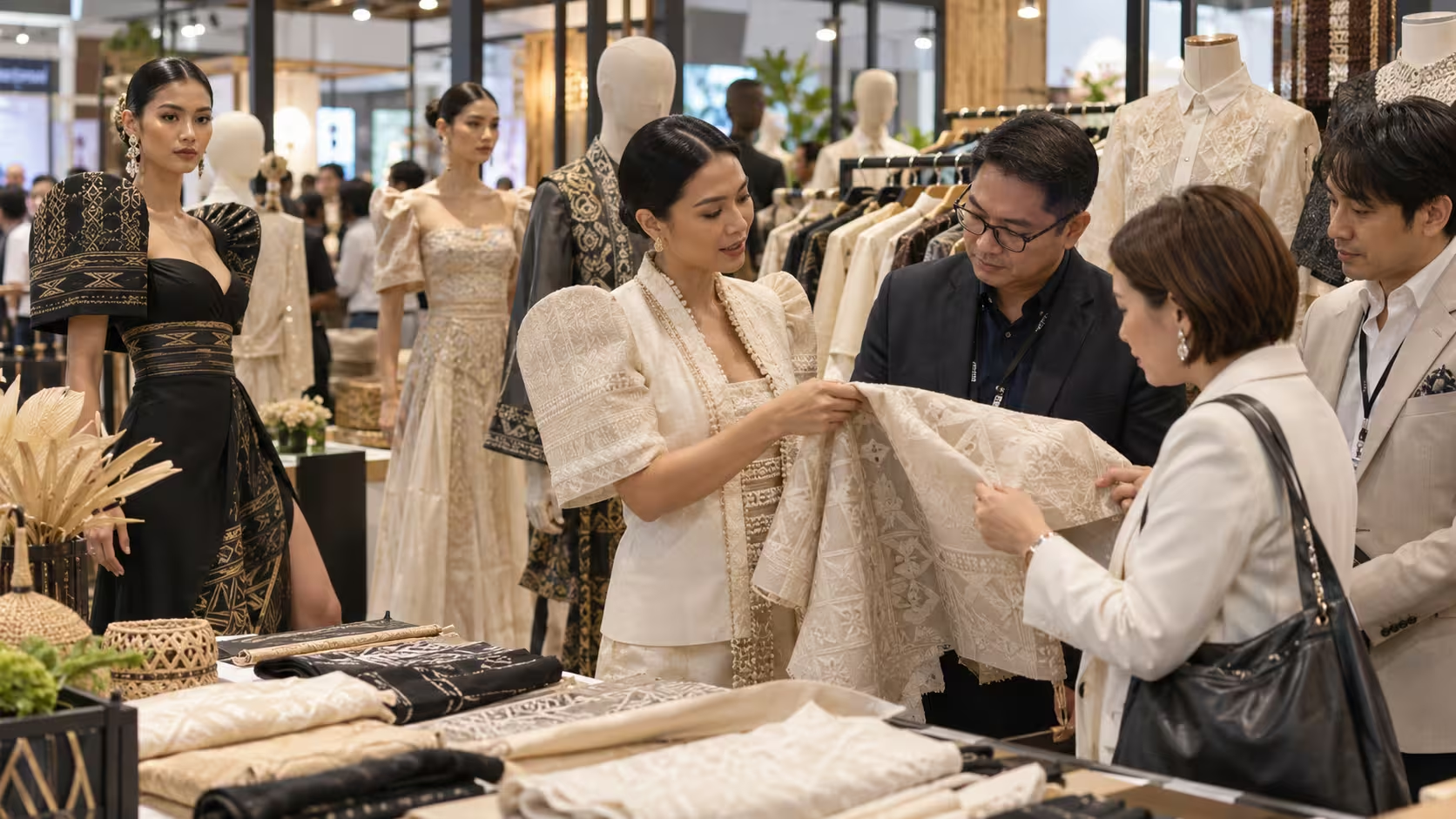
Vogue Philippines’ March 2026 feature on Filipina designers underscored another dimension: the integration of heritage craft into contemporary practice. The issue spotlighted five designers—Jilliane Santos and Paulina Dayrit of Palengke, Krizia Jimenez, Renee De Guzman of R/Studios, and Steph Verano—who balance retail viability with bespoke craftsmanship. This is not nostalgia for its own sake. As Vogue Philippines’ editorial framing suggests, these designers treat craft as living knowledge, not museum artifact.
Why Identity Is the New Competitive Advantage
In a regional fashion landscape often characterized by aesthetic convergence, Filipino designers are betting that specificity is strength. The queer femininity of Kalaw, the Manila noir of Roché, the family fractures of Acera—these are not market-tested concepts. They are risks. And in 2026, those risks are being rewarded with editorial features, international showcases, and a growing audience that recognizes authenticity as the scarcest luxury of all.