Travelers arriving in the Philippines may initially assume that vegetarian choices are limited. Restaurant signs often promote grilled meat, seafood, fried chicken, and pork dishes, while vegetables appear lower on the menu.
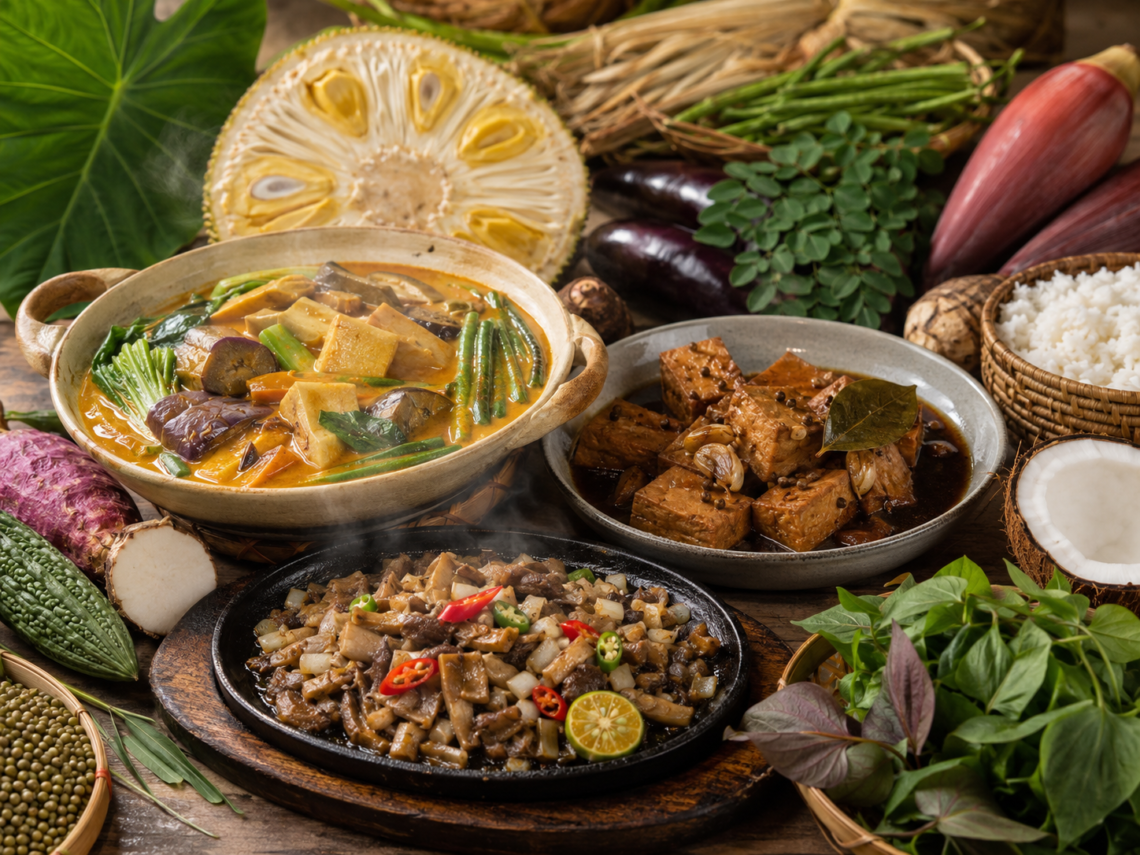
A closer look reveals a different reality. Filipino households regularly cook eggplant, mung beans, squash, leafy greens, bamboo shoots, green papaya, jackfruit, and coconut-based stews. The real issue is not the absence of vegetables but the frequent use of animal-based seasonings.
The Safest Starting Points
Fresh Fruit and Breakfast Choices
The Philippines offers bananas, mangoes, papayas, pineapples, watermelon, pomelo, and seasonal tropical fruit. These are useful breakfast options when hotel buffets provide few clearly labeled vegetarian dishes.
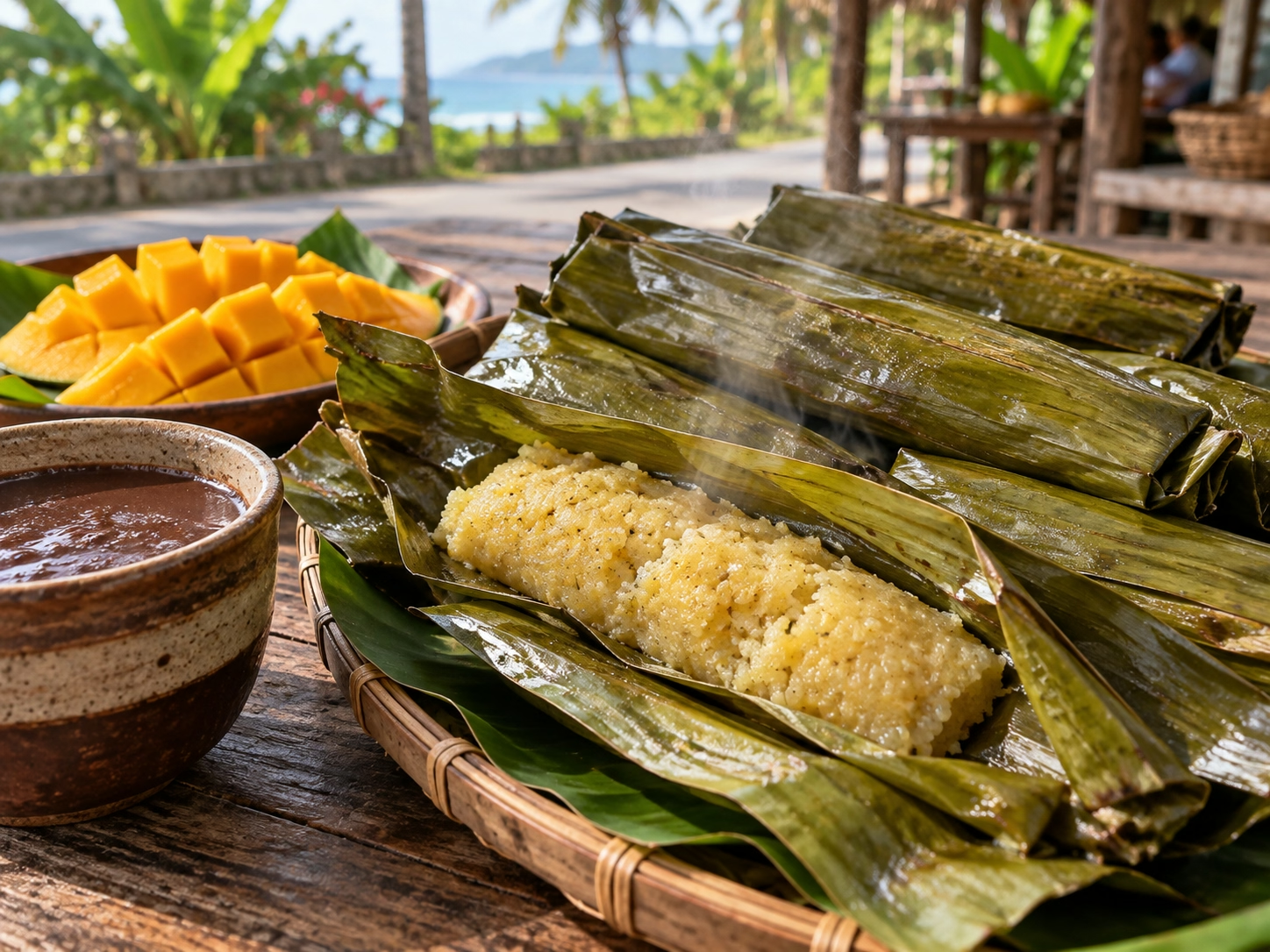
Champorado, a chocolate rice porridge, may also be suitable for vegetarians. Traditional versions are often served with milk and sometimes paired with dried fish. Vegans can request coconut milk or another plant-based alternative and omit the fish accompaniment.
Tofu and Vegetable Meals
Tofu is widely known as tokwa. Tokwa dishes can be filling, affordable, and easy to combine with rice. However, sauces may contain fish sauce, oyster sauce, or pork broth.
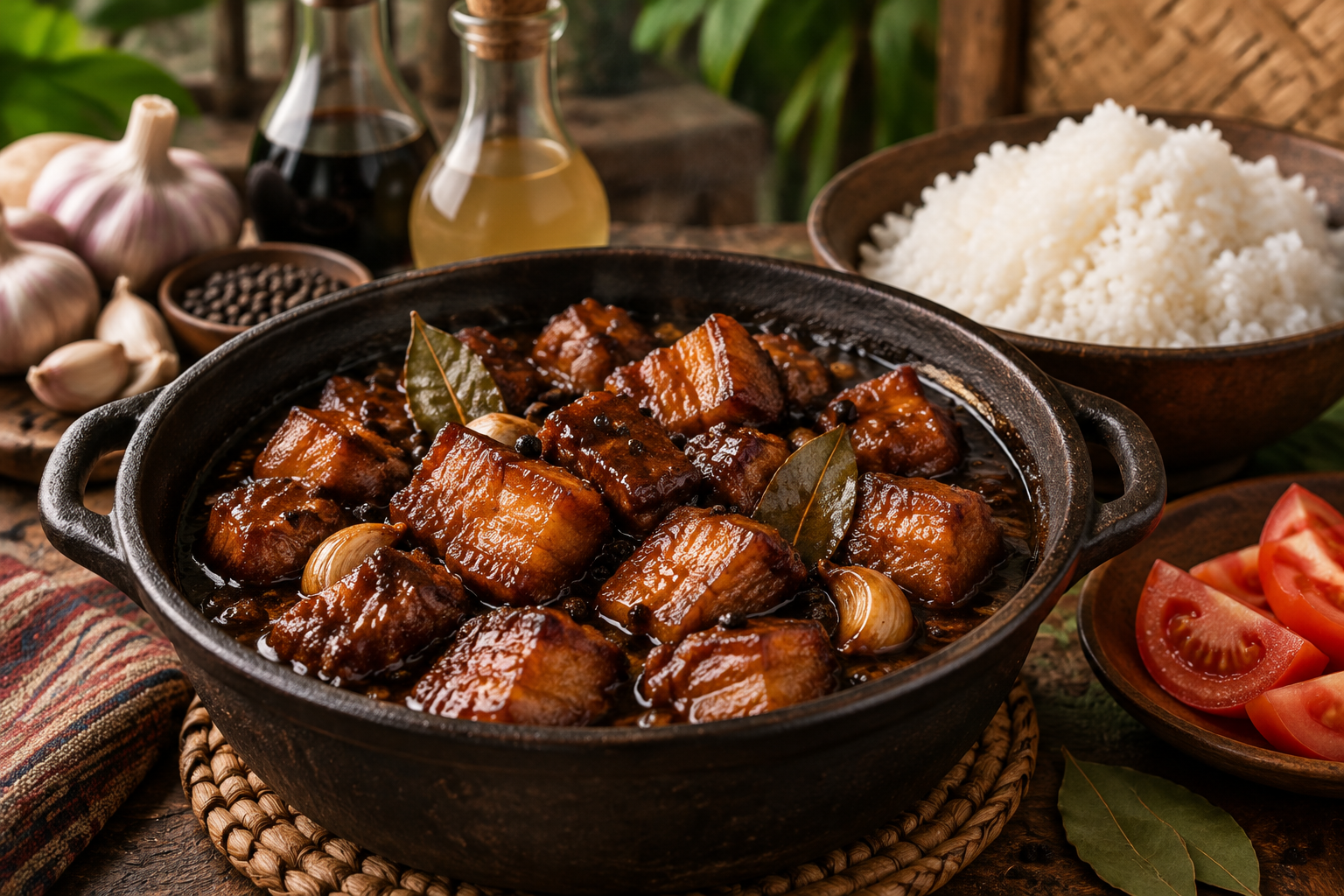
Tokwa’t baboy is not vegetarian despite tofu being a major ingredient, because the dish traditionally includes pork. A customized tokwa dish with vinegar, soy sauce, onions, and chilies is a safer alternative.
Noodles and Rice Dishes
Pancit may contain cabbage, carrots, green beans, mushrooms, and noodles, but standard recipes often use chicken stock, shrimp, pork, or fish-based sauces.
Vegetarian diners should request noodles cooked with vegetable stock and soy sauce. Garlic fried rice can also be suitable, although some kitchens cook rice using shared oil or add meat-based seasoning.
Filipino Vegetable Dishes to Request
Ginisang sayote combines chayote with garlic, onions, and tomatoes. It is mild, affordable, and easily prepared without meat.
Ginataang kalabasa features squash cooked in coconut milk, sometimes with string beans. Shrimp is a common addition, so diners must request a shrimp-free version.
Sinigang na gulay is a sour vegetable soup flavored with tamarind. It may include radish, water spinach, eggplant, tomatoes, okra, and string beans. The broth must be checked carefully because many restaurants use fish, shrimp, pork, or commercial stock containing animal ingredients.
Lumpiang togue, a fried spring roll filled with bean sprouts and vegetables, may look vegetarian but sometimes contains shrimp, pork, or fish-based seasoning.
Useful Questions When Ordering
Rather than relying on the word “vegetarian,” diners should describe exactly what must be excluded. A clear request should mention meat, poultry, fish, shrimp, fish sauce, shrimp paste, oyster sauce, and meat broth.
It is also useful to ask whether the dish is cooked separately. Shared pans and fryers may matter to strict vegetarians and vegans, particularly in busy restaurants.
In a real-world tourism setting, large hotels and contemporary cafés are generally more likely to understand terms such as vegan or plant-based. Small eateries may still provide excellent vegetable meals, but communication should focus on ingredients rather than labels.
Making the Meal Nutritionally Complete
Eating only steamed rice and sautéed vegetables may not provide enough protein over an extended trip. Mung beans, tofu, peanuts, soy products, seeds, and legumes should be included regularly.
The World Health Organization advises people to consume at least 400 grams of fruits and vegetables per day, excluding starchy roots. The full guidance is available in the WHO Healthy Diet Fact Sheet.
By combining local produce with legumes, tofu, rice, and coconut-based dishes, vegetarian travelers can experience Filipino cuisine without reducing every meal to a modified side dish.