To understand traditional entertainment in the Philippines, it is necessary to see performance as part of everyday life rather than as a separate artistic activity. In many Filipino communities, entertainment grew out of religious ceremonies, seasonal celebrations, social customs, and local storytelling. Long before cinema, television, or online media, villagers gathered in plazas, churchyards, and open spaces to watch performances that combined music, movement, acting, and costume. These traditions still matter today because they reveal how Filipinos have expressed joy, belief, humor, and identity over centuries.
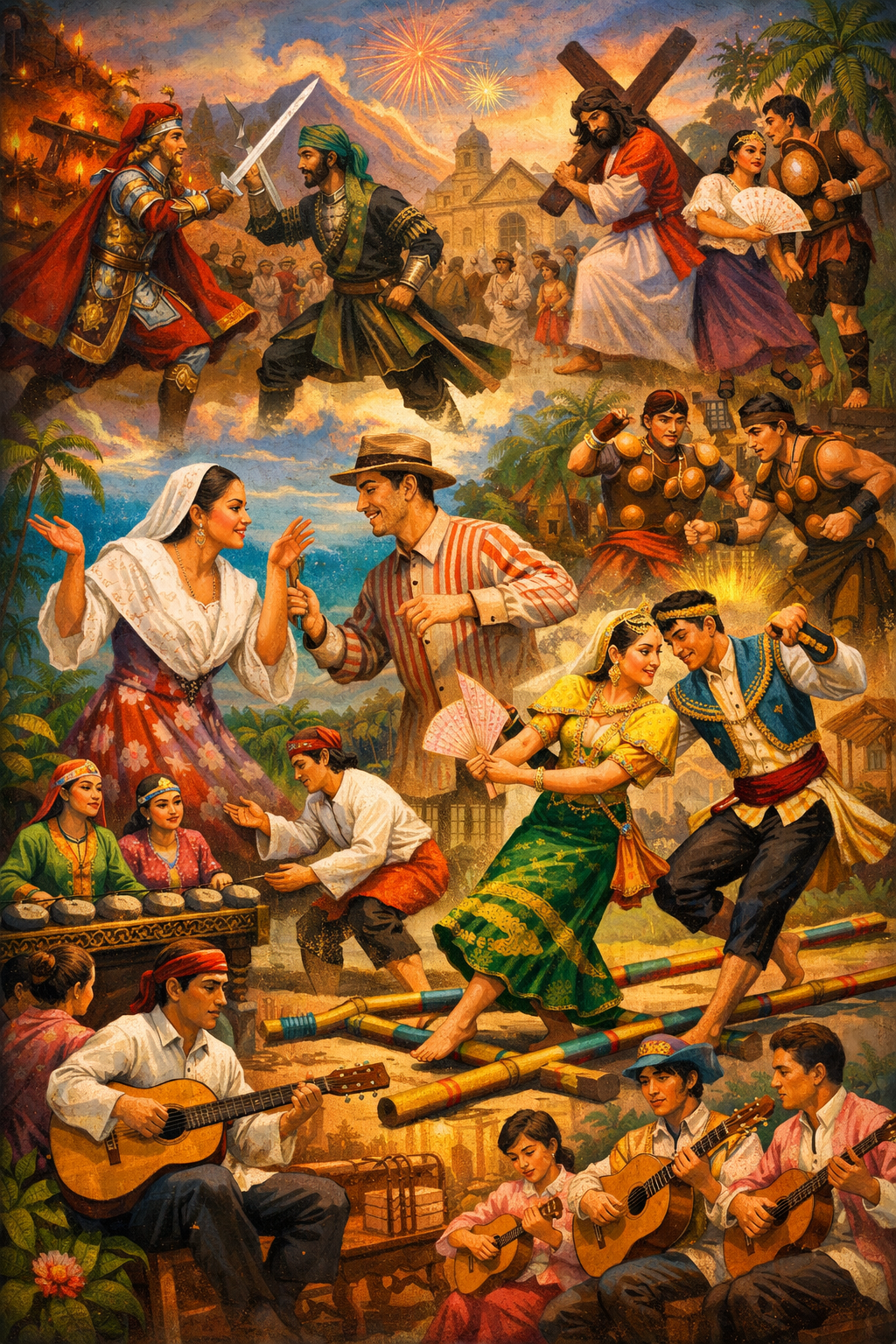
One important element in these performances is pantomimic expression. Silent or semi-silent acting has long been used in Philippine folk entertainment because gesture can communicate meaning quickly and vividly. The body itself becomes a storytelling tool. A classic example is Pantomina, a dance from the Bicol region that dramatizes courtship through movement. Dancers do not need elaborate verbal exchange to show flirtation, hesitation, and attraction. The narrative unfolds through mirrored steps, changing distance between partners, and carefully timed gestures. In this way, the audience reads emotion visually. This form of performance reflects a broader Filipino preference for expressive, communal, and easy-to-understand entertainment.
Philippine traditional theater expands this visual language into larger public drama. The komedya, often known as moro-moro, is famous for grand costumes, stylized sword fights, princely characters, and a highly dramatic tone. It became especially visible during the colonial period and was staged in many towns as a major community event. Another long-standing form is the senakulo, the Holy Week passion play portraying the suffering and death of Christ. Though rooted in Catholic devotion, it also became a major theatrical tradition that involved acting, recitation, music, stage design, and neighborhood participation. These theater forms show how entertainment in the Philippines often served multiple purposes: recreation, instruction, collective memory, and ritual.
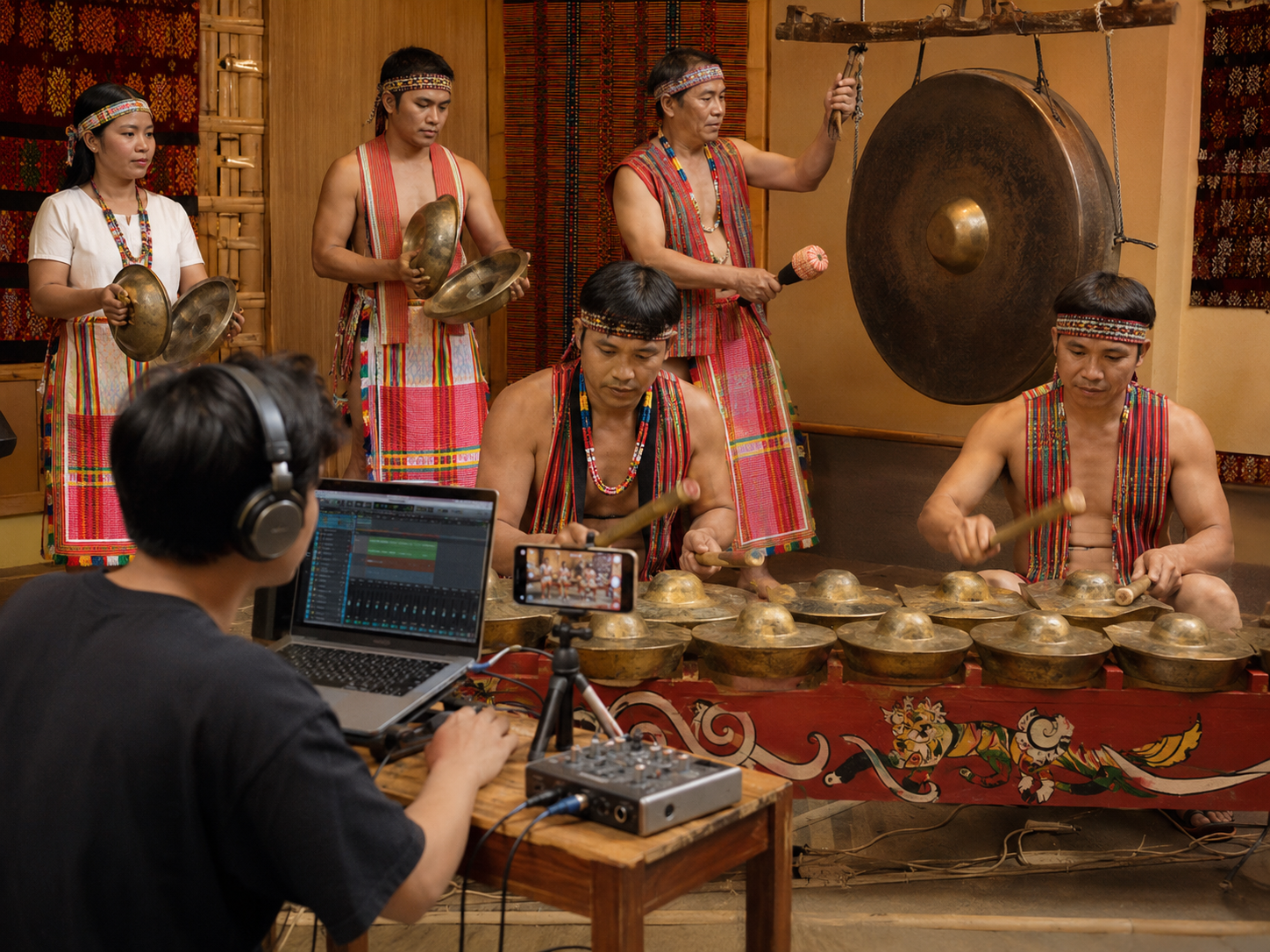
Music gives life to these traditions and differs by region. In Mindanao and the Sulu archipelago, the kulintang musical system stands as one of the most important indigenous performance traditions. Using sets of gongs and percussion instruments, it supports ceremonies, welcomes guests, and animates public gatherings. In many Christian lowland communities, the rondalla became equally important, offering bright string-based accompaniment for dances and festive presentations. Whether gong-centered or string-centered, Filipino traditional music is deeply interactive. It shapes the timing of movement, cues performers, and helps audiences feel involved in the event.
Dance is perhaps the clearest window into Filipino traditional entertainment because each form reflects a particular story or social value. Tinikling is often interpreted as a dance of agility, with performers stepping quickly between clapping bamboo poles. Cariñosa focuses on modest courtship and gentle charm, often enhanced by fans and handkerchiefs. Singkil, associated with Maranao court culture, emphasizes balance, noble bearing, and controlled movement while navigating bamboo poles. Other forms such as Maglalatik, with its rhythmic coconut shell performance, or Subli, linked to devotion in Batangas, show the remarkable range of Philippine folk dance.
These traditions continue to appear in school presentations, regional fiestas, national cultural programs, and heritage festivals. Their survival is important because they preserve local knowledge that cannot be fully captured in books alone. Traditional Filipino entertainment remains a moving archive of the country’s past, expressed through gesture, sound, color, and rhythm.