
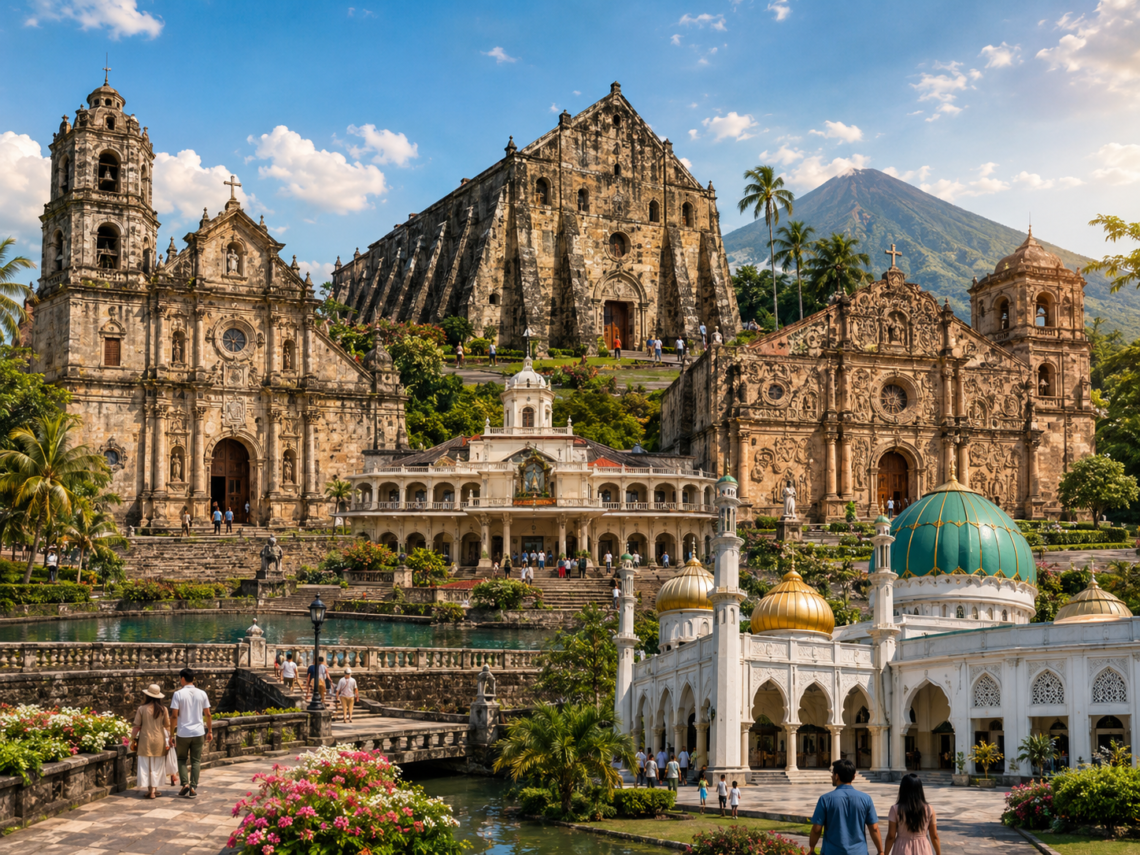
Religious tourism in the Philippines provides an exceptional opportunity to explore the country’s historic churches, sacred shrines, and culturally significant temples. These sites reflect centuries of devotion, colonial influence, and local artistry, attracting pilgrims, historians, and travelers seeking spiritual enrichment.
San Agustin Church in Manila stands as one of the most significant landmarks. Constructed in the late 16th century, this Baroque-style church is a UNESCO World Heritage Site and the oldest stone church in the Philippines. Its interior boasts intricate ceiling murals and gilded altars that narrate biblical tales. For visitors, it represents not only spiritual significance but also a deep connection to Filipino history and heritage.
Paoay Church in Ilocos Norte is celebrated for its monumental architecture and earthquake-resistant design. The massive buttresses, a defining feature of its Earthquake Baroque style, demonstrate an innovative approach to construction that merges European techniques with local environmental needs. Inside, detailed stone carvings illustrate biblical stories, captivating both tourists and scholars interested in heritage conservation.
In the Visayas, Basilica Minore del Santo Niño in Cebu attracts both devout pilgrims and casual visitors. Home to the historic Santo Niño statue, gifted by Ferdinand Magellan in 1521, the basilica is central to the country’s Catholic traditions. The annual Sinulog Festival held here is a vibrant cultural event, combining devotion, dance, and music, allowing visitors to witness the living practice of faith in a deeply engaging way.
Smaller churches like Miagao Church in Iloilo provide unique insights into local history and art. Its intricately carved facade, which integrates native plants and symbolic figures with biblical motifs, represents a creative adaptation of European Baroque style to the Filipino context. Such sites reveal how religion, art, and local culture intersect in meaningful ways.
Religious tourism also extends beyond Catholicism. Islamic worship sites in Mindanao, such as the Grand Mosque of Cotabato, offer a view into the Muslim faith, its rituals, and its architectural traditions. Observing prayer practices and exploring these sacred spaces provides a richer, multi-faceted understanding of the Philippines’ spiritual diversity.
Exploring the nation’s religious landmarks offers a rare opportunity to connect with Filipino culture on multiple levels. From centuries-old churches and historic relics to sacred Islamic sites, each location encapsulates the essence of devotion, resilience, and cultural identity. These sites serve not only as centers of worship but also as living museums that narrate the intertwined stories of faith, art, and history.