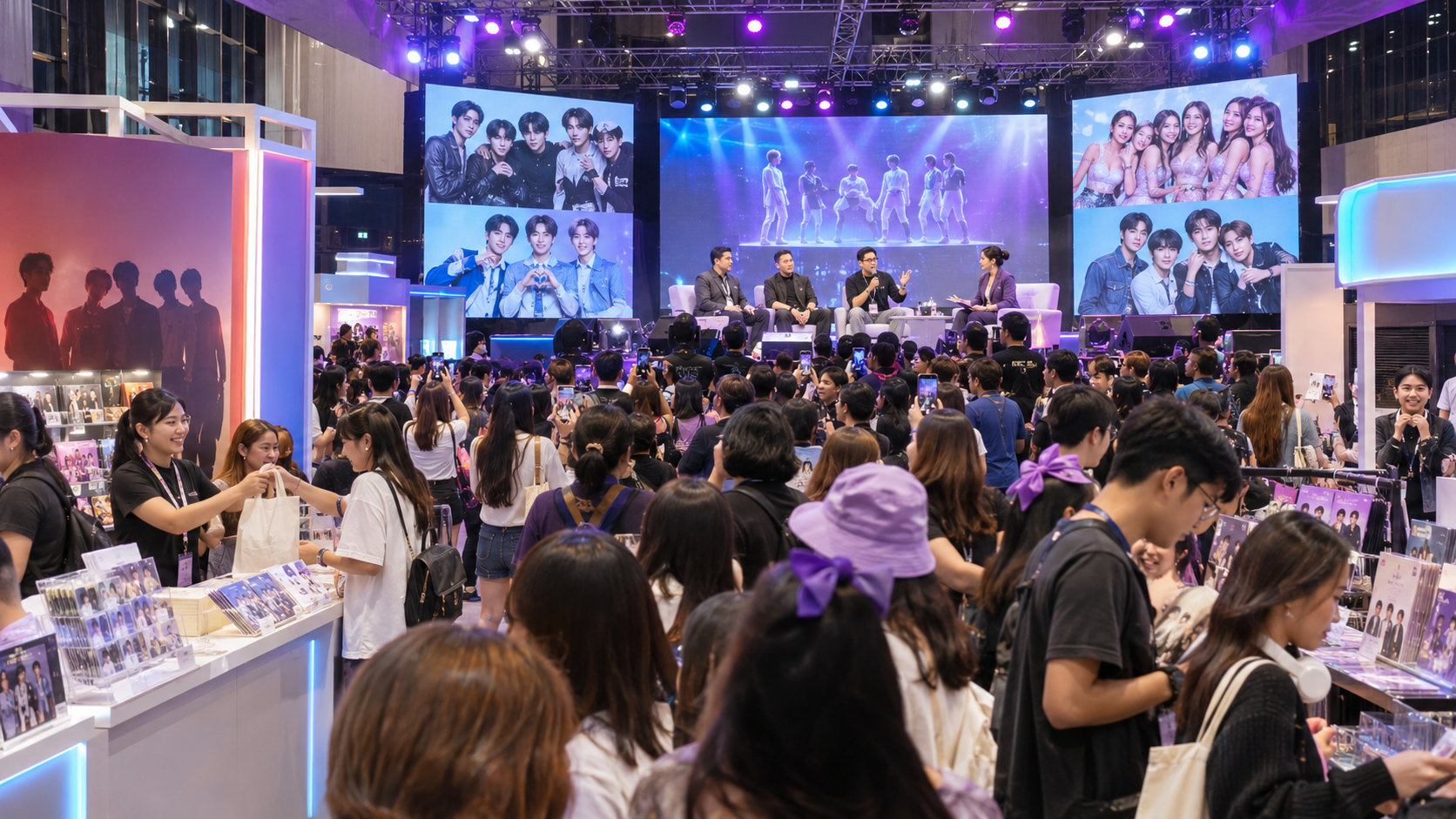
A viral moment can launch a career. It takes an ecosystem to sustain one. The story of P-Pop’s rise is often told through the highlight reel: BINI at Coachella, SB19’s sold-out arenas, the millions of streams . But beneath those peaks lies a slower, less glamorous build: the creation of a shared infrastructure that can catch talent when it falls and push it forward when it stalls. The 2026 convention was one node in a network that includes multi-act festivals, dedicated media coverage, and even academic study .
The Festival Circuit as a Shared Stage
Before a group gets its own headlining tour, it needs a stage that aggregates audiences. Events like PPOPCON and the Tugatog Filipino Music Festival served this function in earlier years, bringing acts from different management companies onto a single bill . This matters because it forces the scene to present itself as a scene rather than a collection of isolated fan camps. The 2026 iteration of P-POP UNITE furthered this by explicitly branding its lineup into cohorts—the P-pop Class of 2026 and the Rising Class of 2025—creating a narrative of progression and institutional memory .
The Role of Specialized Media
Billboard Philippines has moved beyond simply covering P-Pop releases. It now actively structures the scene through its class system, its convention programming, and its editorial framing. Rolling Stone Philippines has contributed retrospective histories that situate contemporary P-Pop within a longer lineage of Filipino dance groups and idol experiments . This kind of media labor is infrastructural: it creates a shared vocabulary, a canon, and a sense of historical continuity that artists and fans can reference.
The Academic Anchor
Perhaps the most surprising piece of infrastructure is scholarly. The 2024 issue of the Ateneo de Manila University journal Katipunan, titled “P-pop Rise,” was devoted entirely to P-Pop as a field of research, addressing idol training, foreign influences, fandom, and Filipino identity . When academics take a pop movement seriously, they create a durable record that outlasts chart cycles. They also provide industry practitioners with frameworks—like cultural hybridization and participatory culture—that can be used to refine training systems and marketing strategies . The presence of this academic layer suggests that P-Pop is not a fleeting trend to be mined and discarded. It is a cultural phenomenon being studied, documented, and thereby institutionalized.