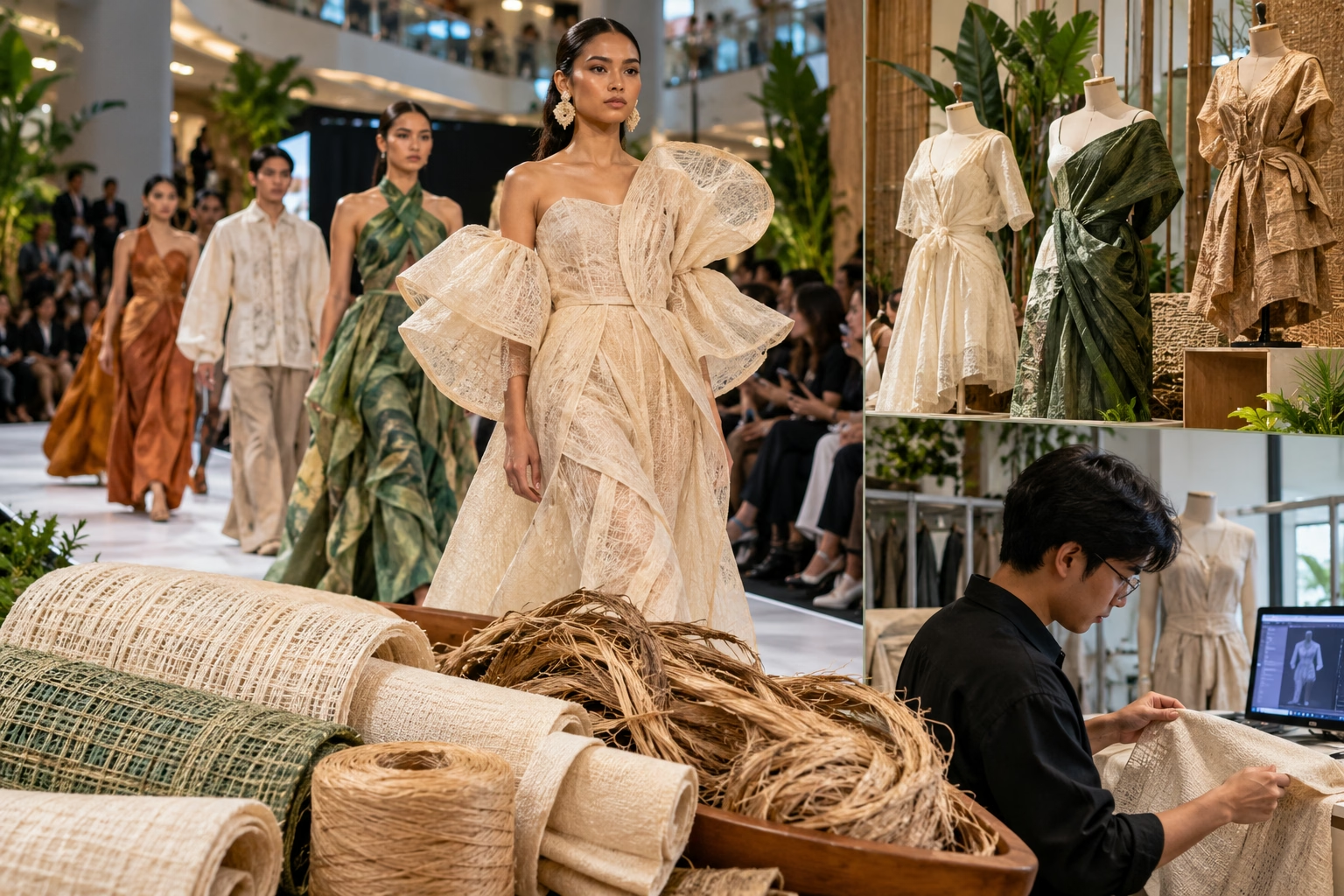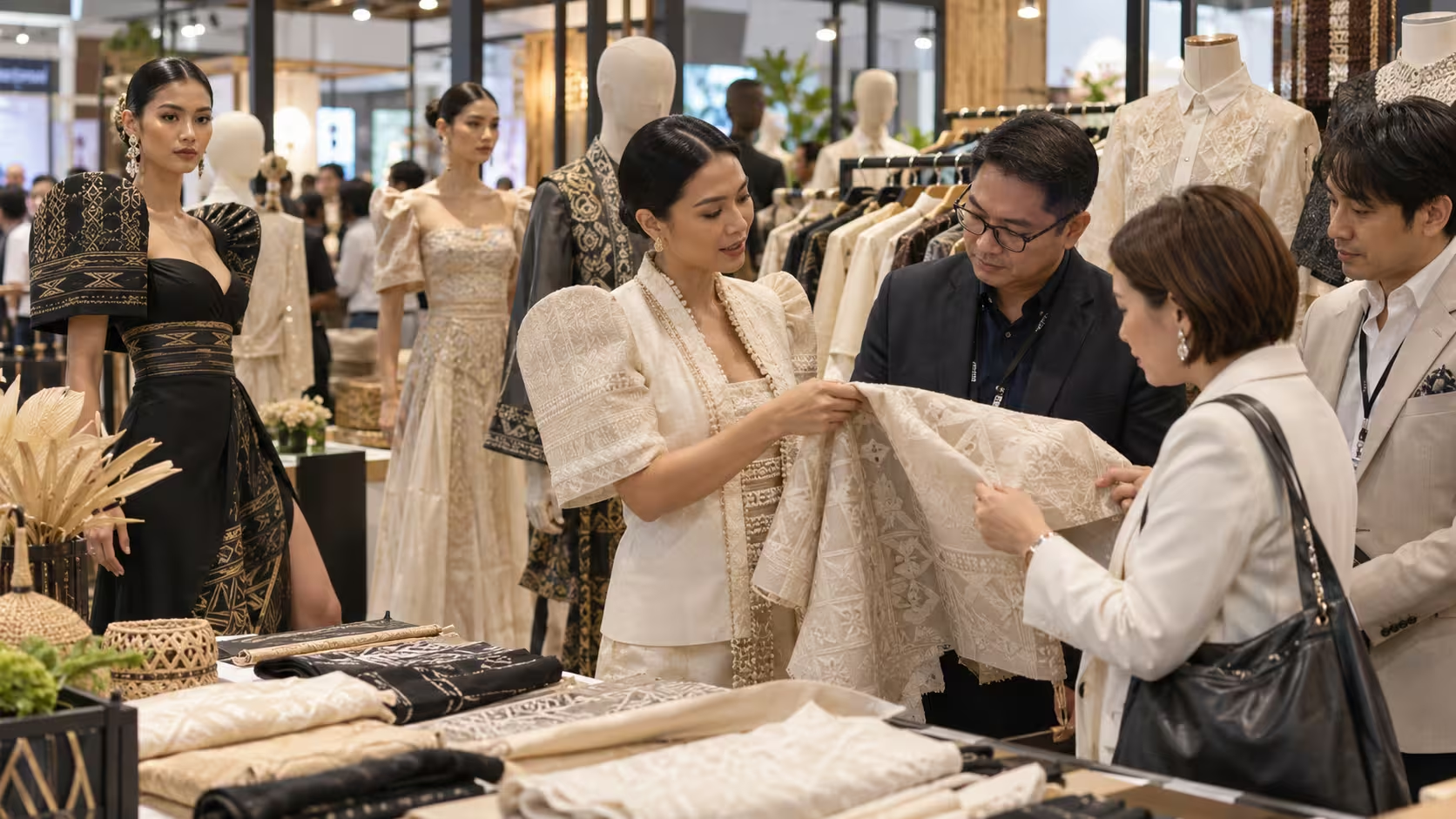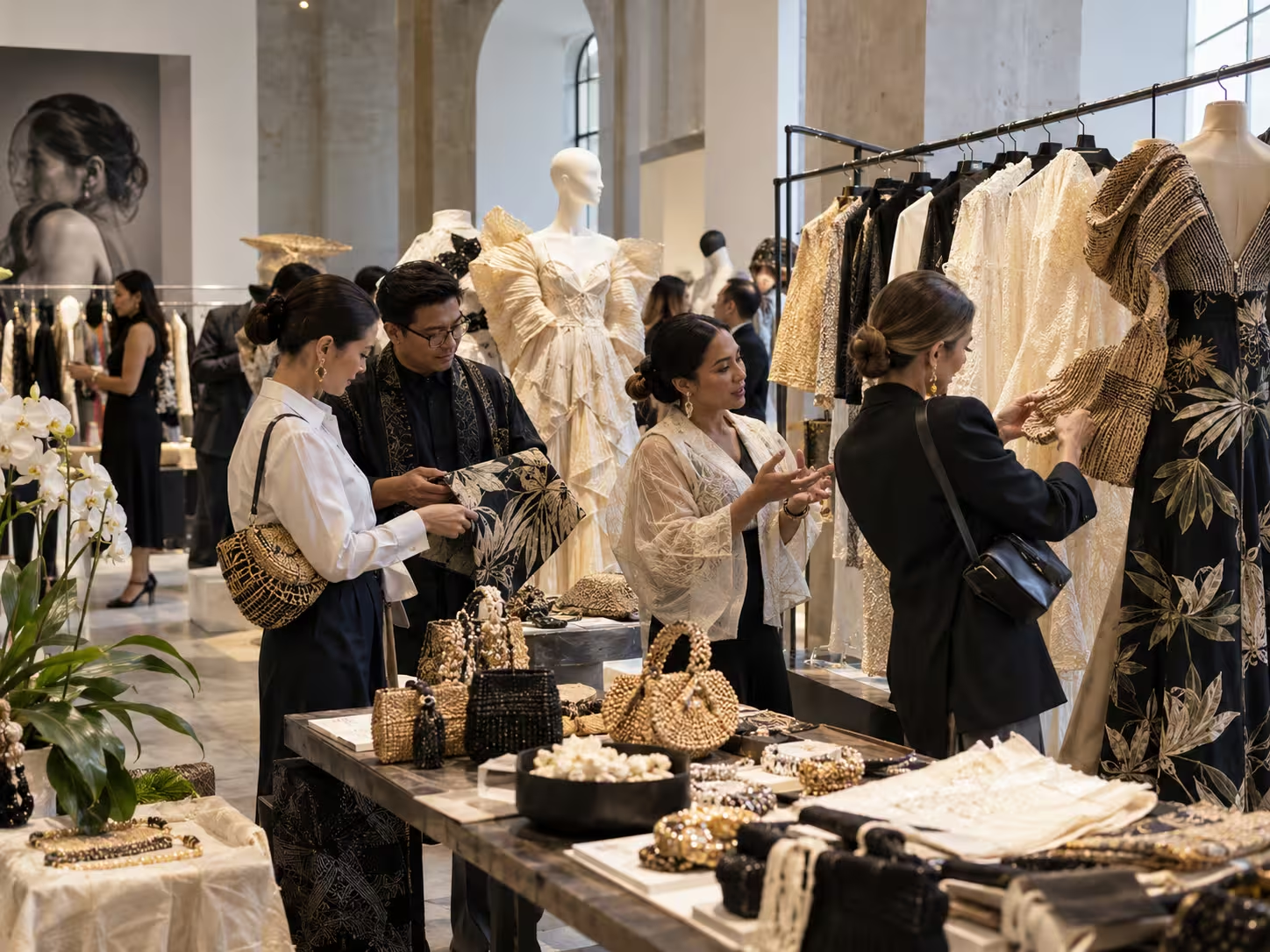
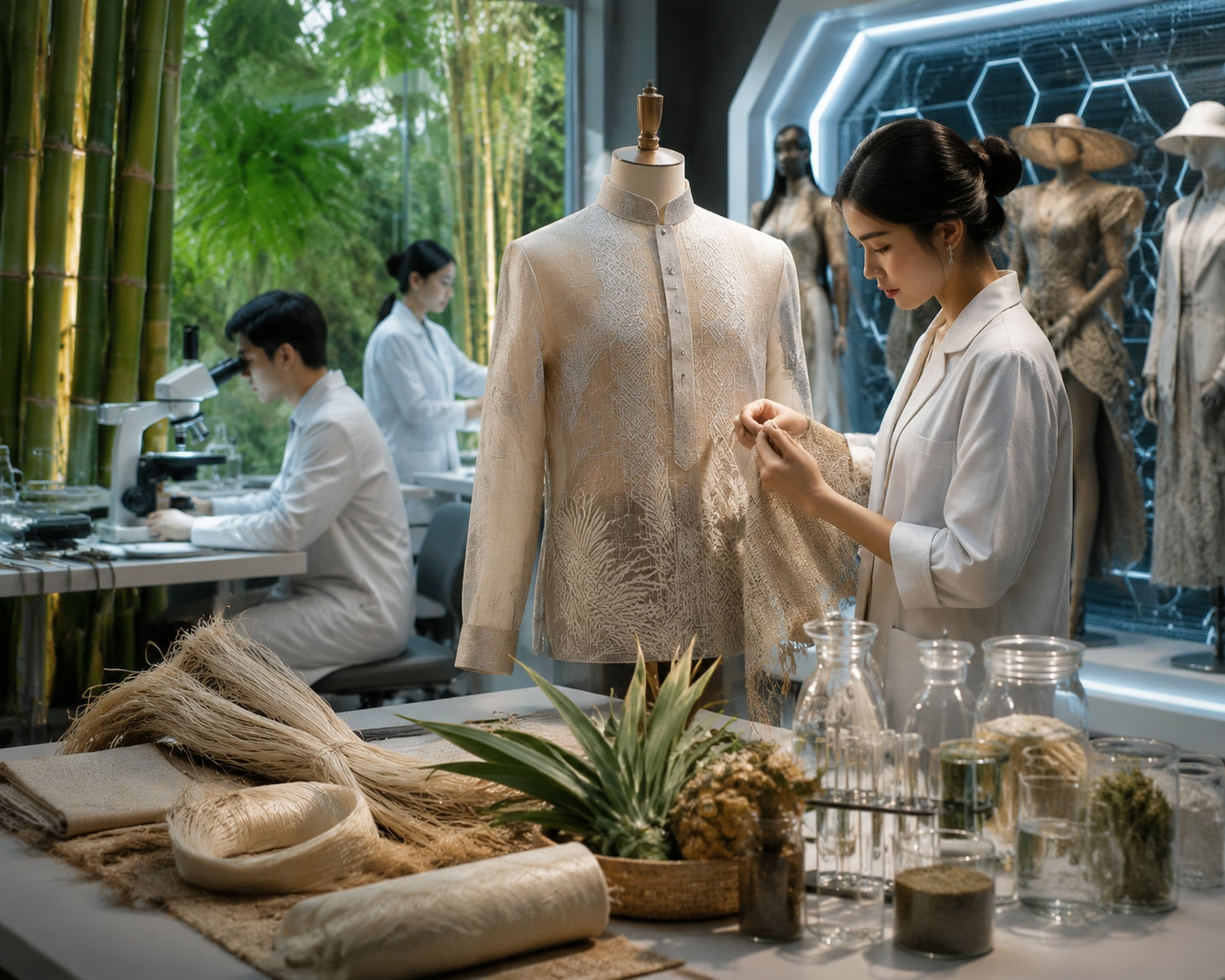
For decades, the Philippines’ greatest cultural export may have been its labor force. However, by 2026, that story is undergoing a beautiful revision. The children of Filipino migrants, born and raised in New York, London, Dubai, or Singapore, have now come of age. They bring with them a dual perspective: a deep understanding of strict global fashion trends and a longing for cultural roots that sometimes exist only in their parents’ stories. This phenomenon of “Cultural Fusion in Philippine Fashion 2026” is precisely driven by these Global Filipinos who are trying to answer the question: “What does it mean to be Filipino today?”
Aesthetic Hybridity: More Than Just Ethnic Accents
Diaspora designers bring a different design language. They are fluent in the vocabulary of Tokyo street fashion, Scandinavian elegance, and the boldness of New York style. When these elements meet Philippine textile heritage, the result is not a clumsy pastiche but a seamless hybridity.
Take, for example, Josie Natori based in New York, who continues to revitalize her label, or the new wave of designers like Charlene Tan based in Milan. They do not simply stick woven fabric onto modern dresses. They understand structure, fabric drape, and the psychology of the global consumer. For instance, in the Fall/Winter 2026 collections, several diaspora designers showcased the use of extremely fine Calao embroidery from Batangas on sharply tailored coats typical of European fashion. This creates a visual tension between “hard” and “soft,” between “West” and “East,” which is highly valued by the high-end fashion market.
Fashion Remittances: Knowledge and Taste Transfer
Interestingly, diaspora influence does not come only from luxury labels. Social media has facilitated a constant flow of ideas. Data from various trend analytics platforms show that hashtags like #PinoyStyle and #ModernFilipiniana saw a surge in usage not only from accounts based in the Philippines but also from London, Toronto, and Melbourne throughout 2025–2026.
They pair vintage Barong Tagalog with cargo pants, or ethnic embroidered blouses with leather skirts. These everyday dressing styles, born from diaspora communities, quickly become reference points for the younger generation in Manila. A kind of cultural dialogue is occurring where the standard of “cool” is collectively determined by Filipinos both inside and outside the country.
Real-World Context: The “Homecoming Collection” Initiative
An interesting initiative that emerged in 2026 is a collaboration funded by the Commission on Filipinos Overseas (CFO) together with the Design Center of the Philippines. Dubbed the “Homecoming Collection,” this program brought together five selected diaspora designers with five local weaving communities on Panay Island.
The goal was to create a capsule collection that would then be marketed internationally. Diaspora designers provided guidance on global color trends and contemporary silhouettes, while local weavers supplied the authenticity of motifs and techniques. The result was a truly literal cultural fusion: metropolitan fashion knowledge meets rural textile wisdom. The collection sold out in an exhibition in Los Angeles, proving that such collaborations are not just social projects but sustainable business models.
Psychological and Market Impact
This diaspora role transforms “Cultural Fusion in Philippine Fashion 2026” from a mere local trend into a global movement. Clothing becomes a means for millions of overseas Filipinos to negotiate their identity. By purchasing and wearing garments that combine elements of their homeland with the aesthetics of their adopted countries, they declare that identity is fluid and richly layered. For the global market, this offers a fashion product with a narrative depth that ordinary clothing brands cannot provide.