Some of the most powerful ecotourism stories in the Philippines begin with local communities.
In many destinations, residents are not simply tourism employees. They work as guides, boat operators, forest protectors, homestay owners, cultural interpreters, wildlife monitors, and conservation partners.
This structure makes community-based ecotourism different from conventional mass tourism. Its objective is not simply to attract visitors. It also aims to ensure that local people benefit while natural and cultural resources are protected.
One widely discussed example is Masungi Georeserve, a conservation area near Metro Manila that promotes guided access, landscape restoration, and watershed protection. Its official website explains its conservation-focused visitor model at https://www.masungigeoreserve.com/.
Why Community Ownership Matters
When communities earn income from conservation, forests, reefs, rivers, mangroves, and wildlife habitats become valuable long-term assets.
This can reduce pressure from destructive extraction and encourage residents to participate in environmental protection. It can also create employment opportunities that allow people to remain in rural areas instead of relocating to major cities.
Across the Philippines, this approach can be seen in mangrove tours, island-hopping cooperatives, indigenous cultural visits, birdwatching routes, village homestays, and guided mountain experiences.
The strongest programs are not staged performances. They are respectful exchanges in which travelers learn how communities depend on and protect their surrounding landscapes.
Guided Forest and Watershed Walks
Forest trails can teach travelers about native plants, limestone formations, wildlife habitats, watersheds, and reforestation programs.
A trained local guide can explain why a mountain or forest is not merely scenic. It may also provide drinking water, reduce erosion, regulate local temperatures, and protect biodiversity.
Guided access helps prevent visitors from leaving trails, disturbing wildlife, or entering restoration zones.
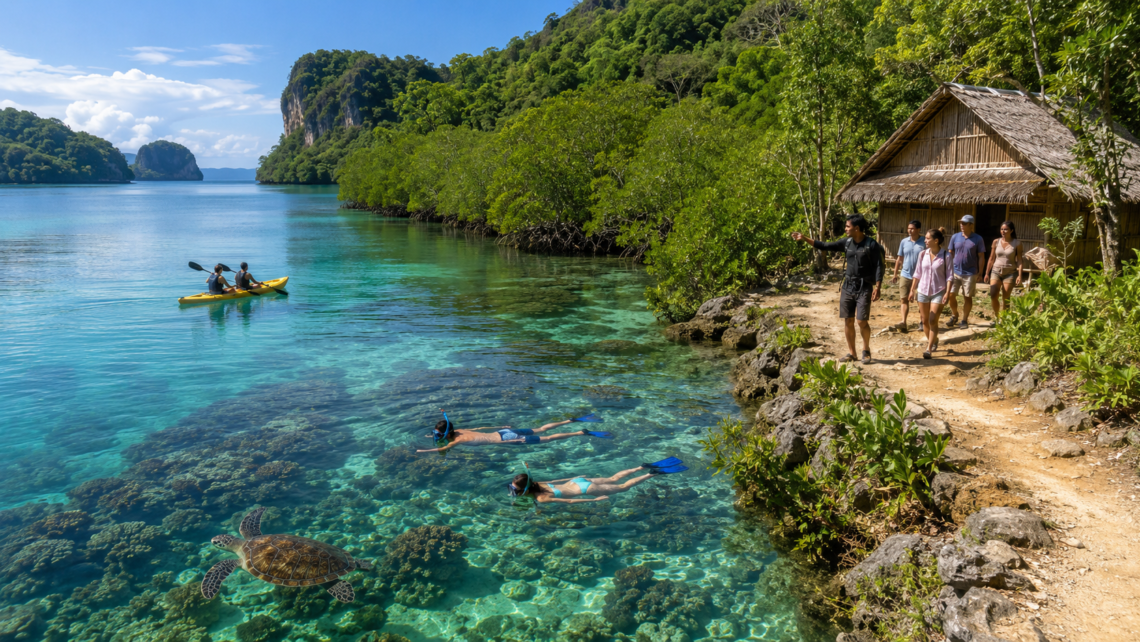
Mangrove Kayaking and Coastal Education
Mangrove ecotours are increasingly important because they connect tourism with coastal resilience.
Visitors can learn how mangrove forests protect villages from storm surges, provide nursery habitats for fish, absorb carbon, and reduce coastal erosion.
When tour fees support local organizations, mangrove protection becomes economically practical rather than dependent only on short-term environmental campaigns.
Homestays and Cultural Routes
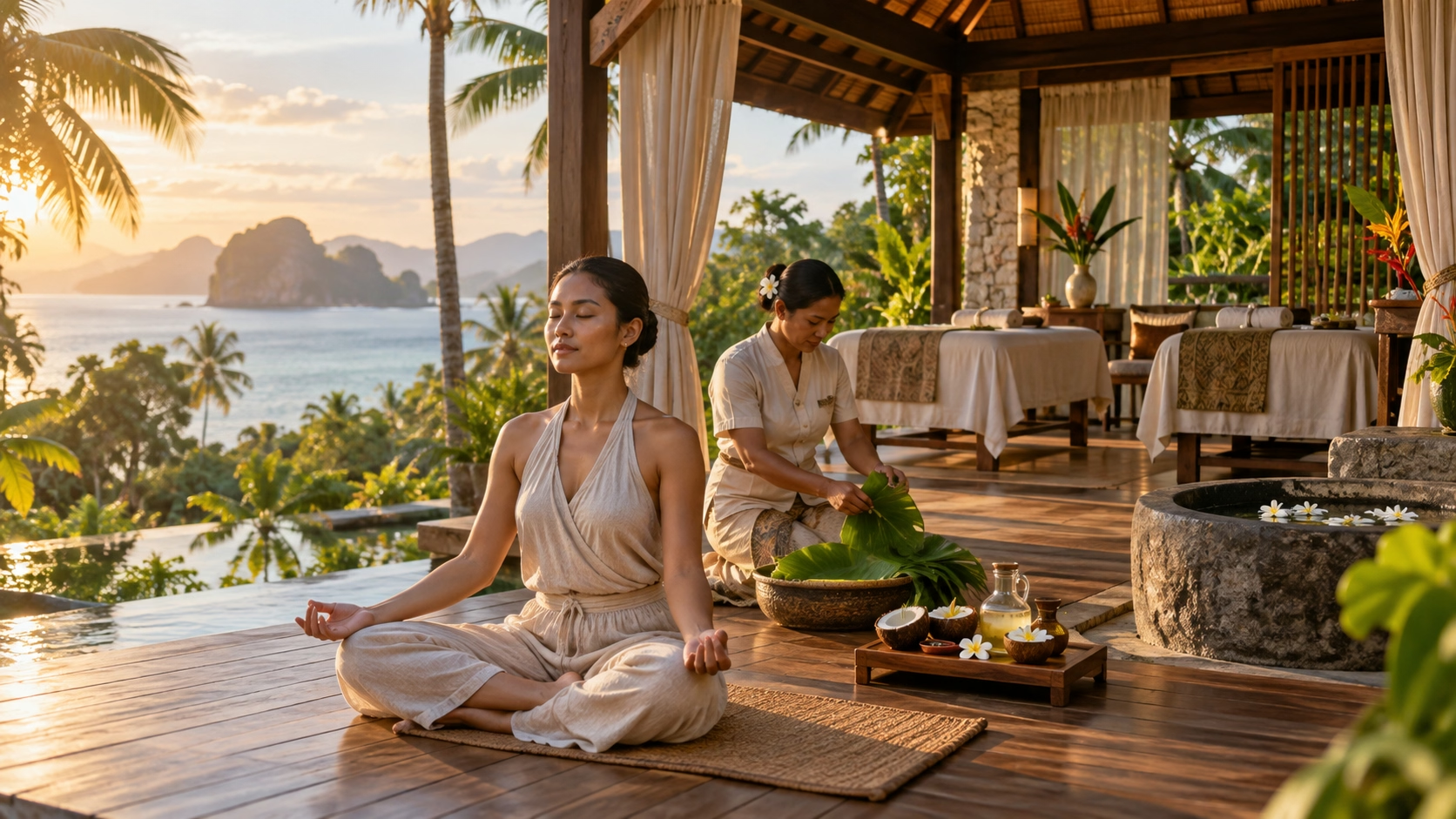
Community homestays can distribute tourism income more fairly than large resort models.
They also encourage visitors to spend money on local food, transportation, handicrafts, guiding services, and community enterprises. Longer stays can create more meaningful cultural exchanges while reducing the pressure associated with fast, high-volume tourism.
When handled respectfully, cultural tourism can strengthen local identity rather than turning traditions into commercial products.
The Risk of Exploitative Community Tourism
Not every experience described as “local” is automatically ethical.
Some operators use community images in advertising while most of the revenue goes to outside companies. Others may pressure indigenous groups to perform rituals, wear traditional clothing, or open sacred places without proper consent and fair compensation.
Responsible community-based ecotourism requires transparency. Travelers should ask who owns the tour, who receives the income, whether cultural protocols are respected, and whether residents participated in designing the experience.
A Growing Shift in Travel Preferences
Many modern travelers want more than attractive scenery. They are interested in restored forests, trained local guides, women-led cooperatives, youth conservation programs, and visible environmental rules.
This shift gives the Philippines an opportunity to compete not by offering the cheapest beach holiday, but by creating meaningful experiences with measurable social and environmental value.
Travelers should prioritize tours that employ local guides, limit group sizes, reduce single-use plastics, respect community rules, and contribute to restoration programs.
Community-based ecotourism is not charity. It is a more inclusive tourism economy. When communities have ownership, travelers receive deeper experiences and natural areas gain stronger long-term defenders.