Filipino Food Is More Than Adobo
Adobo may be the most internationally recognized Filipino dish, but it represents only one part of a much larger culinary landscape. Across the Philippines, local ingredients define what people cook, how they season food, and why certain flavors have become national favorites.
The country’s food culture is strongly regional. In coconut-rich areas, dishes become creamy and aromatic. In coastal provinces, seafood appears in everyday meals. In agricultural communities, rice, vegetables, root crops, and fruits influence both daily cooking and festive dishes.
For background data on agricultural commodities connected to these ingredients, the Philippine Statistics Authority OpenSTAT portal is a useful official reference: https://openstat.psa.gov.ph/. It offers access to Philippine statistics that can support reporting on crops and regional food production.
Coconut Gives Filipino Dishes Their Tropical Signature
Why Gata Matters
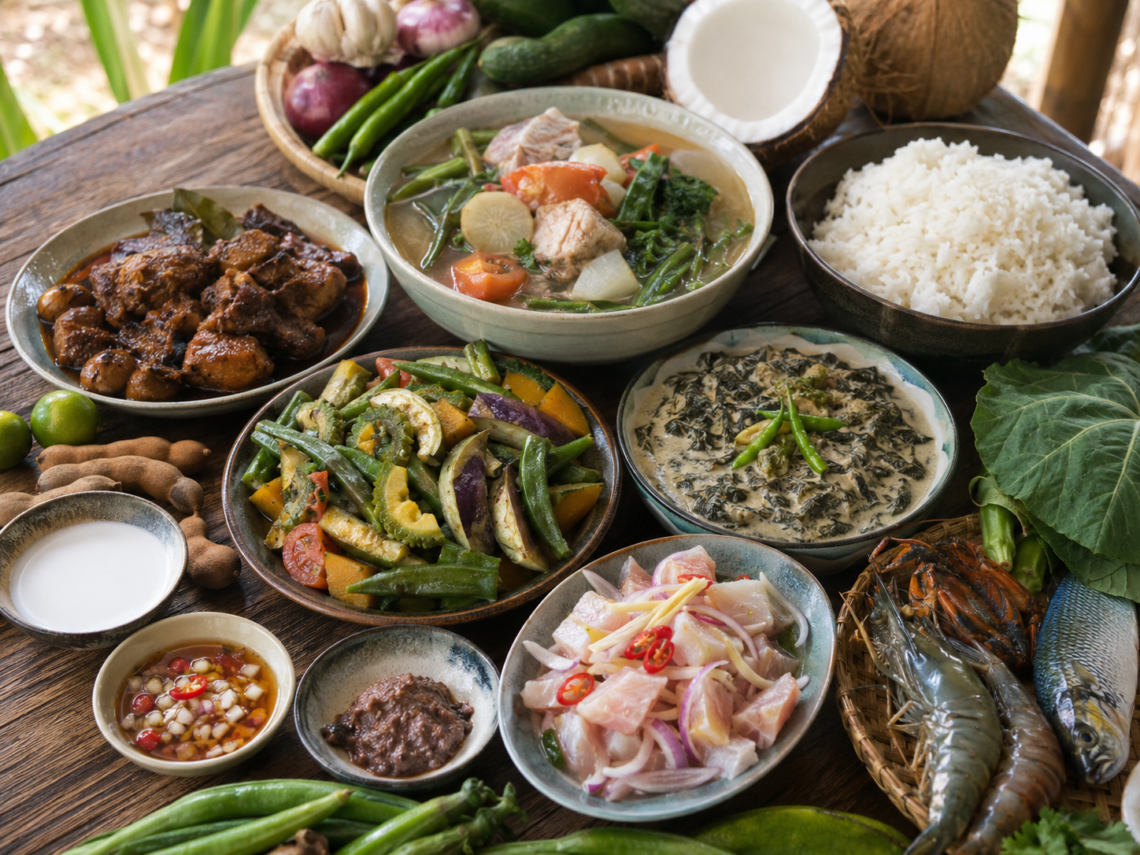
Coconut milk is one of the most expressive ingredients in Filipino cooking. It transforms simple vegetables into rich stews and gives spicy dishes a smooth finish. In Bicol, where chili and coconut are often used together, laing and Bicol Express show how local ingredients can create a strong regional identity.
Laing uses taro leaves simmered in coconut milk, usually with chili, garlic, onion, ginger, and shrimp paste or dried seafood. The result is earthy, creamy, and intense. It is not a dish built on expensive imported ingredients. Its power comes from understanding local produce.
Sour Ingredients Define the Filipino Palate
Calamansi, Tamarind, and Vinegar
Filipino food often depends on sourness. Calamansi brightens dipping sauces and marinades. Tamarind gives sinigang its famous sharp broth. Vinegar drives the flavor of adobo, paksiw, and kinilaw.
This sour profile is one reason Filipino cuisine feels memorable. It wakes up the appetite and balances rich elements such as pork belly, fried fish, and coconut milk. In a global food scene filled with creamy, fried, and grilled dishes, Filipino acidity provides contrast.
Seafood Shows the Strength of Island Cooking
Kinilaw as a Case Study
Kinilaw is one of the clearest examples of local Filipino technique. Fresh fish is mixed with vinegar, citrus, onion, ginger, chili, and sometimes coconut milk. The dish depends on quality seafood and sharp seasoning rather than complicated cooking.
Its appeal fits current dining trends because it is fresh, regional, and ingredient-led. It also tells a real story about island communities, where seafood can move quickly from boat to market to table.
Vegetables, Rice, and Fermented Flavors Add Complexity
Filipino cuisine also relies on vegetables that thrive locally: eggplant, okra, squash, water spinach, bitter melon, green papaya, and banana blossom. These ingredients appear in dishes such as pinakbet, ginataang gulay, and various soups.
Fermented condiments add another layer. Fish sauce, shrimp paste, and salted fish give intensity to vegetable dishes and stews. Used carefully, they create umami that makes simple ingredients taste complete.
Rice ties everything together. It softens sourness, absorbs sauces, and turns boldly seasoned dishes into balanced meals. This explains why Filipino food is rarely about one isolated plate. It is about combinations.
Why This Matters for Food Writers and Diners
The most interesting way to discuss Filipino food today is through its local ingredients. This approach moves beyond stereotypes and highlights the intelligence of regional cooking. Coconut, calamansi, vinegar, seafood, rice, and native vegetables are not background details. They are the foundation of Filipino flavor.