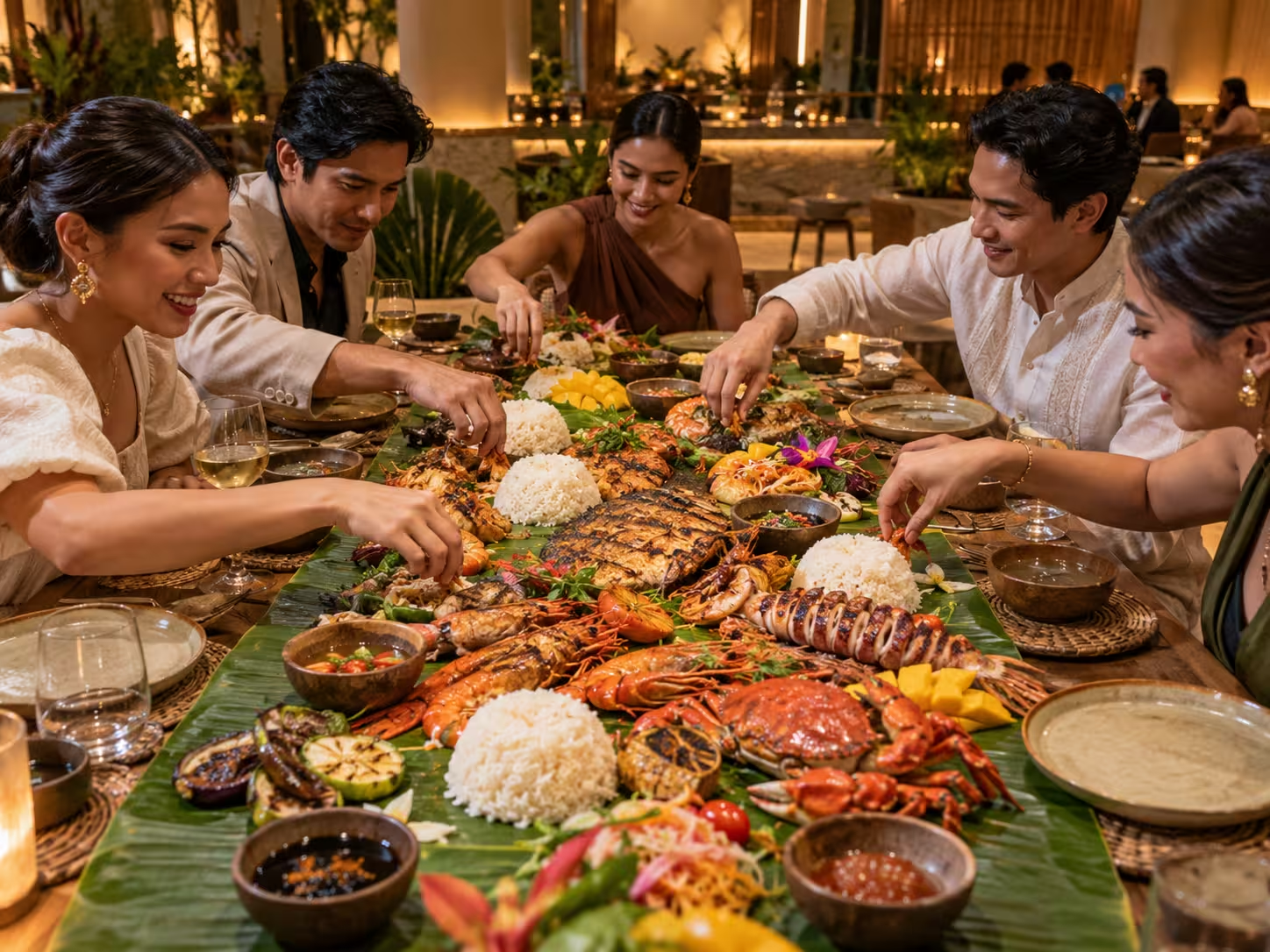
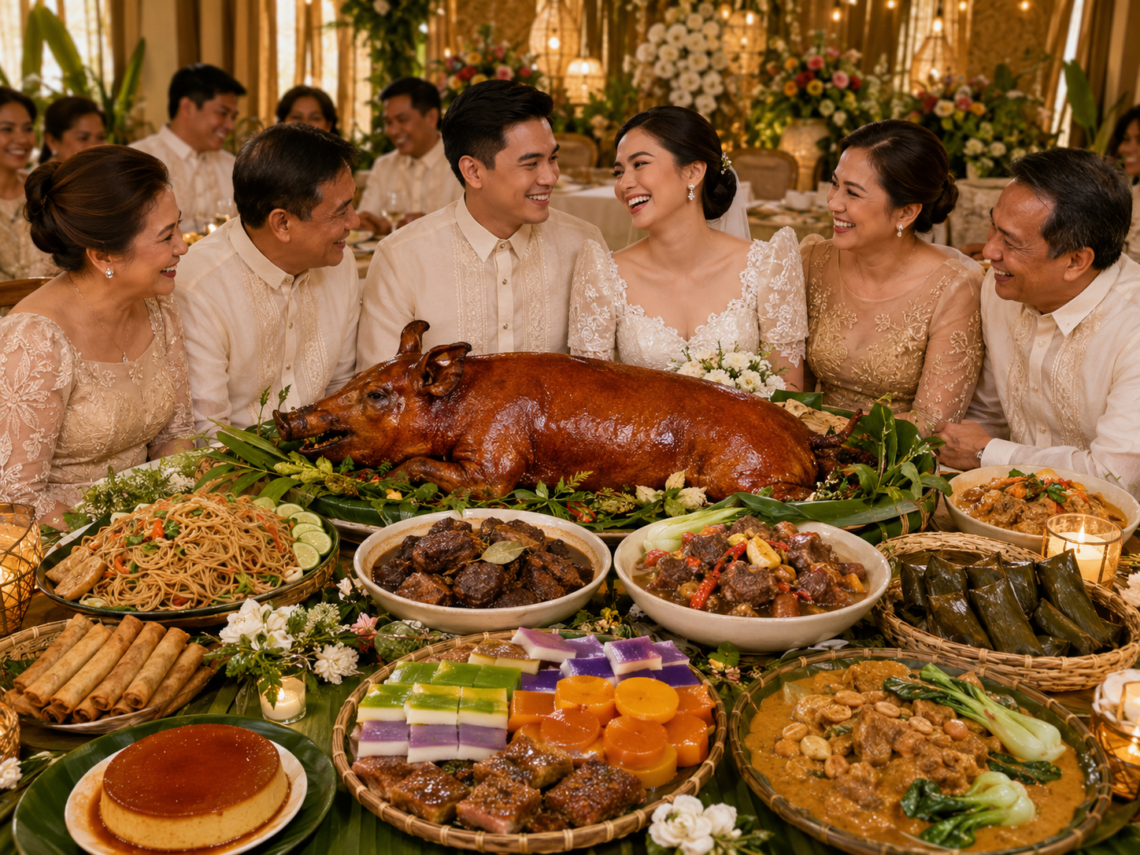
Food is one of the strongest symbols in a Filipino wedding. It brings people together, honors guests, and reflects the values of the families involved. In the Philippines, weddings are usually large and lively celebrations where relatives, friends, neighbors, and community members gather. Because guests are considered an important part of the occasion, families often prepare a generous handaan, or feast, filled with traditional Filipino dishes.
Among the most famous wedding foods is lechon. This roasted whole pig is strongly associated with grand celebrations in the Philippines. It is often served during weddings, fiestas, baptisms, and milestone birthdays. At a wedding, lechon represents prosperity and abundance. Its large size makes it ideal for sharing, while its golden, crispy skin gives the feast a festive appearance. For many guests, lechon is one of the dishes they look forward to most.
Pancit is another dish with deep symbolic value. Since noodles are long, they are believed to represent long life and continuity. In the context of marriage, pancit expresses the hope that the couple’s relationship will remain strong through the years. Different areas of the Philippines have their own versions of pancit. Pancit Bihon is made with thin rice noodles, Pancit Canton uses thicker egg noodles, and Pancit Malabon is known for its rich sauce and seafood toppings.
Adobo is often included because of its strong connection to Filipino identity. It is a dish that many Filipinos grow up eating at home. The combination of vinegar, soy sauce, garlic, bay leaves, and pepper creates a flavor that is both simple and memorable. At weddings, adobo can remind families that married life is not only about celebration but also about building a home together. Its presence brings a sense of familiarity to the table.
A Filipino wedding feast may also include kare-kare, caldereta, lumpia, relleno, embutido, and morcon. These dishes are commonly linked with special gatherings because they take time and skill to prepare. Kare-kare, with its peanut sauce and vegetables, is often paired with bagoong, or fermented shrimp paste. Lumpia provides a crisp appetizer that is easy for guests to enjoy. Morcon and embutido add a formal touch because they are often reserved for holidays and important family events.
Traditional desserts help complete the celebration. Leche flan is a favorite because of its smooth texture and rich sweetness. Fruit salad is also popular, especially at receptions with many guests. Rice cakes, known as kakanin, are important in Filipino food culture. Biko, sapin-sapin, suman, puto, and kutsinta are often served to represent sweetness, togetherness, and cultural heritage. Because sticky rice binds together when cooked, it is sometimes associated with unity and closeness.
Food also appears in pre-wedding customs. In pamamanhikan, the groom’s family visits the bride’s family to formally ask for her hand and discuss wedding arrangements. Sharing food during this meeting helps create a respectful and welcoming atmosphere. During the wedding reception itself, the feast becomes a symbol of gratitude. By offering traditional dishes, the couple and their families show appreciation to everyone who joins them. Filipino wedding cuisine therefore carries emotional, cultural, and symbolic meaning in every serving.