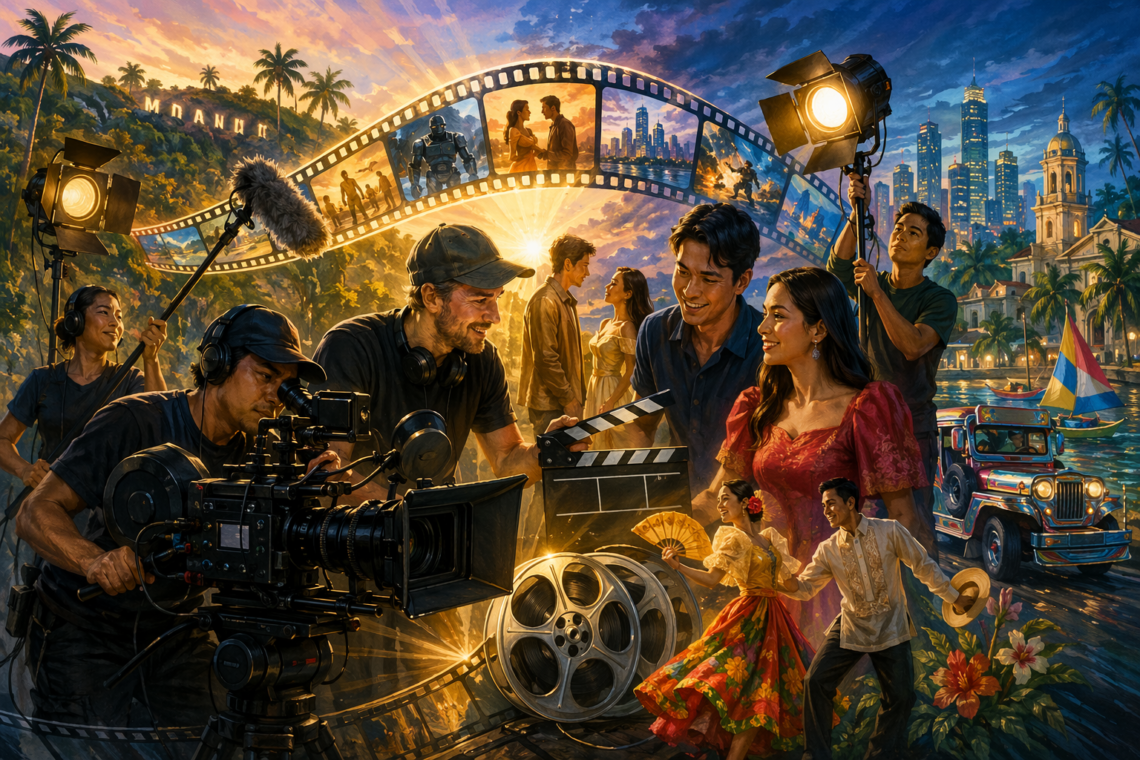
Hollywood’s impact on the Philippine entertainment industry has been profound and multifaceted. Over the years, the fusion of Hollywood’s global dominance with the Philippines’ rich cultural heritage has resulted in a dynamic and innovative entertainment landscape. From collaborative projects to the adaptation of Hollywood’s signature genres, the influence of the American film industry has shaped the way Filipino entertainment is produced, consumed, and distributed.
One of the most striking ways Hollywood has affected the Philippine entertainment industry is through the fusion of Western and Filipino storytelling styles. The local industry has increasingly incorporated elements from Hollywood films, both in terms of content and form. The rise of high-budget action films, superhero sagas, and epic dramas in Hollywood has prompted Filipino filmmakers to adopt similar genres, creating local versions that cater to Filipino tastes. These films often carry universal themes of heroism, love, and conflict, which are then infused with Filipino culture, traditions, and social issues. As a result, these films resonate with local audiences while also appealing to the global market.
The collaboration between Filipino filmmakers and Hollywood professionals has also spurred significant innovation within the Philippine entertainment industry. Co-productions, joint ventures, and the sharing of expertise have opened new avenues for creativity. Hollywood’s extensive experience in the use of special effects, CGI, and innovative film technologies has been shared with Filipino filmmakers, resulting in the production of films that are not only technically advanced but also capable of competing in the global market. These collaborations have also led to the emergence of Filipino actors and filmmakers who have garnered international recognition, further elevating the country’s position in the global entertainment industry.
Moreover, the influence of Hollywood has brought about significant changes in the Philippine television industry. Local networks have adopted successful American TV formats, such as reality shows, talk shows, and drama series, to cater to the growing demands of a more globalized audience. Television networks often import popular American series or create local adaptations of these shows, allowing them to capitalize on existing international popularity. By doing so, they can attract a wider viewership, especially from younger, more tech-savvy audiences who are increasingly exposed to global content.
Despite the positive changes brought about by Hollywood’s influence, there are concerns about the preservation of Filipino identity in the entertainment industry. As the local market becomes more attuned to international trends, there is a risk that Filipino filmmakers may prioritize commercial success over cultural authenticity. Some critics argue that an over-reliance on Hollywood’s influence could result in the loss of the unique storytelling traditions that have long been a hallmark of Philippine cinema. However, many Filipino filmmakers continue to explore ways to blend Hollywood’s global appeal with the rich storytelling traditions of the Philippines, ensuring that local content retains its cultural essence.
In the future, the relationship between Hollywood and the Philippine entertainment industry will likely continue to evolve. As globalization continues to influence media consumption, Filipino filmmakers will continue to experiment with new genres and technologies, often inspired by Hollywood. However, they will also seek to maintain a strong connection to the local audience by incorporating Filipino cultural elements into their work. The fusion of Hollywood’s commercial success with Filipino creativity promises to drive continued growth and innovation in the Philippine entertainment sector.