
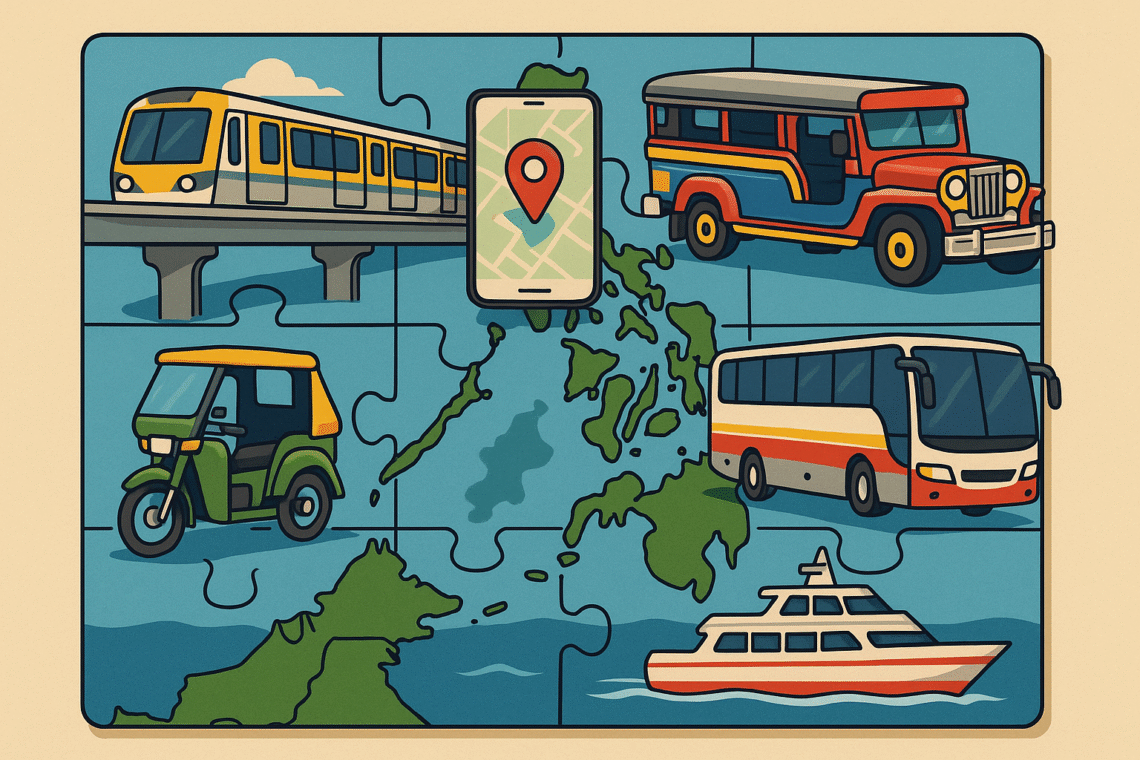
Getting around the Philippines is about matching your route to the right vehicle. In dense city corridors, the LRT/MRT offers predictable travel times compared with traffic-bound roads. Stations can be busy; travel off-peak and load a Beep card for multiple rides. Buses with dedicated lanes (where available) can be faster than jeepneys and provide air-conditioning and clearer routes.
Jeepneys remain the backbone of everyday mobility. Think of them like fixed-stop minibuses with low fares and high frequency. Learn the local cue: pass your fare forward and say your destination; change will come back hand-to-hand. If you’re unsure of stops, tell the driver where you intend to get off. Tricycles are best for short connectors—ports to hotels, barangay roads, or beaches—and are ubiquitous outside major CBDs.
For city-to-city travel, choose between buses, flights, and ferries. On Luzon, buses link Manila to northern and southern provinces with multiple classes, from ordinary to deluxe. For islands like Palawan or Siargao, flights save time, while ferries may be scenic and budget-friendly for nearby crossings. When booking ferries, check cabin classes, baggage limits, and whether the ticket includes terminal fees.
Ride-hailing (Grab) is a game-changer in large metros. It’s especially useful for late-night rides, cross-town hops with luggage, or unfamiliar neighborhoods. Motorcycle taxis (e.g., Angkas) can weave through gridlock, but they’re for confident riders and small bags only; helmets are provided. Traditional taxis are common—always ask for the meter. If you encounter a refusal or inflated fare, move on to the next cab or use an app.
Costs vary by city and time. Keep small bills (₱20/₱50/₱100) for local rides. Many small operators don’t accept cards. E-wallets work in malls and some transport services, but don’t rely on them in rural areas. If you’ll take multiple trains and buses, the Beep card helps streamline payments. For long-distance buses and ferries, buy tickets in advance during holidays (Holy Week, Christmas, long weekends).
Safety is generally straightforward: use official terminals, avoid isolated shortcuts at night, and keep valuables tucked away. Petty theft can occur in crowded lines and on vehicles with open sides; don’t dangle phones near windows. On ferries, pay attention to safety briefings and crew instructions; if seas are rough, consider rescheduling. During the wet season (roughly June–November), monitor advisories and allow buffer time between legs.
Accessibility and comfort deserve thought. If you have heavy luggage, skip jeepneys and tricycles and opt for taxis or ride-hailing. UV Express vans and some buses can be cramped; if you value legroom, choose premium classes or fly. Air-conditioned buses and trains can be cold—bring a light layer. Motion sickness is common on winding mountain roads and ferries; pack medication.
Language is rarely a barrier—English is widely spoken in tourist hubs. Courtesy goes a long way: queuing, greeting with “Good morning po,” and offering seats to seniors are appreciated. Plan your routes, expect a little unpredictability, and embrace the variety—land, rail, sea, and app-based rides combine into a flexible system that rewards patience and curiosity.