Work attire in the Philippines is a topic that has evolved over time, adapting to both global trends and local customs. As the country has become increasingly globalized, professionals are expected to maintain a polished image while navigating the country’s tropical climate. Understanding how to dress for success in Filipino workplaces is crucial for career growth and establishing credibility in any business setting.
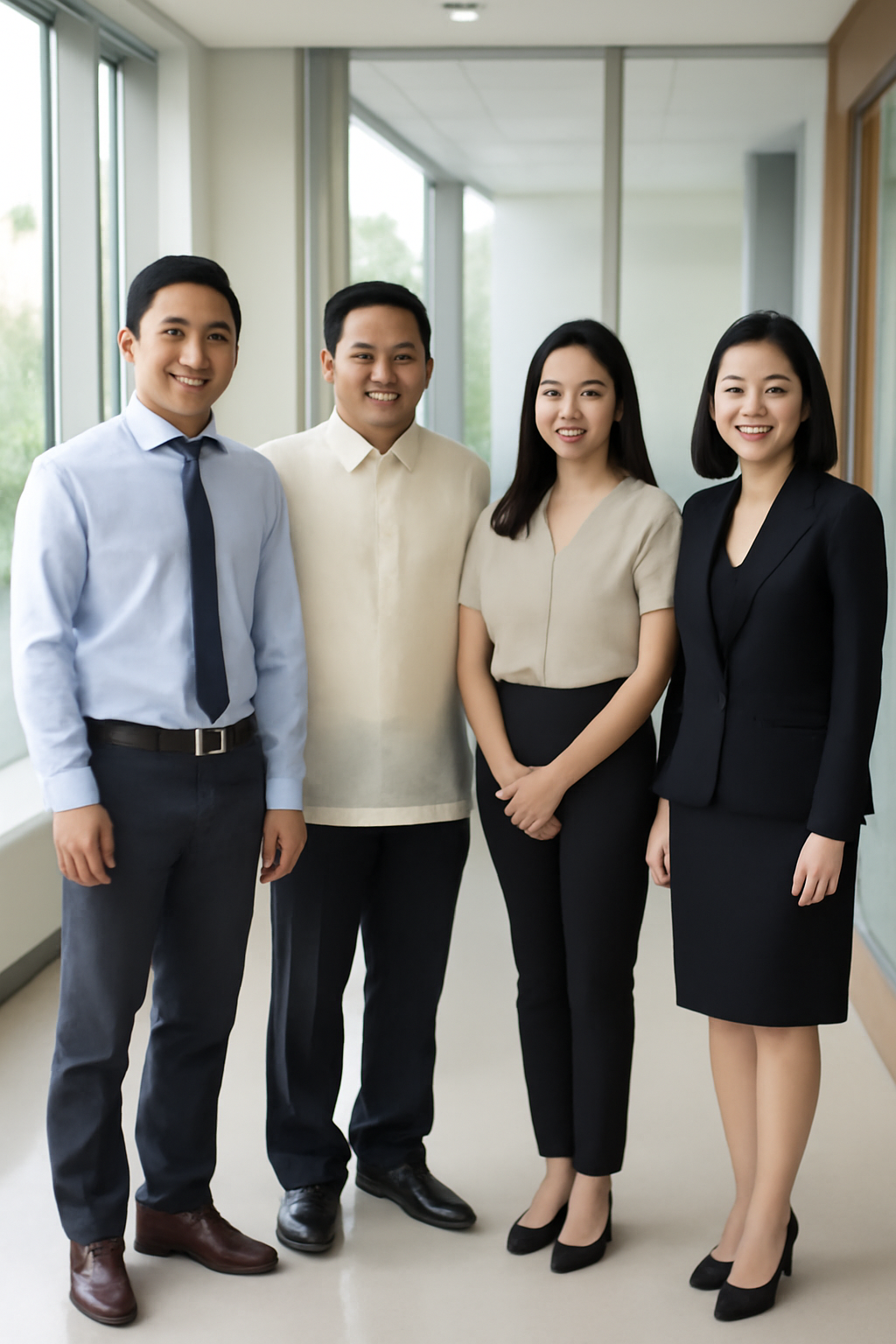
The most common dress code in the Philippines is business casual, but there are variations depending on the industry, the city, and even the season. In general, men and women are expected to dress neatly, with an emphasis on professionalism without being overly formal. The standard work attire for men typically includes dress shirts and trousers, although the type of shirt can vary. For example, some workplaces may be more lenient and allow short-sleeve shirts, especially in non-corporate settings or during the hot months. On the other hand, for more formal settings, such as meetings with high-profile clients or corporate events, men often wear full suits or the barong Tagalog – a traditional Filipino garment made from fine, breathable fabric. The barong is a popular choice for official occasions due to its lightness and cultural significance.
For women, professional attire often involves dresses, skirts, or blouses paired with trousers. Many women choose modest yet elegant clothing that is comfortable enough for the hot climate but still professional. For example, a well-fitted blouse and a knee-length skirt are often appropriate choices. On more formal occasions, a well-tailored suit or dress is a popular option. Traditional Filipino garments, like the terno, are sometimes worn, particularly for formal business events or cultural celebrations, although most modern workplaces prefer business casual styles.
Given the warm temperatures in the Philippines, it’s vital to choose breathable materials such as cotton, linen, or synthetic fabrics designed to keep the body cool. While loose clothing may seem appealing, overly casual outfits, such as tank tops or flip-flops, are inappropriate for most office settings. A key element of professional attire is maintaining a neat and clean appearance, so even when choosing lighter fabrics, it’s important that clothing is properly pressed and free of wrinkles.
Industry also plays a significant role in determining the appropriate work attire. In corporate settings such as banking or law firms, employees often wear full business suits or corporate uniforms to convey professionalism and authority. Conversely, in more creative fields, such as advertising or design, the dress code may be slightly more relaxed, allowing for personal expression and creative clothing choices. However, even in these industries, it’s still important to avoid overly casual or eccentric outfits that could undermine a professional image.
Filipino professionals often prioritize comfort, but they also understand the importance of making a good impression. Therefore, accessories are used to enhance one’s appearance without detracting from the overall professional look. Simple jewelry, leather shoes, and structured bags are popular choices for both men and women, as they convey attention to detail and professionalism.
Maintaining a professional appearance, whether in the office or during virtual meetings, is key in Filipino work culture. As remote work becomes more common, it’s important to continue to project professionalism even when working from home. In virtual settings, employees are expected to dress appropriately, typically following the same guidelines as in the office. A neat appearance and minimal distractions in the background are essential for creating a professional online presence.
In short, the Philippines’ work attire standards blend traditional Filipino garments with modern business practices. By following general guidelines for business casual or formal attire, professionals can navigate the diverse dress codes across different industries and leave a lasting positive impression on clients and colleagues alike.