
Hybrid training—splitting time between at‑home and in‑studio—has become the Filipino default. People build weekly stacks from short app‑based workouts, weekend group classes, and occasional personal training. The formula is cost‑aware and scalable, perfect for dense cities and provincial towns where access to coaches or facilities can vary widely.
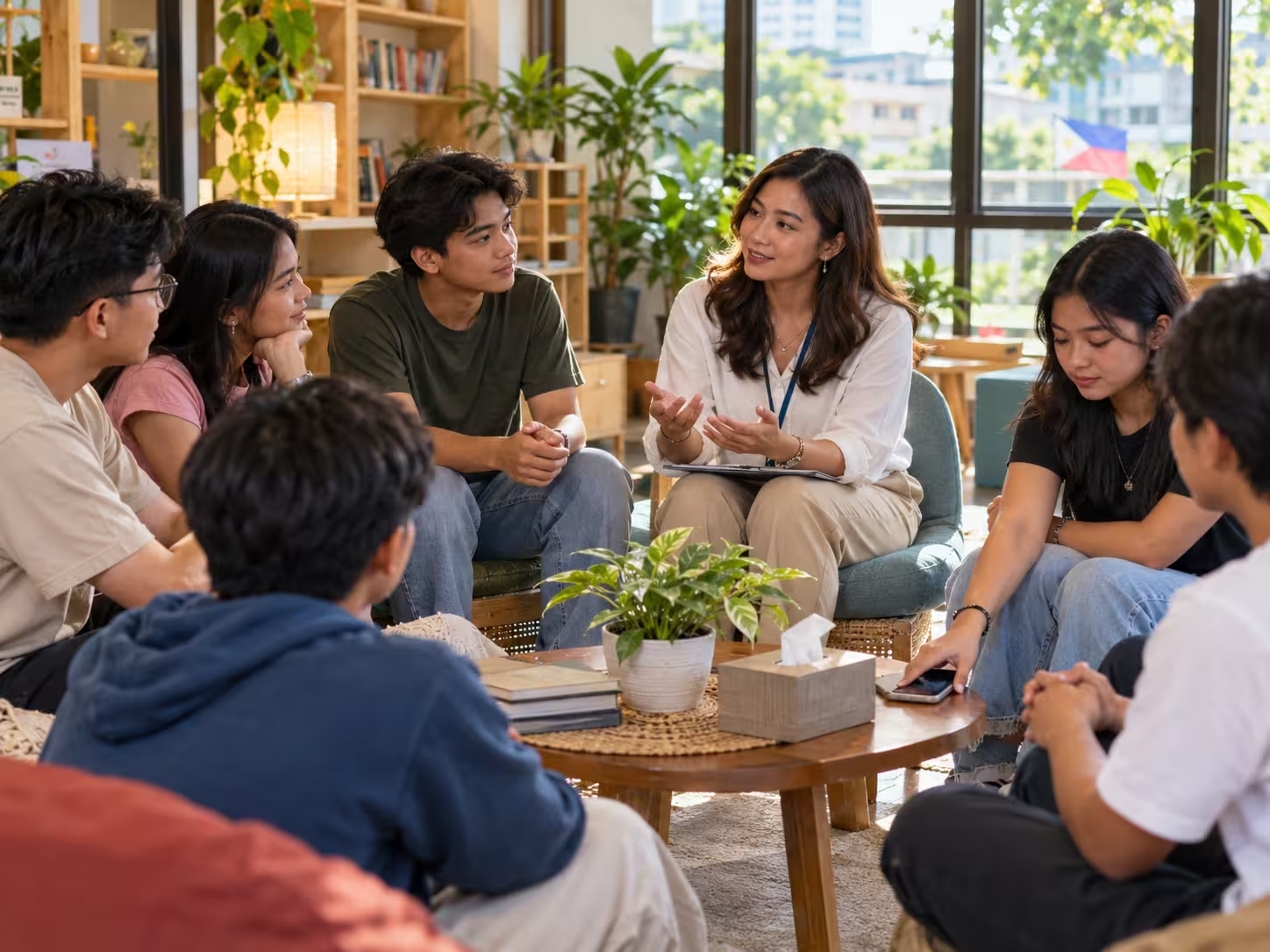
Local coaches produce Tagalog‑ and Bisaya‑friendly plans, while group chats on Messenger, Viber, or WhatsApp turn goals into daily habits through check‑ins and playful dares. Social platforms supply inspiration, but savvy users filter trends with a critical eye, looking for coaches who show periodized programming, clear regressions, and sensible progress metrics.
Wearables track steps, heart rate zones, and sleep regularity, giving people feedback loops that were once exclusive to athletes. In a tropical climate, heat can be the limiter, so many use alerts to shift runs to cooler hours, increase rest, or prioritize shade and hydration. Recovery apps guide breathwork, mobility, and self‑massage, reinforcing the idea that rest days are training days.
Connectivity constraints shape product design. Downloadable video libraries, low‑data audio coaching, and SMS‑based habit prompts keep users engaged even with spotty internet. Nutrition tools add local food databases so tracking tinola, palabok, or taho feels intuitive, and portion visuals use everyday objects—rice cups, banana sizes—to improve accuracy without obsession.
Telehealth has matured into a practical ally. Dietitians, physicians, and mental‑health professionals consult online, direct clients to nearby labs, and interpret results within the person’s cultural and budget context. Pharmacy delivery and e‑wallet payments simplify follow‑through, while calendar integrations protect bedtime and schedule deload weeks just like meetings.
The digital wave brings responsibilities. Data privacy, informed consent, and credentials matter when health information is involved. Filipinos increasingly vet coaches for proper certifications and transparent scope of practice, and creators earn trust by citing sources, acknowledging uncertainty, and prioritizing safety. When tech, coaching, and culture align, people in far‑flung islands and crowded cities alike can build strong, individualized routines without losing the warmth of community.