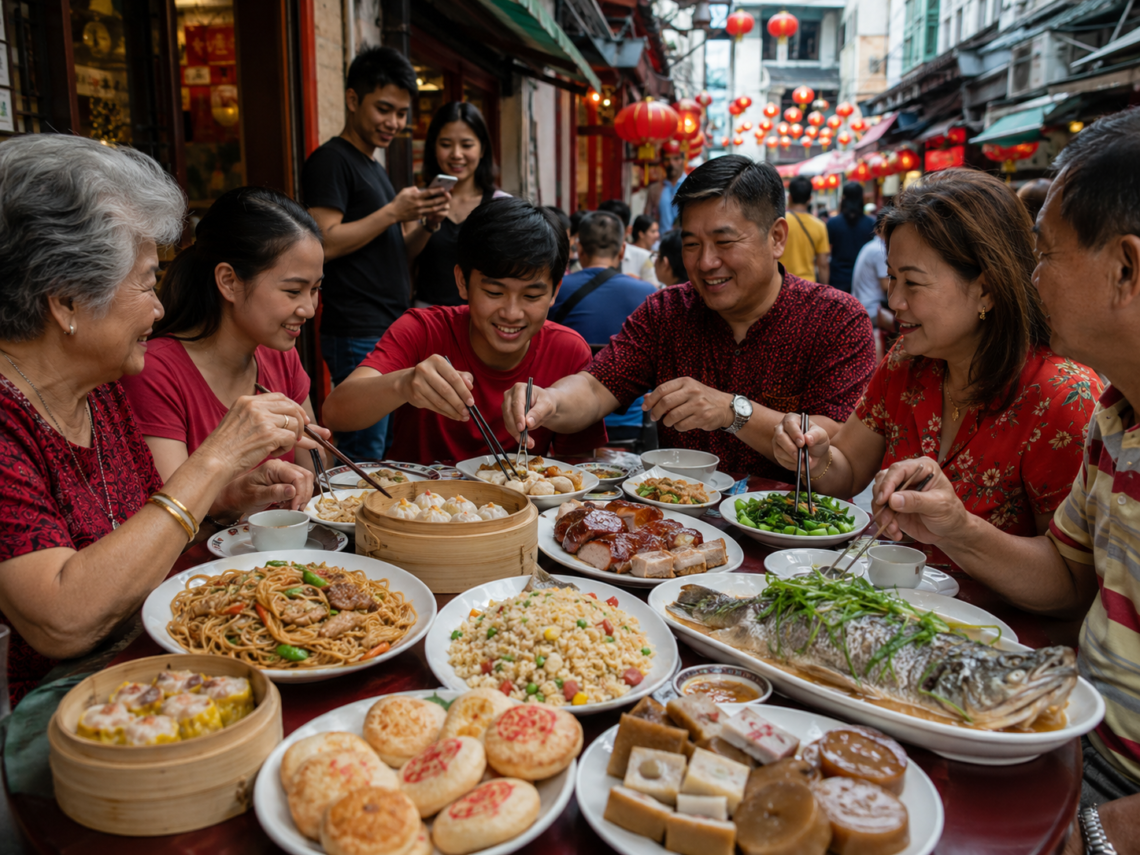
Chinese influence on Philippine food is often most visible not in luxury restaurants but in ordinary bakeries, roadside stalls, school canteens, public markets, and family kitchens. Foods such as lumpia, siopao, siomai, mami, and hopia have become everyday Filipino choices despite their Chinese linguistic and culinary roots.
Their popularity reveals an important feature of Philippine food history: foreign dishes were rarely copied without change. They were renamed, reformulated, and adapted to local eating habits until they occupied a permanent place in Filipino life.
Lumpia and the Filipino Reinvention of Spring Rolls
Lumpia developed from Chinese spring-roll traditions introduced by migrants from southern China. The basic idea was simple: vegetables, meat, or other ingredients were wrapped in a thin pastry and served fresh or fried.
In the Philippines, this format expanded into several distinct dishes. Lumpiang sariwa contains cooked vegetables and is served in a soft wrapper with a sweet, garlicky sauce. Lumpiang ubod traditionally uses heart of palm, while lumpiang togue highlights bean sprouts.
Lumpiang Shanghai became one of the country’s most recognizable celebration foods. Usually filled with seasoned ground pork, carrots, onions, and spices, the small fried rolls are frequently served at birthdays, weddings, fiestas, and office events.
Despite the name, the dish does not necessarily represent food typically eaten in Shanghai. Its identity is distinctly Filipino, demonstrating how Chinese terminology can acquire a new local meaning.
Siopao and Siomai Entered the Urban Snack Culture
Siopao came from the Chinese tradition of steamed filled buns. Philippine versions commonly use asado or bola-bola fillings. Asado siopao is generally sweet and savory, while bola-bola may contain ground meat, salted egg, or sausage.
The Filipino preference for stronger sauces also changed the experience of eating siopao. Many customers add a thick brown sauce, creating a sweeter and more heavily seasoned product than some traditional Chinese bao varieties.
Siomai underwent a similar transition. It became an inexpensive street snack served in small metal steamers at transport terminals, markets, shopping centers, and school districts. Filipino-style siomai is commonly paired with calamansi, soy sauce, and generous amounts of chili-garlic oil.
Mami and the Rise of Commercial Noodle Soup
Mami is another example of culinary adaptation. The dish combines noodles, broth, meat, and garnishes in a format associated with Chinese noodle soup. In the Philippines, it developed into an affordable urban meal sold by specialized restaurants and street vendors.
Its history is often connected with Chinese-Filipino restaurateur Ma Mon Luk, whose noodle shops helped popularize mami and siopao in Manila during the twentieth century. The combination became a classic pairing: a bowl of hot noodle soup accompanied by a steamed bun.
Food Vocabulary as Historical Evidence
The names lumpia, siopao, siomai, and related dishes preserve traces of Hokkien and other Chinese languages. They function almost like linguistic records of migration.
At the same time, their recipes reveal Filipino priorities: sweeter sauces, sour citrus, garlic-heavy condiments, accessible ingredients, and food portions designed for sharing.
Britannica’s account of Philippine cultural life explains that Filipino identity reflects multiple cultural layers developed through trade, colonization, and regional contact. Everyday Chinese-rooted foods show how that broader historical process occurred at the dining table: Britannica – Philippines: Cultural Life.
Why These Foods Continue to Thrive
In the contemporary Philippines, these dishes succeed across social and commercial settings. Traditional restaurants sell handmade versions, while convenience stores, frozen-food companies, delivery platforms, and street vendors offer inexpensive alternatives.
Their staying power comes from familiarity. Filipinos may recognize their Chinese ancestry, but they also associate these foods with childhood, school breaks, family parties, rainy afternoons, and neighborhood businesses. Chinese culinary influence became durable because Filipinos converted inherited food traditions into personal and collective memories.