
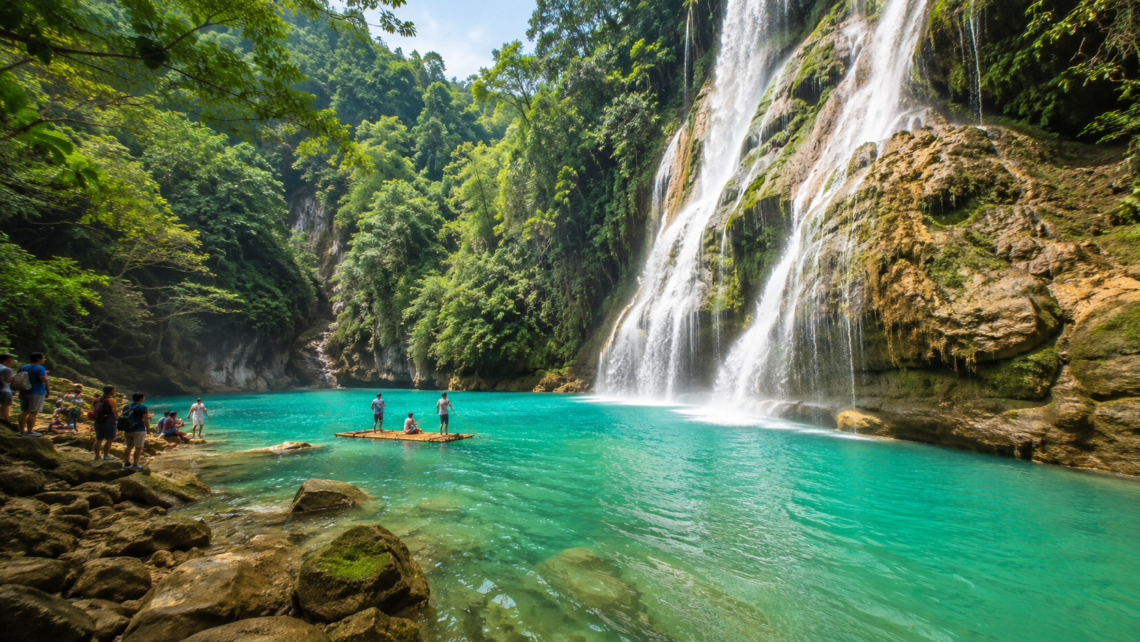
Why Waterfalls Matter in Philippine Travel
The Philippines is a country of more than beaches. Behind its coastlines are mountains, rivers, limestone cliffs, and forested valleys where waterfalls shape some of the most memorable travel experiences in Southeast Asia. These sites are becoming more relevant as travelers look for open-air destinations that combine adventure with environmental awareness.
The official Philippine travel portal, https://philippines.travel/, is a helpful reference for destination research and tourism updates. For waterfall trips, it is wise to pair official tourism information with local government advisories because trail access and safety rules may change quickly.
Kawasan Falls and the New Rules of Nature Travel
A Popular Destination Facing Real-World Challenges
Kawasan Falls in Cebu remains the country’s best-known waterfall attraction. Its blue pools, canyoneering routes, and jungle setting have made it a headline destination for adventure travelers. Yet Kawasan also reflects a timely issue: the pressure placed on natural attractions when social media turns them into global bucket-list stops.
Local tourism management has increasingly emphasized regulated access, guide-led activities, and visitor safety. This is not just bureaucracy. It is a response to real risks such as accidents, overcrowding, waste, and environmental stress. For travelers, the lesson is clear: the future of Philippine waterfall tourism depends on discipline as much as discovery.
The Waterfalls That Define Different Regions
Luzon: Pagsanjan Falls
In Laguna, Pagsanjan Falls offers one of the country’s most established waterfall experiences. The ride through the gorge is part of its identity, combining river navigation with scenic cliff views. It is a practical option for travelers staying in Manila who want a nature escape without flying to another island.
Visayas: Kawasan Falls
Cebu’s Kawasan Falls is ideal for those who want a more active itinerary. The canyoneering experience can involve cliff jumps, river trekking, and swimming through clear channels. It is best suited for travelers who are comfortable with physical activity and guided adventure.
Mindanao: Tinuy-an and Asik-Asik Falls
Mindanao adds scale and surprise. Tinuy-an Falls in Surigao del Sur is admired for its wide, curtain-like formation, while Asik-Asik Falls in North Cotabato is known for water flowing through a green rock wall. Both destinations show how diverse the country’s inland scenery can be.
Responsible Tips for a Better Waterfall Journey
The most important travel decision is timing. During heavy rains, waterfalls may look more powerful but trails can become unsafe. In drier months, access may be easier, but water volume can be lower. Visitors should prepare with proper footwear, waterproof bags, drinking water, and modest expectations about weather.
Travelers should also support local communities. Hiring accredited guides, paying environmental fees, and buying from nearby small businesses help keep tourism income in the area. Avoiding plastic waste and respecting swimming restrictions are simple actions that matter.