
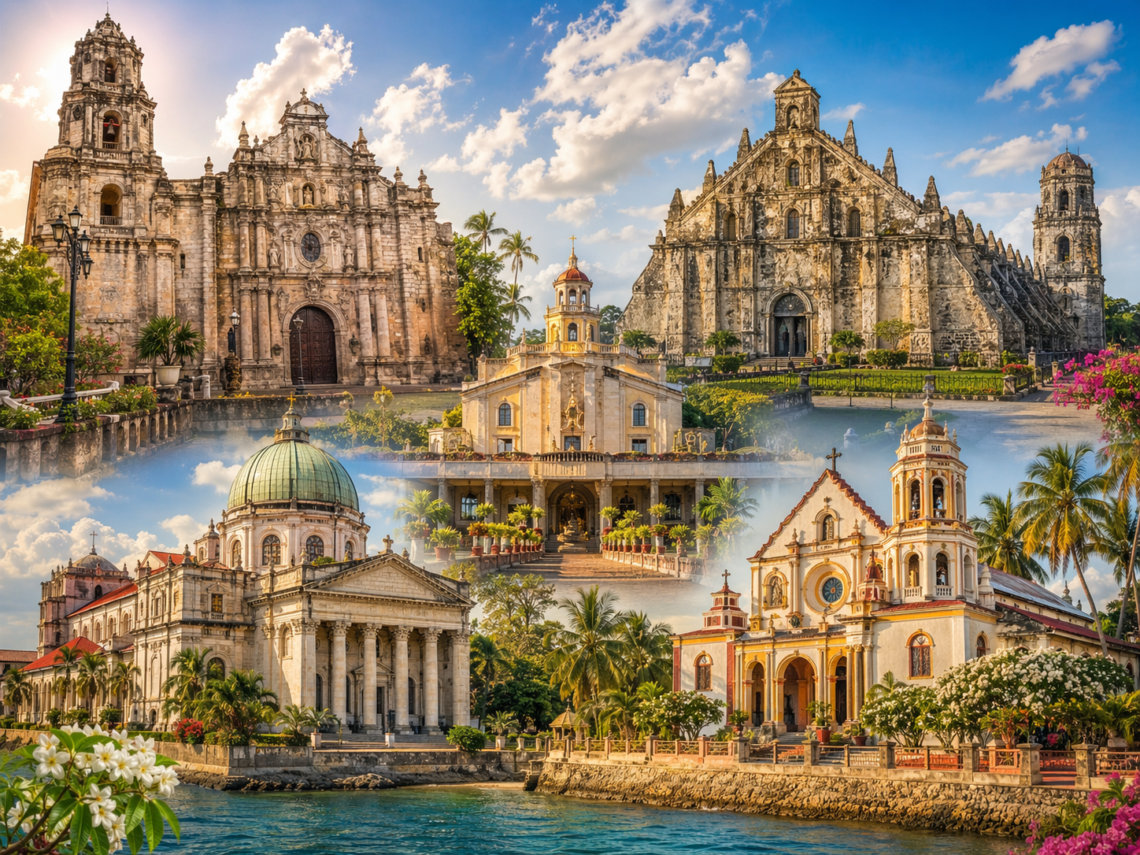
The Philippines is a country where Catholicism plays a central role in the daily lives of its citizens, and this influence is evident in the many historic churches and sacred sites spread across the archipelago. These sites are not just religiously significant; they also represent the country’s colonial history and the deep spirituality of the Filipino people. Let’s embark on a journey to explore some of the most iconic religious landmarks in the Philippines.
In Manila, San Agustin Church is a living testament to the Philippines’ colonial past. This 16th-century church, built by the Spanish Augustinians, is a UNESCO World Heritage Site and one of the most significant historical churches in the country. Its baroque style, intricate ceiling frescoes, and massive stone walls make it a remarkable piece of architecture. Over the years, it has been witness to countless historical events and remains a beacon of Catholic faith in the heart of the capital.
Further north in Ilocos Norte, Paoay Church stands as an architectural marvel. Known for its massive coral stone buttresses, Paoay Church is a prime example of the earthquake baroque architectural style. Built in the 17th century, this church is a UNESCO World Heritage Site and is famed for its resilience to earthquakes. The church’s imposing façade and grand design make it one of the Philippines’ most picturesque religious structures.
Over in Cebu, the Basilica del Santo Niño is the oldest church in the country. Built in 1565, it houses the Santo Niño, a statue of the child Jesus, which is believed to have miraculous powers. The church’s role in the religious life of the Cebuanos is unmatched, and it serves as a key center for Catholicism in the region. Every year, thousands of people gather here for the Sinulog Festival, a colorful celebration of the Santo Niño’s role in Cebu’s Christianization.
In Batangas, Taal Basilica, also known as The Minor Basilica of Saint Martin of Tours, is the largest church in the Philippines. Constructed in the mid-19th century, this church is a masterpiece of neoclassical architecture, complete with intricate altars and stately columns. Taal Basilica is a focal point of faith in the Batangas region and stands as a testament to the influence of Spanish colonial architecture.
Not to be missed is Our Lady of the Pillar Church in Zamboanga. This church, which dates back to the Spanish colonial era, is a beautiful example of colonial architecture. Its religious significance to the people of Zamboanga is immense, as it is dedicated to the patroness of the region, Our Lady of the Pillar. The church has played an important role in the spiritual life of the people in Zamboanga and continues to draw visitors and pilgrims alike.
These sacred sites are not just places of worship but also monuments that tell the story of the Philippines’ religious and cultural evolution. Each church and place of worship has its own unique history, and visiting them offers a deeper understanding of the Philippines’ rich heritage.