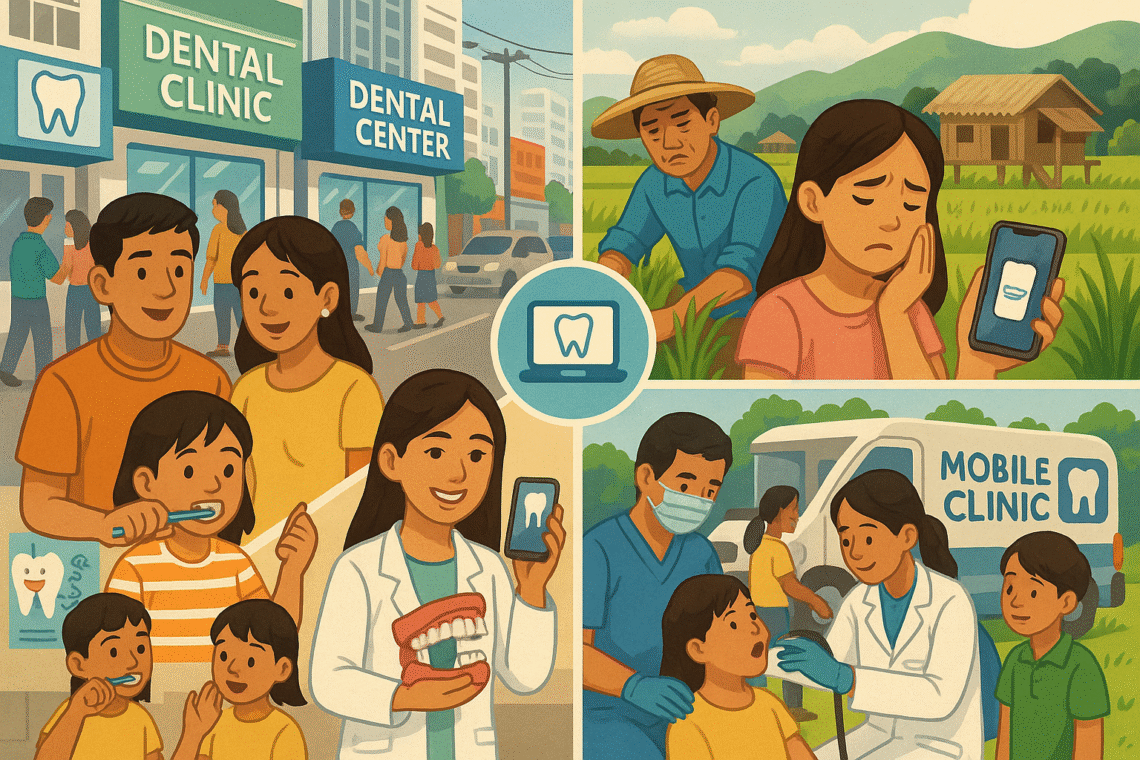
Dental health in the Philippines reflects broader social inequalities. While some Filipinos receive regular cleanings, orthodontic care, and cosmetic procedures, many others struggle with untreated cavities, gum disease, and missing teeth. The divide is shaped by income, education, and where people live, making oral health both a medical and social issue.
Children’s dental health offers a clear window into these challenges. In low-income communities, it is common to see children with decayed or damaged teeth. Sugary snacks, sweetened beverages, and frequent consumption of processed foods are widely available and often more affordable than healthier options. When combined with irregular brushing and limited access to fluoride toothpaste, these habits lead to early tooth decay. Pain from dental problems can interfere with concentration in school, nutrition, and self-confidence.
Many parents are aware that brushing is important, but detailed knowledge about proper technique, frequency, and diet is not always widespread. Some caregivers consider cavities in baby teeth as “temporary problems” that will disappear once permanent teeth emerge, not realizing that untreated decay can affect speech, nutrition, and the health of permanent teeth. This misunderstanding shows why awareness must go beyond simple slogans and provide practical, context-specific guidance.
Adults face their own set of issues. In physically demanding jobs or informal work, oral health often ranks low on the list of priorities. Dental appointments may mean losing a day’s income, so people rely on painkillers or wait until a tooth is so damaged that extraction is the only option. For many, the pattern repeats across multiple teeth over time, leading to partial or complete tooth loss. Dentures can restore some function and appearance, but they also require cost and follow-up care that not everyone can manage.
Policy efforts aim to address these gaps, though progress can be gradual. Public health strategies increasingly emphasize prevention: promoting tooth-brushing in schools, distributing educational materials, and encouraging regular check-ups. Some local governments support dental missions that provide free or subsidized services, particularly in hard-to-reach communities. These missions can significantly ease short-term need, but they do not fully replace a stable, everyday dental care system.
Water fluoridation and other population-level preventive measures are limited and not uniformly implemented across the country. This means that protection against tooth decay often depends on individual access to fluoride toothpaste and professional treatments. Strengthening preventive programs—through school initiatives, community-based fluoride applications, or expanded oral health promotion—could make a meaningful difference, especially for children.
Economic realities and migration patterns also influence dental care. Overseas work is a major source of income for many Filipino families; some choose to allocate remittances toward long-postponed dental treatment, particularly in private clinics. This highlights how financial security can quickly translate into improved oral health, but it also underscores how vulnerable those without such resources remain.
To narrow the gaps in dental health, the Philippines needs a combination of strategies: more evenly distributed dental professionals, stronger public funding for basic and preventive care, and persistent education that reaches households where dental issues are normalized or ignored. By treating oral health as a fundamental part of human dignity and daily functioning, policy-makers and communities can work together to reduce avoidable suffering and improve quality of life across social groups.